October 10, 2026
Find out what to do if you lose your car keys with clear steps for searching, securing your vehicle, and arranging a replacement key quickly and safely.
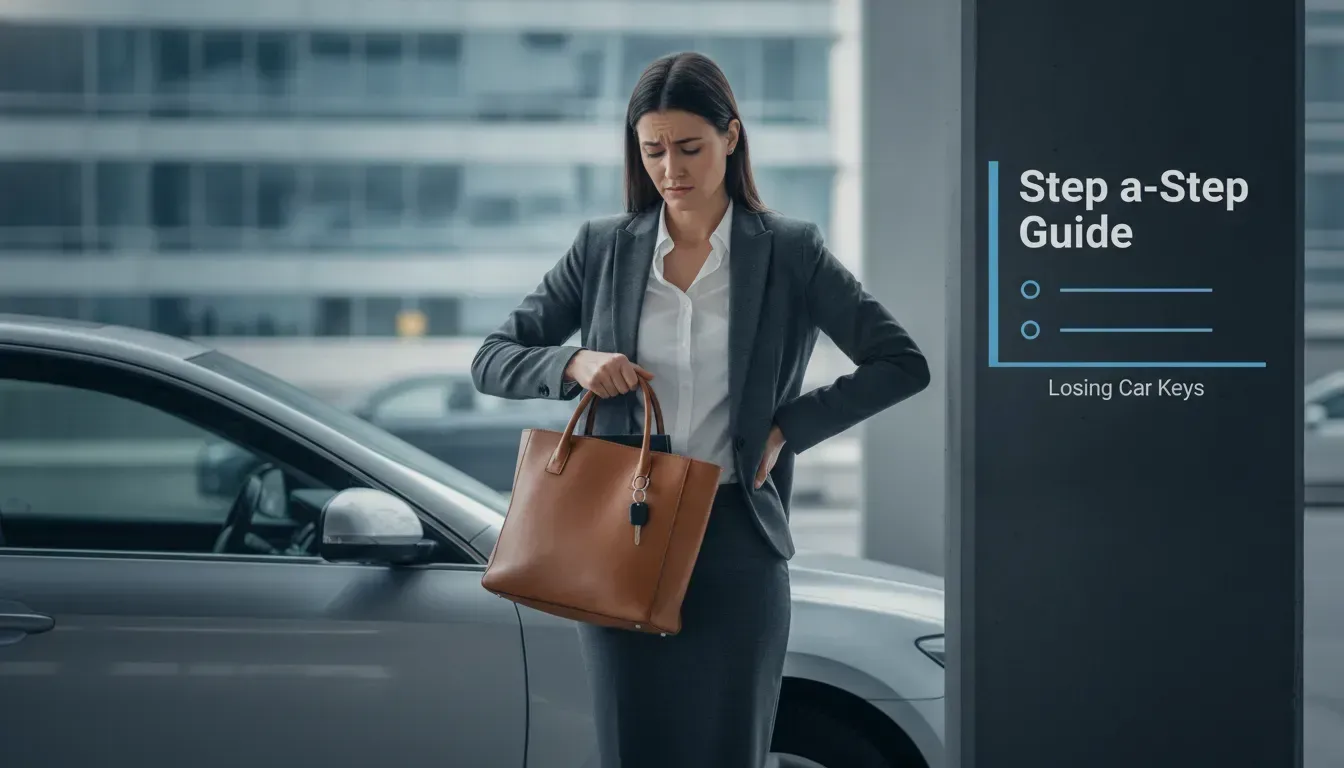
When your car keys disappear, the first few minutes matter. A rushed search may cause you to overlook the place where the keys fell, while an improvised lockout solution can damage your vehicle. A better approach starts with retracing your steps and checking pockets, bags, furniture, the driveway, and the vehicle interior. Then consider whether someone could use the missing key to access your car or home. This guide explains what to do if you lose your car keys, how to identify the replacement you need, and when to call a professional. The LOCK Shop offers key cutting, origination, programming, and auto lock services in Mesa and the East Valley.
Key Takeaways
- Search with a clear plan first: Retrace your route, inspect pockets, bags, furniture, the vehicle, and nearby areas, then contact businesses or lost-and-found desks.
- Protect your vehicle and personal information: Lock the car, remove documents showing your address, gather your VIN and identification, and report suspected theft promptly.
- Request the right replacement service: Share the vehicle’s year, make, model, key type, location, and spare-key status, then confirm programming, mobile service, fees, guarantees, and available discounts.
What Should You Do First After Losing Your Car Keys?
Losing your car keys can make a routine errand feel stressful. Before assuming they are gone for good, pause and follow an organized search. Keys often turn up in a coat pocket, bag compartment, vehicle seat crevice, or nearby area that was overlooked.
If you still cannot find them, focus on two priorities: secure your vehicle and find out how to replace or deactivate the missing key. These steps can help you avoid unnecessary damage, delays, and expenses.
Confirm Your Keys Are Missing
Before calling for a replacement, think about the last moment you clearly remember holding or using your keys. Were you unlocking the vehicle, carrying groceries, paying at a counter, or switching bags? Replaying the moment may point you toward the right location.
Ask anyone who was with you whether they moved the keys or placed them somewhere safe. If you have a spare, confirm where it is and whether it still works. Even if you believe the keys were lost outside your home, take a few minutes to complete a careful search.
If you are locked out, do not force the door or try to manipulate the ignition. Damaging a door seal, lock, or electronic system can cost more than professional service. An automotive locksmith can help with auto key duplication, origination, and programming, including many situations where every key is missing.
Check Your Pockets, Bags, Counters, Furniture, and Vehicle
Start with the places you use most often. Empty every pocket, including coat pockets, jacket linings, jeans, and work uniforms. Check each section of your purse, backpack, gym bag, or shopping bag. Feel along the bottom and sides for a key that may have slipped into a fold.
Next, scan counters, tables, desks, chairs, sofas, and other surfaces near the door. Keys can blend into clutter or slide beneath mail, clothing, or small items. If you recently entered the vehicle, check the floor, seat crevices, center console, cup holders, trunk, and the area beside each seat.
Think about where you placed bags, loaded groceries, changed clothes, or handled your phone. A methodical search is more useful than repeatedly checking the same obvious spot. For additional search tips, retrace your movements and check each area separately.
Search the Driveway, Parking Area, and Nearby Ground
After checking indoors, search the ground around your home or vehicle. Walk slowly through the driveway, sidewalk, garage entrance, parking space, and the path you took after leaving the car. Look under the vehicle and around the tires, curbs, planters, benches, and shopping carts.
Use your phone’s flashlight, even during the day. Metal keys can be difficult to see in gravel, grass, pavement cracks, or beneath a parked vehicle. If your key fob has a bright color or distinctive keychain, search for that feature instead of looking only for the metal key.
If you are in a public parking area, stay aware of your surroundings. Do not leave the vehicle unlocked while you search, especially if registration, mail, work documents, or other personal information is inside. Once you have completed a thorough search, secure the vehicle and arrange professional help if the keys do not turn up.
Determine Whether You Lost or Someone Stole the Keys
Consider where the keys disappeared and whether someone else could have accessed them. A misplaced key may be at a restaurant counter, inside a shopping bag, or at a friend’s home. A stolen key may have been taken from an unlocked vehicle, purse, gym locker, workplace, or shared entry area.
Check whether other belongings are missing, including your wallet, identification, garage remote, access card, or vehicle registration. Think about whether the key ring included information that could identify your vehicle or home. An address, branded tag, or personal identification can make a lost key a more serious security concern.
If theft is possible, report it to the relevant business, property manager, or law enforcement agency. You may also need to contact your insurance provider. Tell the locksmith that someone may have taken the key so they can discuss auto lock repairs, rekeying, and replacement.
Secure Your Vehicle and Personal Information
If the vehicle is unlocked, check the interior and lock all doors before leaving. Remove registration documents, mail, spare keys, garage remotes, and anything that displays your home address. If you can access the vehicle, look for a spare key or paperwork showing the vehicle identification number, also called the VIN.
If the missing keys were attached to your house keys, secure your garage and exterior doors as well. When possible, move the vehicle to a well-lit, monitored location. Do not hide a spare key inside the vehicle or in an obvious spot nearby.
A missing modern key may still unlock or start the vehicle, depending on its design and programming. Ask a qualified automotive locksmith whether the lost key can be removed from the vehicle’s memory or whether the locks need to be rekeyed. The LOCK Shop offers mobile automotive services in Mesa and nearby areas, bringing the necessary equipment to your location.
Check Roadside, Insurance, and Warranty Coverage
Before paying out of pocket, review your roadside assistance plan, auto insurance policy, vehicle warranty, and membership benefits. Some plans cover lockout service, towing, or part of the key replacement cost. Coverage varies, so ask whether programming, replacement parts, mobile service, and travel charges are included.
You may need to provide proof of ownership before a locksmith or dealership can make an advanced replacement key. Keep your driver’s license, registration, title, insurance card, and VIN available. If these documents are locked inside the vehicle, tell the service provider before arrival so they can explain which alternatives may be accepted.
Ask whether your coverage requires an approved provider or a specific claims process. Request a written estimate for any amount you will pay yourself, including cutting, programming, travel, and emergency service fees. If you need help in Mesa or the East Valley, request automotive service from The LOCK Shop and provide your vehicle details, location, and spare-key status.
How Can You Retrace Your Steps?
Before ordering a replacement, give yourself a focused search plan. Rushing can lead you to check the same counter or vehicle seat repeatedly while overlooking the spot where your keys actually fell. Slow down, replay your movements, and search one location at a time.
Start with the last moment you clearly remember holding the keys. Then work backward through every stop, including quick errands, parking areas, driveways, and places where you paused to carry groceries, answer your phone, or open a door. The AAA guide to lost car keys recommends checking your immediate surroundings and contacting businesses where you may have left them.
Recall the Last Time You Used the Keys
Think about the last time you used the keys, not only the last place you drove. Did you unlock the car, start the engine, open the trunk, or set the keys on the roof while loading something? Try to remember what you were wearing and carrying at that moment.
Check every pocket, bag compartment, jacket, purse, and pair of shoes you had with you. Look in your usual key-storage spots, such as an entryway table, kitchen counter, bowl, desk, or wall hook. Check the floor around these areas as well. Keys can slide under furniture or hide beneath mail, clothing, and shopping bags.
List Every Stop in Reverse Order
Write down every place you visited, starting with where you are now and moving backward. Include your home, workplace, stores, restaurants, gas stations, parking lots, friends’ homes, and stops that lasted only a few minutes.
If you cannot remember the route, check your phone’s location history, calendar, receipts, and bank transactions. Return to each location in reverse order, as recommended by Good Sam’s lost-key checklist. A written list keeps you from relying on memory alone and makes it easier to explain where you have searched if you need to call a locksmith.
Search Each Location Separately
Give each location your full attention before moving to the next one. At home, begin in one room and follow a consistent pattern. Check surfaces first, then inspect chairs, cushions, drawers, floors, and the space beneath furniture.
At a business or parking area, walk the route from your vehicle to the entrance. Look near shopping carts, checkout counters, benches, doorways, and payment machines. Use your phone’s flashlight to inspect dark areas, and ask an employee about the location’s lost-and-found process. A calm, organized search is more effective than quickly scanning several places at once. Mark each location on your list after you check it so you do not repeat the same search.
Check Unusual Spots and Moved Items
Keys do not always remain where you expect them. Check coat pockets, reusable shopping bags, laundry baskets, containers, and clothing you removed after coming home. In your vehicle, inspect beneath the floor mats, between the seats, under the seats, and inside the seat crevices.
Also look at places where someone may have moved your belongings. A family member might have placed the keys on a different counter, or a child may have carried them into another room. Check tables, counters, floors, and nearby surfaces where the keyring could blend in with other objects. Focus on the color and shape of the keychain, not just the metal key, as suggested by Good Sam’s lost-key advice.
Contact Businesses, Friends, Family, and Lost-and-Found Desks
Call every business on your list, even if you do not remember using the keys there. Ask whether an employee or customer turned in a keyring, and describe it clearly. Mention the vehicle make, keychain color, attached tags, or other identifying details.
Contact friends, family members, coworkers, property managers, and anyone else who may have handled your belongings. Ask them to check entryways, counters, vehicles, and other places where they may have set the keys down. If you visited a shopping center, apartment complex, office, or public facility, contact both the business and the property’s security or lost-and-found desk.
Use a Bluetooth Tracker or Vehicle App
If your keys have a Bluetooth tracker attached, open its app and check the last recorded location. Move slowly through the area while using the tracker’s sound or proximity feature, if available. A tracker may help you locate keys inside your home, vehicle, garage, or a nearby outdoor area, although its range and battery life vary.
Some vehicle manufacturer apps show the car’s last parked location. This may not identify where the keys are, but it can confirm where you last drove or whether the vehicle moved after you parked it. If the keys may be inside a locked vehicle, do not force the door. A professional automotive locksmith can help you regain entry while reducing the risk of damage.
Set a Search Limit and Schedule Replacement Service
Set a reasonable limit for your search, such as 20 or 30 minutes. Complete your list, avoid repeating the same checks, and decide what you will do if the keys do not appear. If you have searched thoroughly, scheduling replacement service is often more practical than delaying important errands or leaving your vehicle unsecured.
The LOCK Shop provides mobile auto key duplication, origination, and programming in Mesa and surrounding East Valley communities. A technician can identify whether your vehicle needs a traditional key, transponder key, remote, or programmed smart key. When you request service, share the vehicle year, make, model, location, and whether all keys are missing. If you believe someone stole the keys, mention that during the call so the technician can discuss available security options.
What Type of Car Key Do You Need to Replace?
Car keys are no longer limited to a piece of cut metal. Depending on your vehicle, replacement may involve cutting a blade, programming a transponder chip, pairing a remote, or registering a smart key with the vehicle’s security system. Identifying the key type helps you request the right service and receive a more accurate estimate.
If you are unsure which type of key your vehicle uses, contact The LOCK Shop’s automotive locksmith team. A technician can help identify the correct replacement and provide mobile service throughout Mesa and the East Valley.
Traditional Metal Keys: Cut a New Key
Traditional car keys have a metal blade that turns the door lock and ignition. They do not contain a chip, remote, or proximity sensor, so replacement is usually straightforward. A locksmith can duplicate an existing key or create a new one by decoding the vehicle lock or using the key code.
If you still have a working key, duplication is typically faster. If every key is missing, the locksmith may need to create a new key from the vehicle’s lock or ignition. Mechanical keys can often be copied by a locksmith, according to GEICO’s guide to lost car keys.
Even with a basic key, be prepared to show proof that you own or have permission to use the vehicle. The technician may also ask for the vehicle identification number, or VIN, before making a replacement.
Transponder Keys: Cut and Program the Chip
A transponder key has a metal blade and a small electronic chip inside the key head. When you insert it into the ignition, the vehicle checks the chip before allowing the engine to start. A newly cut blade may unlock the door, but the vehicle will not start if the transponder has not been programmed.
The replacement process usually includes cutting the key and pairing its chip with the vehicle’s immobilizer system. Some vehicles allow a qualified locksmith to program a key on-site, while others have more specific equipment requirements. If you have no spare, dealership service or towing may be necessary in certain cases, as GEICO explains.
Ask whether the estimate includes both cutting and programming. A key that unlocks the door but does not start the engine is not a complete replacement.
Remote Key Fobs: Replace and Pair the Fob
A remote key fob lets you lock, unlock, or open the trunk without inserting a key into the door. Some fobs include a separate metal emergency blade, while others are designed only for remote functions. The fob must be compatible with your vehicle’s year, make, model, and frequency.
Replacement fobs may come from a dealership, auto parts retailer, online seller, or automotive locksmith. Buying a fob is only part of the process, however. It may need to be paired with the vehicle, and an included emergency blade may need to be cut.
Some replacement fobs are simple to program, while others require professional diagnostic equipment. Before ordering one online, confirm the part number and programming requirements. The LOCK Shop’s auto key duplication and programming service can help you avoid purchasing an incompatible part.
Switchblade Keys: Cut the Blade and Program the Fob
Switchblade keys combine a folding metal blade with a remote fob. Pressing a button releases the blade, which folds back into the housing when it is not in use. Since this design combines mechanical and electronic components, replacement usually involves more than cutting a standard key.
The locksmith must cut the blade to match the vehicle and program the fob or transponder so the car recognizes it. Some switchblade keys operate the locks and trunk but still require a separate transponder function to start the engine.
Aftermarket versions may cost less than original manufacturer keys, but compatibility and build quality can vary. Dealerships may offer on-site replacement, while qualified automotive locksmiths may be able to cut and program the key at your location. Ask whether the estimate covers the blade, remote functions, chip programming, and any replacement housing.
Smart Keys: Program Proximity and Keyless-Ignition Features
Smart keys, sometimes called proximity keys, allow you to unlock and start the vehicle without removing the key from your pocket or bag. The vehicle detects the key nearby, unlocks when you touch the handle, and starts when you press a button.
Replacing a smart key requires a compatible proximity fob and programming that connects it to the vehicle. If the correct replacement is not available, it may need to be ordered and paired with the car. GEICO’s information about smart keys explains that replacement may involve both ordering and vehicle-specific programming.
If your key is missing, ask whether the old key can be removed from the vehicle’s memory. This is especially important if you believe someone found or stole it. A locksmith may also be able to check the locks, ignition, and key-memory settings for additional security concerns.
Check How the Vehicle Year, Make, Model, and Trim Affect Replacement
Two vehicles with the same model name may use different keys because of their year, trim level, engine, or factory options. A base model might use a metal key or standard remote, while a higher trim could use push-button ignition and a proximity fob.
Give the locksmith your vehicle’s year, make, model, and trim whenever possible. You may also need to provide the VIN or a photograph of the existing key. This information helps the technician identify the correct blank, fob, chip, and programming procedure. It also reduces the chance of ordering a part that does not work with your vehicle.
When you contact The LOCK Shop, mention whether the vehicle has a keyed ignition, push-button start, remote entry, or folding key. If you are unsure, describe what the key looked like and how you normally started the car.
Understand How Key Type Affects Equipment, Cost, and Time
Key type affects the tools, parts, and skill required for replacement. A traditional metal key may only require cutting, while a transponder, switchblade, or smart key may require specialized programming equipment. Technology generally increases replacement costs. Basic fobs often cost less than transponder and smart keys, which can cost several hundred dollars, according to GEICO’s car key replacement overview.
Service time also varies. A common key blank may be cut during a mobile appointment, while an uncommon smart key may need to be ordered first. An all-keys-lost situation can take longer because the locksmith may need to create the key from the vehicle and program it from scratch.
Before approving service, ask for a written estimate that identifies the replacement part, cutting, programming, mobile service, and any emergency or travel fees. For details about available automotive locksmith services, provide The LOCK Shop with your vehicle information and location.
What Information Do You Need for Replacement?
A locksmith needs more than your vehicle’s make and model to create a replacement car key. The right details help identify the key type, cutting method, programming requirements, equipment, and estimated price before work begins. They also help the technician confirm that you have permission to access and operate the vehicle.
Gather as much information as possible before calling for service. If your registration, title, or identification is locked inside the vehicle, mention that right away. A reputable locksmith may be able to unlock the car first, then review your documents before creating a replacement key. The AAA guide to lost car keys also recommends preparing vehicle and ownership information before arranging service.
Provide the Vehicle Year, Make, Model, and Trim
Start with the vehicle’s year, make, model, and trim level. For example, a 2020 Honda CR-V may require a different key than a 2020 Honda Accord. Even two versions of the same model may use different remotes, transponder systems, or smart keys. The trim can also affect whether the vehicle has push-button ignition, keyless entry, or other integrated features.
If you are unsure of the trim, check your vehicle paperwork, insurance documents, purchase records, or manufacturer app. You can also describe the original key, including whether it had buttons, a visible metal blade, or a proximity feature. The LOCK Shop provides automotive key duplication, origination, and programming for drivers in Mesa and nearby East Valley communities.
Locate the VIN
The vehicle identification number, or VIN, is a unique 17-character code assigned to your vehicle. A locksmith may use it to verify vehicle details, identify the correct key system, and confirm compatibility before cutting or programming a replacement.
You can often find the VIN on the driver’s side dashboard, visible through the windshield. It may also appear on the driver’s side doorjamb, registration, insurance card, title, or financing documents. If you cannot access the vehicle, check your insurance app, online account, or previous service records.
Write the VIN down carefully, since one incorrect letter or number can create confusion. You may not need to provide it during the first phone call, but having it ready can help the technician prepare and provide a more accurate quote.
Show Government-Issued Photo ID
Be prepared to show a valid government-issued photo ID before the locksmith creates a key or performs certain vehicle services. A driver’s license is usually the simplest option, though another form of identification may be accepted under the provider’s policies.
Your ID helps connect you to the vehicle and reduces the risk of unauthorized access. The verification process protects you as well as the locksmith. Without reasonable proof of identity, a technician may need to limit the service or decline the request.
If your wallet and identification are inside the locked vehicle, explain the situation when you call. The locksmith may be able to unlock the car first, then review your ID and ownership documents. Ask what forms of identification are accepted when you request automotive service.
Provide Registration, Title, Insurance, or Purchase Records
Ownership documents give the locksmith another way to confirm that you are authorized to receive a replacement key. Useful records may include the vehicle registration, title, insurance card, purchase agreement, financing paperwork, or current lease document.
You may not have every document available, especially if they are inside the locked vehicle. Bring whatever you can access, and tell the provider what you have before the appointment. The technician may ask for additional documentation if the name on your ID does not match the registration, such as when you are driving a family member’s, employer’s, or rental vehicle.
Keep digital copies of your registration and insurance information in a secure account if your state and insurer permit it. This can make verification easier during an emergency while still giving the locksmith the information needed to protect the vehicle.
Share the Vehicle Location and Lock or Ignition Status
Tell the locksmith exactly where the vehicle is located. Include the street address, parking lot name, apartment or business details, and any instructions needed to find the car. If you are in a large lot, share the row, nearby landmark, license plate number, or other identifying details.
Explain whether the vehicle is locked, unlocked, or partially accessible. Also mention whether the key is missing from the ignition, broken inside the ignition, or stuck in a door. If the car has push-button ignition, tell the provider whether the dashboard lights up or recognizes the key.
These details help the technician bring the right tools and estimate the work involved. They also matter for safety. If the vehicle is on a busy roadside, in a restricted parking area, or in an unfamiliar location, mention that when you call.
Confirm Whether You Have a Spare Key
Tell the locksmith whether you have a working spare, a damaged spare, or no spare at all. A working spare may allow you to move the vehicle to a safer location while arranging a replacement. It may also help the technician duplicate or program an additional key more efficiently.
If the spare only unlocks the doors, mention that detail. Some keys can operate the locks but cannot start the vehicle because the transponder chip is missing, damaged, or not programmed. Likewise, a remote may lock and unlock the car while its emergency blade or ignition function does not work.
If you have lost your only key, say so when requesting service. An all-keys-lost situation may require vehicle-specific cutting, programming, or key-memory work. Once you have a replacement, ask about making a spare and store it in a separate, secure location.
Tell the Provider if Someone May Have Stolen the Key
If you believe someone stole your key, tell the locksmith before work begins. This situation may require more than creating another key. The missing key could still unlock the doors or start the vehicle, creating an ongoing security concern.
Ask whether the provider can erase the missing key from the vehicle’s memory, reprogram the remaining keys, rekey the locks, or assess the ignition system. The appropriate solution depends on the vehicle and its security system. You may also need to contact law enforcement, your insurer, property management company, or employer.
Do not leave out this information because you are concerned about additional steps or costs. A replacement key that works may not solve the security problem if the stolen key remains active. The LOCK Shop provides auto lock repairs, rekeying, and replacement for drivers who need help securing a vehicle after lost or stolen keys.
Understand Why Locksmiths Verify Vehicle Ownership
Locksmiths verify vehicle ownership to help prevent unauthorized entry, key creation, and vehicle theft. A car key can provide access to the doors, trunk, glove box, and ignition, so a responsible provider must confirm that the request is legitimate before completing the work.
Verification may include your photo ID, registration, title, insurance information, VIN, or purchase records. The technician may compare the vehicle identification number with your paperwork. Requirements can vary based on the vehicle, the service requested, the location, and the provider’s policies.
If your documents are locked inside the car, explain that during the initial call. In many cases, the locksmith can unlock the vehicle first, then inspect your identification and ownership records. Have those documents ready as soon as access is restored, and ask about the requirements before the technician arrives. This preparation helps prevent delays and supports safe, lawful service.
Should You Choose an Automotive Locksmith or Dealership?
When you lose your car keys, both an automotive locksmith and a dealership may be able to help. The better choice depends on your vehicle, key type, location, and how quickly you need to get back on the road. A dealership may be necessary for certain manufacturer-specific systems, while an automotive locksmith can often cut, originate, and program replacement keys at your location.
Before choosing a provider, ask which services they can perform for your vehicle and whether mobile service is available. You should also request a complete quote that includes the key or fob, cutting, programming, labor, travel, and any emergency service charges. AAA recommends choosing a licensed or reputable locksmith and confirming ownership before work begins.
Use The LOCK Shop’s Mobile Automotive Key Service in Mesa and the East Valley
If your vehicle is parked at home, at work, or in a parking lot, The LOCK Shop can bring automotive locksmith service to you. Its fully equipped mobile fleet allows technicians to handle many key and lock services without requiring you to arrange a tow to a dealership or repair shop.
The LOCK Shop serves drivers in Mesa, the East Valley, and the Phoenix Metropolitan Area. Its automotive team provides auto key duplication, origination, and programming for many vehicle types. The company also handles auto lock repairs, rekeying, and replacement.
When you call, provide the vehicle year, make, model, trim, and location. Explain whether you lost every key, have a damaged key, locked the keys inside, or suspect someone took them. These details help the technician determine which equipment and replacement options may be needed.
Know When an On-Site Locksmith Makes Sense
An on-site automotive locksmith can be a practical choice when your vehicle cannot be driven. Traditional metal keys can often be cut at the vehicle’s location, even when the original key is missing. Depending on the make and model, a locksmith may also create and program replacement transponder keys, remote fobs, switchblade keys, or smart keys.
Mobile service can save you from arranging a tow, waiting for dealership transportation, or leaving your vehicle unattended. It may also help when the keys are locked inside the car or when a damaged door or ignition lock needs attention. GEICO explains that a locksmith may cut a replacement key on-site, depending on the vehicle and key system.
Ask whether the locksmith can service your specific vehicle before scheduling an appointment. Some newer models require specialized tools, security information, or programming procedures, so confirming compatibility early can prevent delays.
Know When You Need Dealership Service
A dealership may be the better choice when your vehicle uses manufacturer-specific equipment, software, or security credentials. This can apply to some newer smart keys, unusual models, high-security systems, and vehicles with replacement parts that are difficult to source elsewhere.
Dealership service may also be necessary when the ignition lock cylinder or key must be replaced through a manufacturer-supported process. AAA explains that some transponder keys must communicate electronically with the vehicle. An experienced automotive locksmith may still be able to program many transponder keys, so ask about your exact vehicle before deciding.
Call the dealership before arranging a tow. Ask whether the correct key is in stock, how long ordering and programming may take, and which documents you must provide. If you lost every key, ask whether the dealership can remove missing keys from the vehicle’s memory.
Compare Mobile Service, Towing, Equipment, and Wait Times
The lowest advertised price may not be the lowest total cost. Compare the complete process, including transportation, time without your vehicle, and the equipment needed to finish the job. A mobile locksmith may come directly to your car, while dealership service may require a tow if the vehicle cannot be driven.
A lost electronic key can leave a vehicle unusable. GEICO notes that transponder and smart-key systems may require dealer programming, although some automotive locksmiths have the tools to complete programming on-site. Ask each provider which steps they can perform at your location.
Wait times also matter. A locksmith may offer same-day service, while a dealership may need to order the key before scheduling programming. A dealership may still be the right choice when your vehicle needs a manufacturer-specific part or repair. Compare the estimated arrival time, completion time, towing needs, and total price before authorizing work.
Ask About Cutting, Origination, Programming, and Travel Fees
Car key replacement can involve several different services. Cutting creates the physical key shape. Origination creates a key when no original is available. Programming pairs a transponder, remote, or smart key with the vehicle. You may also need a lock repair, ignition repair, or replacement key shell.
Ask for an itemized quote that identifies the work your vehicle requires. Confirm whether the price includes the key or fob, cutting, origination, programming, labor, service-call charges, and travel. Emergency appointments, after-hours service, vehicle unlocking, and difficult access may affect the final price.
Costs vary by vehicle, key type, and programming requirements. GEICO recommends comparing replacement options and costs. The LOCK Shop can discuss available automotive key services before dispatching a technician, helping you understand what the quote covers before work begins.
Confirm Licensing, Bonding, Insurance, Guarantees, and Availability
Before hiring a locksmith, ask whether the company is licensed, bonded, and insured. You should also ask whether the company guarantees its workmanship or replacement parts and whether those terms appear on the written invoice. Reading the provider’s customer reviews can give you more insight into communication, pricing, and service quality.
A reputable automotive locksmith will verify that you have the right to access and operate the vehicle. Prepare a government-issued photo ID, registration, title, insurance documents, or other ownership records. Some providers request documents before scheduling, while others verify them when the technician arrives.
The LOCK Shop is a family-owned and operated locksmith company serving Mesa and nearby communities. Its team provides automotive, residential, commercial, and safe services with fair, competitive pricing. When you call, ask what documents the technician needs and what guarantee applies to the completed work.
Check for Same-Day Service and Senior or Veteran Discounts
If you need to leave a parking area, get to work, or pick up your family, same-day availability may be important. Ask whether a technician can come to your location, how soon they can arrive, and whether the requested key or fob is available for your vehicle.
The LOCK Shop offers mobile automotive services in Mesa and the East Valley, including key duplication, origination, programming, and auto lock repairs, rekeying, and replacement. Availability depends on the vehicle, location, time of day, and current service calls, so confirm the expected arrival window when you request service.
Ask about discounts before work begins. The LOCK Shop serves seniors and veterans and may offer eligible customers a discount. Have identification available if needed, and request a written quote showing the discount and any service or travel charges. You can request automotive service from The LOCK Shop.
How Much Does Car Key Replacement Cost?
Car key replacement can cost anywhere from about $10 to several hundred dollars. The final price depends on the key type, vehicle, programming requirements, and whether you still have a working key. A basic metal key is usually inexpensive to duplicate, while a smart key may require a vehicle-specific replacement part and specialized programming equipment.
Your location and timing can affect the total, too. Service for a vehicle parked at home may cost less than emergency assistance at a remote location or outside regular business hours. If you have lost every key, the locksmith may need to originate a new key and program it to the vehicle. The AAA guide to lost car keys also recommends considering your vehicle’s make, model, key type, and available coverage before choosing a replacement option.
The estimates below are general ranges, not guaranteed quotes. For a more accurate estimate, contact The LOCK Shop’s automotive service team with your vehicle information and location.
Traditional Metal Keys: Often About $10
Traditional metal keys are usually the least expensive type to replace. They do not contain an electronic chip or remote, so a locksmith can typically duplicate one by cutting a new key to match the original. A basic copy may cost about $10, although the price varies by key blank, vehicle, and provider.
If you have a working key, duplication is generally straightforward. If every key is missing, the locksmith may need to create a key from the vehicle lock or an available key code. Older vehicles sometimes use uncommon blanks, and worn locks can make key creation more involved.
A hardware store may be able to copy a simple key, but a locksmith can also assess the lock and confirm that the new key operates correctly. Review The LOCK Shop’s auto key duplication and origination services when you need a replacement in Mesa or the East Valley.
Key Fobs: About $50–$100
A key fob controls features such as remote locking, unlocking, and trunk release. Replacement fobs often cost about $50 to $100, but the total depends on the vehicle and whether you choose an original manufacturer part or an aftermarket option.
Some vehicles allow owners to pair a replacement fob using a specific button sequence. Others require diagnostic equipment to connect the fob to the vehicle. A fob that looks identical to the original may still fail if it uses the wrong frequency or is incompatible with the vehicle’s computer.
Ask whether the quote includes the fob, battery, programming, and testing. If the metal key inside the fob also starts the vehicle or opens the door, cutting that blade may be an additional service. A locksmith can confirm whether you need a complete fob or only a replacement shell.
Transponder Keys: About $50–$200 or More
A transponder key contains a small electronic chip that communicates with the vehicle’s immobilizer system. The metal blade must be cut correctly, and the chip must be programmed before the vehicle will start. A copied metal blade alone will not solve the problem if your vehicle uses a transponder system.
Replacement transponder keys often cost about $50 to $200 or more. The make, model, year, and programming method all affect the final price. Some vehicles accept compatible aftermarket keys, while others require a specific key or a more involved programming procedure.
The key may turn in the ignition but still fail to start the engine if the chip has not been programmed. The LOCK Shop’s auto key programming service can help vehicle owners in Mesa and nearby East Valley communities determine what type of replacement they need.
Switchblade Keys: Often About $150–$300 or More
Switchblade keys combine a folding metal blade with a remote or transponder housing. Pressing a button releases the blade, which folds into the fob when not in use. This design protects the blade and makes the key easier to carry.
Replacement switchblade keys often cost about $150 to $300 or more. The price may include the key housing, blade cutting, remote pairing, and transponder programming. If the original housing is damaged but the electronics still work, replacing only the shell may cost less than replacing the entire key.
Compatibility is important. The replacement must match the vehicle’s electronics, blade style, and programming requirements. Before ordering a switchblade key online, confirm the part number and vehicle details with an automotive locksmith. A low-cost part may not work with your exact vehicle.
Smart Keys: About $200–$500 or More
Smart keys, also called proximity keys, allow you to open and start a vehicle without inserting a key into the ignition. The vehicle detects the key when it is nearby, then permits entry or ignition when the correct conditions are met.
Replacement smart keys commonly cost about $200 to $500 or more. The total may include the smart key, emergency blade, programming, and service call. Luxury vehicles and newer models may use more costly components or require specialized programming equipment.
If you have no working smart key, programming may take additional time. Some vehicles can be serviced on-site by a mobile locksmith, while others may require dealership equipment or towing. Share the vehicle’s exact year, make, model, and trim before service so the provider can confirm the available options.
Identify Factors That Affect the Final Price
The key type is only one part of the replacement cost. Your vehicle’s year, make, model, trim, and security system can affect the key blank, electronic components, and programming process. A common key for an older vehicle may be quick to replace, while a newer vehicle with advanced security features may require specialized tools.
The number of keys you have also matters. Replacing one damaged key is different from replacing every lost key. The vehicle’s location can affect the price as well, particularly if it is outside the normal service area or requires after-hours assistance.
When requesting an estimate, tell the locksmith whether you have a spare, whether the vehicle is locked, and whether the key may have been stolen. Also share the vehicle location and whether the issue involves the door lock, ignition, or both. Accurate details help the provider prepare the right equipment and give you a more useful estimate.
Compare Aftermarket and Original Manufacturer Keys
Aftermarket keys are made by companies other than the vehicle manufacturer and may cost less than original manufacturer keys. They can be a practical choice when the part is compatible, properly cut, and supported by the vehicle’s programming system.
Original manufacturer keys are made for a specific vehicle brand and may offer a closer match for fit, finish, and electronics. They can also cost more. A lower-priced key is not always the better choice if it does not communicate with the vehicle or wears out quickly.
Ask which type of key the quote includes and whether the provider guarantees compatibility. If you purchase a key yourself, confirm that it matches your exact vehicle year and trim. You should also check whether it is new, not locked to another vehicle, and supported by the required programming process.
Account for Cutting, Programming, Emergency, Travel, and Towing Fees
A quoted key price may not include every part of the service. Cutting and programming may be listed separately, especially when the replacement includes both a mechanical blade and an electronic chip. Some providers also charge a service call or travel fee based on the vehicle’s location.
Emergency or after-hours service can affect the total price. If a dealership must handle programming, towing may add a significant expense, especially when the vehicle cannot be driven. Ask about these costs before authorizing the work.
A reliable provider should explain what you are paying for instead of listing only the price of the key. When requesting automotive locksmith service from The LOCK Shop, include the vehicle location and explain whether you need key replacement, lock repair, or programming.
Estimate Cutting, Programming, Ordering, and Service Times
Many basic keys can be cut quickly, especially when you have an original key available. Electronic keys often take longer because the locksmith must verify compatibility, cut the blade, connect programming equipment, and test the key on the vehicle.
If the correct key is not in stock, it may need to be ordered. That can delay service by a day or longer, depending on availability and shipping. A dealership may also need to order a vehicle-specific key before programming it.
A mobile locksmith may complete the work at your location, which can save you a trip to the dealership and reduce the need for towing. When you call, ask how long the appointment may take and whether the required key is available. This gives you a clearer idea of when you can use the vehicle again.
Confirm What the Written Quote Includes
Before approving the replacement, request a written estimate that separates the key or fob from labor, cutting, programming, travel, and other fees. Confirm whether the price includes testing the new key and making sure the vehicle recognizes it before the locksmith leaves.
Ask whether the replacement part and workmanship include a warranty or guarantee. You should also clarify the accepted payment methods and whether the estimate could change if the locksmith finds a damaged lock, ignition, or wiring issue.
Provide the vehicle year, make, model, trim, VIN if available, and location when requesting a quote. The more accurate the information, the less likely you are to encounter an unexpected charge. Use The LOCK Shop’s contact page to ask about automotive key services in Mesa and nearby communities.
How Can You Get Back on the Road Without a Spare?
Losing your only car key can feel overwhelming, especially when your vehicle is locked or parked away from home. Start by staying calm, protecting the vehicle, and identifying the type of replacement you need. A professional automotive locksmith may be able to unlock the car, cut a new key, and program a transponder or key fob at your location.
Before requesting service, check your roadside assistance, insurance, or vehicle warranty benefits. Some plans cover lockouts or towing, while others may reimburse part of the replacement cost. If you are in Mesa or the East Valley, The LOCK Shop provides mobile automotive locksmith services, bringing the necessary equipment directly to your vehicle.
Have your vehicle’s year, make, model, and location ready when you call. Tell the provider whether the car is locked, whether all keys are missing, and whether you suspect theft. This information helps the technician prepare the right tools and give you a more accurate estimate.
If the key cannot be replaced on-site, ask what the next step involves before authorizing a tow. You may need dealership service for certain manufacturer-specific systems, but an experienced locksmith can often handle many key replacement and programming needs without moving the vehicle.
Call a Mobile Locksmith When You Cannot Access the Vehicle
If you cannot unlock or start your vehicle, call a mobile locksmith instead of using improvised tools. Explain that you have lost your only key, provide the vehicle’s year, make, model, and location, and confirm whether the car is locked. These details help the technician bring the appropriate equipment.
A mobile locksmith can often unlock the vehicle without damaging the door, then cut or originate a replacement key at the location. The LOCK Shop’s automotive key service includes key duplication, origination, and programming for many vehicles.
Ask for a quote before work begins. Confirm whether the estimate includes vehicle entry, key cutting, programming, replacement parts, travel, and any after-hours service charges. You should also be prepared to show identification and proof that you own or are authorized to use the vehicle.
Prepare for All-Keys-Lost Cutting and Programming
When every key is missing, replacement usually involves more than cutting a piece of metal. Many vehicles use a transponder chip, remote fob, or smart key that must communicate with the car’s immobilizer system. The technician may need to create a new key, program it to the vehicle, and remove missing keys from the vehicle’s memory.
The exact process depends on the vehicle’s year, make, model, trim, and security system. Have your photo ID and ownership documents ready, since the provider will need to confirm that you are authorized to request service. Registration, insurance information, a title, or purchase records may help verify ownership.
You can also review AAA’s guidance on lost car keys and check your roadside coverage before paying for replacement services. If you have a spare at home, tell the locksmith. A working key may change the equipment, programming process, and total cost.
Arrange a Tow for Required Dealership Service
Some vehicles require manufacturer-specific software, security codes, or equipment that an independent locksmith may not have. If the vehicle cannot be programmed on-site, you may need to tow it to a dealership. This is more common with certain newer smart-key systems, high-security vehicles, and models with restricted programming procedures.
Before arranging a tow, ask the locksmith or dealership what the vehicle needs and whether an on-site option is available. Confirm the dealership’s parts, programming, and appointment requirements so you do not pay for an unnecessary trip.
If a tow is required, ask your roadside assistance provider whether your plan includes transportation to the appropriate dealership. You should also ask whether the dealership needs the vehicle present before ordering a key. In some cases, the correct replacement can be ordered using the VIN, while other situations require the vehicle for programming.
Never Force the Door or Alter the Ignition
Do not use a coat hanger, pry bar, screwdriver, or other improvised tool to open the vehicle. These methods can damage weather seals, window mechanisms, wiring, paint, airbags, or the locking system. Trying to turn, remove, or bypass the ignition can create another repair problem beyond replacing the key.
A trained automotive locksmith uses tools and methods designed for vehicle lockouts. The technician will also verify your identity and ownership before providing service. This protects you, the vehicle owner, and the provider from unauthorized access.
If the key is damaged, stuck, or no longer turning, The LOCK Shop can assess the issue and provide auto lock repair, rekeying, or replacement when appropriate. Give the technician a clear description of the problem so they can plan for both vehicle entry and lock or ignition work.
Deactivate Missing Keys if Someone May Have Stolen Them
If you believe someone took your keys, treat the situation as a security concern rather than a simple inconvenience. Depending on the vehicle and key type, someone with the key may be able to enter the vehicle or start it. Contact a locksmith or dealership promptly and ask whether the missing key can be removed from the vehicle’s programming.
Check whether the keys identify your address, vehicle, or other personal information. If they do, secure your home and review nearby access points. You may need to change a home lock or take other precautions if the stolen keys were attached to an address label.
GEICO’s lost car key guidance recommends taking additional precautions when stolen keys could provide access to your vehicle or property. Tell the locksmith exactly what happened, including when and where the keys disappeared, so they can discuss appropriate security options.
Ask About Lock, Ignition, and Key-Memory Security
Ask the service provider how a replacement key will affect your vehicle’s locks, ignition, and stored key information. A newly cut key may open the doors but still require programming before it can start the engine. Likewise, a remote fob may lock and unlock the vehicle without being authorized to operate the ignition.
If a missing key may be in someone else’s possession, ask whether the provider can erase it from the vehicle’s key memory. You may also need to rekey or replace a door lock, trunk lock, or ignition cylinder, depending on the circumstances.
A professional can explain which steps are necessary for your specific vehicle. Ask whether the replacement key is new or used, whether it includes all original features, and whether the work comes with a guarantee. Clear answers help you compare options and avoid paying for features you do not need.
Make a Spare Key After Replacement
Once your vehicle is working again, make a spare key before another emergency occurs. A duplicate is often simpler and less expensive while you still have a functioning key, since the technician may be able to copy or program it more easily. Keep the spare separate from your everyday key.
Ask for the spare to include every feature you rely on, such as remote locking, trunk release, push-button start, or proximity entry. A basic metal duplicate may open a door but may not start a vehicle equipped with an immobilizer.
The LOCK Shop provides auto key duplication and programming for many vehicle types. Before the technician begins, confirm that the spare will work for the doors, ignition, remote functions, and any keyless-entry features your vehicle uses.
Store the Spare in a Separate, Secure Location
A spare only helps if you can access it when your primary key is missing. Keep it with a trusted family member, in a secure place at home, or in another location separate from your everyday belongings. Avoid leaving an unprotected spare inside the vehicle, where it could be found during a break-in.
Do not label the spare with your full name, address, or vehicle details. If you keep it with someone else, choose a person who lives nearby and understands how to provide it safely. For households with multiple drivers, make sure each person knows where the spare is stored.
You might also consider keeping a spare at home and another with a trusted person if more than one household member regularly drives the vehicle. Store each key securely, and avoid placing all your vehicle keys in the same bag or key cabinet.
Keep Your Keys in a Designated Place at Home
Choose one consistent location for your keys, such as a hook near the entryway, a tray, or a small drawer. Place your keys there as soon as you arrive home. A routine removes much of the guesswork from finding them before work, school, appointments, or travel.
Make the location practical and secure. Keep vehicle keys away from doors and windows when possible, particularly if your vehicle uses a keyless-entry system. If several people share the home, use separate hooks or labeled sections so keys do not get mixed together.
Avoid storing keys beneath mail, inside coat pockets, or in a frequently moved bowl. The simpler the routine, the easier it is to follow. If you regularly switch bags, make the key location the final stop each time you return home.
Check Your Pockets, Bags, and Coats Before Leaving
Before leaving a home, office, store, restaurant, or another location, check the pockets and compartments where your keys may be hiding. Look through coats, handbags, backpacks, shopping bags, and clothing you wore earlier. Keys can also slip beneath a wallet, fall between car seats, or remain in a jacket placed on a chair.
Create a quick exit check that includes your phone, wallet, and keys. When you return home, empty your pockets and place the keys in their designated location. If you often change bags or coats, check the item you used most recently before assuming the key has been permanently lost.
When retracing your steps, search each location carefully instead of relying on a quick visual check. Ask staff members about lost-and-found items, and contact anyone who may have moved your belongings. A few extra minutes of organized searching may save you the cost and wait time of replacement service.
Add a Bluetooth Tracker to the Keyring
A Bluetooth tracker can help you locate keys that are misplaced nearby. After pairing the tracker with your phone, you can use its app to make the device play a sound or view its most recent connection location. This can help when keys are under furniture, inside a bag, or left at a familiar stop.
A tracker is not a replacement for a spare key, and its range and battery life vary by product. Check the battery regularly and replace it when needed. Make sure the tracker is attached securely so it does not separate from the keyring.
Do not rely on a tracker to protect your vehicle if the keys may have been stolen. In that situation, contact an automotive locksmith or dealership and ask about removing the missing key from the vehicle’s system. A tracker can help you find misplaced keys, but it cannot prevent someone from using a key that remains authorized.
Frequently Asked Questions
What should I do immediately after losing my car keys?<br>Search your pockets, bags, vehicle, home, and recent stops in an organized way. If the keys do not turn up, secure the vehicle, remove documents that show your address, and contact a qualified automotive locksmith. Avoid forcing the door or trying to manipulate the ignition, since this can cause costly damage.
Can a locksmith make a car key if every key is missing?<br>In many cases, yes. An automotive locksmith may be able to create a replacement from the vehicle’s lock, key code, or VIN, then program the transponder, remote, or smart key. Availability depends on the vehicle’s year, make, model, trim, and security system.
What information should I provide when requesting car key replacement?<br>Have the vehicle year, make, model, trim, location, VIN if available, and spare-key status ready. Explain whether the vehicle is locked, whether the key starts the car, and whether you believe it was stolen. You should also prepare photo identification and ownership documents, such as registration, insurance information, or a title.
Is an automotive locksmith less expensive than a dealership?<br>The total cost varies by vehicle and key type. A mobile locksmith may help you avoid towing and may complete cutting or programming at your location. A dealership may be required for certain manufacturer-specific systems. Request an itemized estimate that includes the key or fob, cutting, programming, labor, travel, and any emergency charges.
What should I do if I think someone stole my car keys?<br>Tell the locksmith or dealership that theft may be involved. Ask whether the missing key can be removed from the vehicle’s memory and whether the locks, trunk, or ignition should be rekeyed or replaced. If your house keys were attached, secure your exterior doors and garage, and contact your insurance provider or law enforcement when appropriate.