October 8, 2026
Learn why commercial door closers leak, slam, or fail to latch, what adjustments may help, when replacement is wiser, and when to call a technician.

A commercial door that slams, drifts open, or refuses to latch can disrupt daily operations and create a safety concern. Door closer repair starts with identifying what changed: the closer may need adjustment, a component may be worn or damaged, or the door itself may be binding. The right response depends on the symptoms and the opening's use. A careful inspection can help determine whether a simple correction is appropriate or whether a technician should repair or replace hardware.
Request service for a commercial door concern
What does a door closer do?
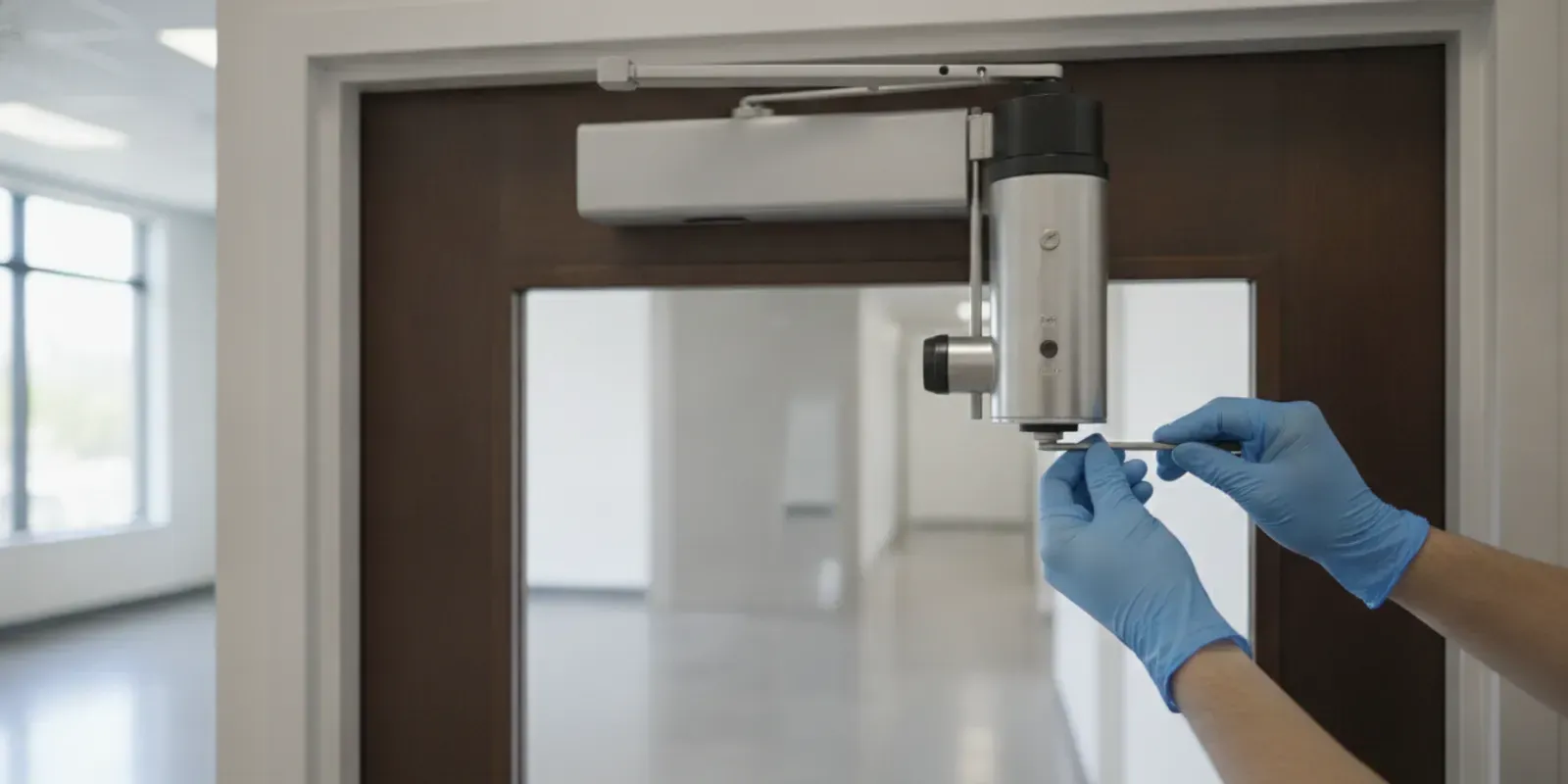
A door closer controls the way a door returns to its closed position after someone opens it. Depending on the model and installation, it may regulate the door's closing speed and final latching action. Some closers also provide resistance as the door opens, which can help prevent it from swinging too far. Common installations include offices, retail spaces, apartment common areas, and other commercial buildings.
The closer works as part of the entire opening, not in isolation. Hinges, the frame, latch, weather seals, and the door's alignment all affect whether it closes smoothly. A closer may appear to be the problem when the door is actually rubbing against the frame or the latch is not lining up. That is why a useful assessment considers the complete door and hardware setup. For background on related hardware work, review The LOCK Shop's lock services.
What are the common signs a door closer needs attention?
Pay attention to a change in how the door moves, especially if the change is sudden or getting worse. Note whether the problem happens every time, only in certain weather, or when people use the door frequently. These details can help a technician narrow down the cause.
- The door slams. It may close too quickly, creating noise and increasing the chance of impact with a person, wall, or nearby object.
- The door closes too slowly or stops short. It may remain partly open, fail to reach the latch, or take an unusually long time to close.
- The door will not latch. It gets close to the frame but does not engage the latch consistently. Misalignment, a binding door, or an issue with the closer can all contribute.
- The door drifts open or stays open. This may point to a closer problem, an opening that is out of alignment, or another hardware issue.
- There is visible fluid around the closer. A leak can indicate a failed seal or other internal damage. Wiping it away does not repair the underlying problem.
- The closer, arm, or fasteners look loose or damaged. Movement, unusual noises, or visible damage deserve attention before the condition worsens.
- The door is difficult to open. A closer adjustment may be involved, but binding hinges, frame problems, or other conditions should also be checked.
One symptom does not prove one particular cause. For instance, a door that fails to latch may have a closer that is not completing its cycle, but it may also have a loose hinge or a latch that no longer aligns with the strike. Repeatedly changing the closer settings without checking the opening can hide the real issue.
Why should a commercial door that will not close be treated promptly?
A door that does not close and latch reliably can affect access control, privacy, building security, and the normal use of a space. In some buildings, particular doors also serve a life-safety function. The requirements that apply depend on the building, door assembly, and use, so do not assume that a closer can be disconnected, held open, or altered without checking the applicable rules and building procedures.
If the door is part of a designated fire or smoke barrier, keep it in its intended operating condition and involve the responsible building professional when there is a problem. Do not prop open a door that is expected to close on its own. If an opening is unsafe, cannot secure the space, or is blocking an accessible route, follow the site's safety plan and arrange qualified help promptly.
Slamming can also create a hazard for people passing through the opening and can put extra stress on the door, frame, hinges, latch, and closer. Slow or unreliable closing can interrupt normal traffic and leave a door unsecured. The goal is not merely to make the door feel smoother; it is to restore dependable operation appropriate to that opening.
Can you adjust a door closer, or does it need repair?
Some closers have adjustment valves that control closing behavior. A qualified person may be able to make a limited adjustment when the closer is intact, properly mounted, and compatible with the door. But adjustment is not a cure for every symptom. A leak, damaged arm, loose mounting, worn component, or door alignment issue may call for repair or replacement of hardware rather than another turn of an adjustment screw.
Commercial closers can differ in design and installation. The adjustment points and directions are not universal, and turning a valve too far or forcing a component can cause damage. Do not remove covers, dismantle a closer, or make changes based on a guess. In particular, avoid attempting adjustments on an opening with a life-safety role unless the person performing the work is qualified and the work follows the applicable requirements.
A useful rule of thumb: if the unit is visibly leaking, broken, loose, or repeatedly fails after a reasonable inspection, stop treating it as a simple speed adjustment. If it is an unfamiliar model or the door's function is important to security, accessibility, or building safety, have a technician inspect the full opening.
When is replacement a better choice than repair?
Repair may be practical when the problem comes from a correctable installation or adjustment issue and the closer remains in sound condition. Replacement may be more appropriate when the closer is leaking, physically damaged, worn out, incorrectly sized for the door, or unable to operate reliably after the cause has been identified. The decision should consider the condition of the closer and the complete opening, not only the immediate symptom.
A replacement must suit the door and its use. Relevant considerations can include the door's size and weight, traffic level, mounting arrangement, opening force, and any special requirements for the opening. A unit that is not suitable for the door may not close it reliably, even if it fits in the same general location. Keep any product and installation documentation available when asking for an assessment.
If the door is binding, replacing the closer alone may not solve the problem. The hinges, frame, latch, and other hardware should be checked so that a new unit is not asked to compensate for a separate defect. The same applies when a door has been changed, for example by adding hardware or changing how it is used; those changes can affect the closer's performance.
What should a technician inspect?
For a complete evaluation, a technician should observe the door through its normal cycle and identify where its movement changes. An inspection may include:
- Door and frame alignment: Look for rubbing, uneven gaps, sagging, or contact that could prevent smooth movement.
- Hinges and pivots: Check whether they are secure and moving as expected, without obvious looseness or binding.
- Closer body and arm: Look for fluid leakage, cracks, bent parts, loose fasteners, or signs that the closer is not mounted securely.
- Closing and latching behavior: Observe whether the door moves consistently and reaches the frame and latch without slamming or stopping short.
- Latch and strike: Confirm that the latching hardware lines up and is not obstructed or mispositioned.
- Door use and requirements: Ask how frequently the opening is used and whether it has access-control, accessibility, or life-safety considerations.
Share when the issue began, whether it varies by time or conditions, and whether any work was recently done on the door. Tell the technician if the opening is used as an accessible entrance or is identified as a fire or smoke door. These details help distinguish a closer fault from an installation, alignment, or hardware problem and make it easier to choose a suitable next step.
Need commercial door hardware inspected? Review The LOCK Shop's commercial locksmith services.
How can you prepare before arranging door closer repair?
Before requesting help, record the door's location in the building and describe exactly what it does. For example, say that it closes quickly and slams, stops several inches short of the frame, or leaks fluid near the closer body. If practical, take a clear photo of the closer and the full doorway, but do not delay urgent attention to obtain one.
Do not hold a problem door open with an improvised wedge if it is meant to self-close. Avoid forcing the door or changing settings if you do not know the model and its requirements. If the closer appears loose or damaged, keep people clear of the affected area as needed and follow your building's procedures. If the door cannot be secured, tell the service provider when you call so the concern can be understood.
For planned commercial hardware work, The LOCK Shop provides a storefront in Mesa and mobile service to customer locations. The company offers free over-the-phone estimates; the work and any parts depend on the door and the conditions found, so ask what the estimate covers before approving work. The frequently asked questions page also answers common questions about locksmith service. To learn about the company's commercial lock services or discuss a door hardware concern, share the opening's symptoms and location.
What should you ask before approving work?
Clear questions can help you understand the proposed scope and avoid treating a recurring symptom without addressing its cause. Consider asking:
- What did you find that is causing the door not to operate correctly?
- Is the issue limited to adjustment, or is a component or closer replacement needed?
- Will you inspect the hinges, alignment, latch, and frame as well as the closer?
- Does this opening have any special security, accessibility, or life-safety requirements to consider?
- What parts and labor are included in the estimate, and what could change the scope?
- How will you check that the door closes and latches reliably after the work?
Ask for an explanation in plain language and make sure you understand what is being recommended. Since the right repair depends on the model and condition of the opening, there is no responsible one-size-fits-all price or fix. A service provider should explain the observed problem and proposed work before you authorize it.
Explore commercial locksmith services
Door closer repair questions businesses ask
Why does a door closer leak oil?
Visible fluid can indicate a failed seal or internal damage. Because wiping the fluid away will not correct the cause, arrange an inspection to determine whether repair or replacement is appropriate.
Can I make a commercial door closer close faster?
Some models allow adjustment, but the correct setting depends on the closer, door, and opening requirements. Avoid turning valves without knowing the model and the proper procedure; have a qualified technician assess the door if it slams, will not latch, or has a safety-related function.
Should I replace the closer if the door will not latch?
Not necessarily. A closer fault is one possible cause, but misalignment, binding, or a latch problem can create the same symptom. Inspect the complete opening before deciding what needs replacement.
How quickly should a broken closer be checked?
Arrange prompt attention if the door cannot secure the space, closes dangerously fast, obstructs normal access, or is part of a designated life-safety opening. Follow building procedures while waiting for qualified service.
A reliable commercial door should move smoothly, close consistently, and latch as intended. When those behaviors change, describing the symptoms and having the complete opening inspected is the best starting point for an appropriate repair decision.