October 8, 2026
Learn the signs of window lock replacement, how to compare hardware, what to measure safely, and when a Mesa locksmith can help with assessment or installation.
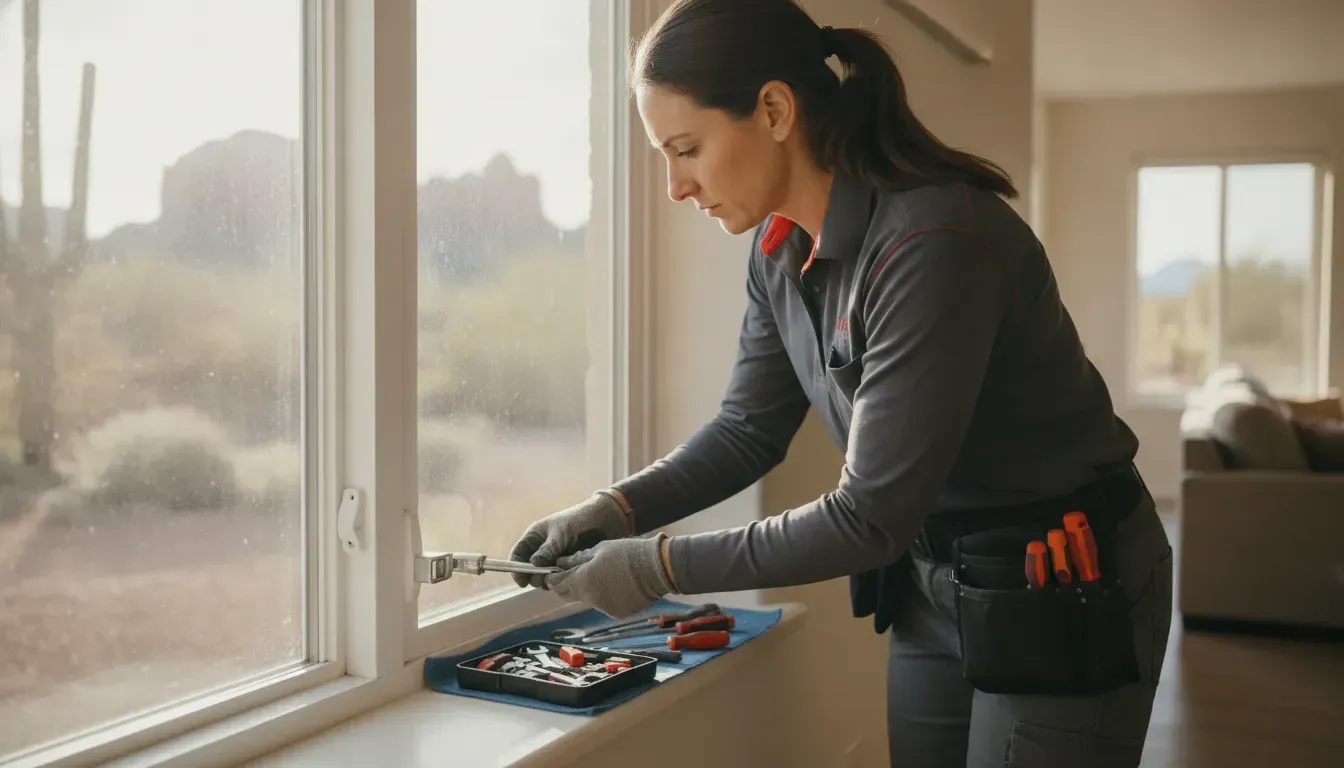
A window that no longer closes securely can turn a small hardware problem into a daily security concern. Before ordering a replacement, identify whether the issue is a worn lock, a damaged keeper, misalignment, or a larger problem with the window assembly. The right solution depends on the window style and the hardware already installed.
Request a residential lock assessment or call The LOCK Shop at (480) 452-4505.
Window lock replacement may restore dependable closure, but the correct part is not universal. Compare the existing hardware, how it engages, and the window's operation before choosing a replacement. If the fit or condition is uncertain, a professional assessment can help prevent damage or a lock that does not secure properly.
The LOCK Shop provides residential lock repair, replacement, installation, and security assessment services, with mobile technicians serving customer locations. Because window-lock capability can vary by hardware and job, call (480) 452-4505 to discuss your situation or submit a Request Service request. Start by looking for the warning signs that indicate the lock may no longer be doing its job.
What Are the Signs You Need Window Lock Replacement?
A window lock may need attention when it no longer holds the window closed consistently or becomes difficult to operate. These are general signs of failing or unreliable hardware, not a confirmation that a particular window-lock service or replacement part is available from The LOCK Shop. Window designs and existing assemblies vary, so the right solution may be an adjustment, repair, or replacement.
The lock feels loose or difficult to operate
A latch, handle, or other locking piece that wiggles more than it used to can indicate wear, loosened fasteners, or a problem with the surrounding hardware. Pay attention if the lock requires unusual force, catches intermittently, or becomes harder to turn, slide, or close. Do not keep forcing it, since pressure can make alignment or hardware damage worse.
The hardware no longer lines up
When a window closes but the lock does not meet its receiving piece, the issue may involve alignment, movement in the window, or worn hardware. A lock that appears to engage but releases easily deserves attention. The same is true if you must lift, push, or pull the window into a specific position before the lock works. Those symptoms suggest the assembly should be assessed rather than treated as a simple tightening job.
The lock is visibly damaged or does not engage
Cracks, bent metal, missing pieces, corrosion, or a broken handle are straightforward reasons to stop relying on the lock. If the mechanism moves without securing the window, or will not engage at all, keep the window closed when practical and arrange an assessment. A broken window lock can sometimes be replaced by itself, but the replacement must suit the window and the existing hardware. In other cases, a related latch, keeper, or larger assembly may also need attention.
Yes, just one window lock can sometimes be replaced. Whether that is appropriate depends on the hardware condition, fit, and how the window operates. For general residential lock concerns, you can review The LOCK Shop's residential lock repair services. Describe the symptoms and window type before work begins, and ask for confirmation of the available scope rather than assuming a specific replacement will fit.
How Do Window Locks Fail, and What Can You Check Safely?
If a window lock is broken, start by documenting what happens rather than trying to force the hardware. A lock that feels loose, does not engage, or prevents the window from securing may involve the latch, keeper, handle, or another part of the existing assembly. The safest first step is to preserve the condition of the window and gather useful information for a repair or replacement assessment.
- Observe the engagement. With the window in its normal closed position, move the lock only as far as it operates easily. Notice whether it engages fully, stops short, feels unusually loose, or moves without securing the sash. Do not repeatedly cycle a mechanism that is binding.
- Avoid forcing the window or lock. Do not use excessive pressure, tools, or improvised objects to make the lock engage. Forcing it can damage the frame, hardware, weather seals, or the window itself. If the window is difficult to close or appears out of alignment, leave it in the safest position available.
- Note visible damage. Look for a cracked housing, bent latch, missing fastener, separated keeper, or other obvious change. Limit this to a visual check. Do not remove covers, disassemble the lock, or take apart the window to identify the problem.
- Photograph the hardware. Take clear photos of the lock from inside the room, along with the closed window and any visible damage. If practical, include a wider view that shows the window type and surrounding frame. These images can help a professional understand the situation before an appointment.
- Stop when the window cannot secure. If the lock will not hold the window closed, the window can be opened from outside, or the hardware is damaged, avoid treating the opening as secure. Keep people away from the window as appropriate and arrange an assessment rather than improvising a temporary repair.
Can just one window-lock component be replaced? Sometimes, but the correct replacement depends on the window and the existing hardware assembly. A latch, keeper, sliding-window lock, or casement handle may not be interchangeable. Fit should be confirmed before purchasing a part or scheduling installation. A locksmith can review the visible hardware and explain whether repair, component replacement, or a broader assessment is the safer path.
Which Window Lock Replacement Path Fits the Window?
Window hardware is not interchangeable simply because two pieces look similar. A latch, keeper, sliding-window lock, or casement assembly may attach in a different location, engage a different counterpart, or depend on the way the sash moves. The right window lock replacement path starts with identifying the existing hardware and how it works, rather than choosing the closest-looking part.
Common window lock replacement paths
- Latch or keeper: A basic engagement point where one part catches or meets another when the window closes. Confirm: Whether the latch and keeper align, whether either piece is damaged, and whether the mounting pattern matches.
- Sliding-window lock: A lock used with a window that opens by sliding along its track. Confirm: The window's operating direction, available mounting space, engagement point, and the condition of the surrounding frame.
- Casement handle or multi-point assembly: A crank or handle-operated window where hardware may engage at more than one point. Confirm: How the handle operates the assembly, the visible mounting pattern, and whether the connected components move correctly.
- Professional assessment: A safer starting point when the hardware is unfamiliar, broken, difficult to access, or no longer engages. Confirm: The window type, existing hardware, alignment, mounting details, and whether replacement or repair is the better route.
Terms such as latch, keeper, and multi-point handle describe broad hardware categories, not guaranteed fits. A replacement that forces the window closed can leave the lock misaligned, strain the frame, or prevent reliable engagement. Avoid drilling new holes or modifying the assembly until the hardware and window operation have been assessed.
If you are unsure which component needs attention, gather clear photos without removing working hardware and seek advice before ordering. The LOCK Shop provides professional lock replacement services; ask whether your window-lock concern fits the documented service scope and whether an on-site assessment is appropriate.
What Should You Measure Before Replacing a Window Lock?
Useful information can make a window lock replacement assessment more efficient, but measurements alone do not prove that a replacement part will fit. Window styles, hardware assemblies, mounting points, and surrounding frames vary. Gather what you can safely observe, then let the window and existing lock guide the next step.
Start with photos and visible hardware details
Take clear photos of the lock from several angles, including one showing the hardware in relation to the window frame. A close-up can show whether you are looking at a latch, keeper, handle, or another part of the locking assembly. Photograph the opposite side of the window if it has matching hardware. These images may help a locksmith identify the general hardware category before an appointment.
Also note how the window operates. Record whether it slides, swings outward, swings inward, or uses another opening style. Observe whether the lock engages smoothly, only catches when the window is lifted or pushed, or fails to engage at all. Do not force the handle or remove a cover simply to expose hidden fasteners.
Record measurements only when they are safe to obtain
If the mounting area is fully accessible and stable, you may record visible spacing between screw holes. The approximate size of the hardware, and any exposed dimensions that a technician requests. Keep the measurements together with the photos and note where each measurement was taken. Avoid removing the lock, leaning out of a window, using a ladder, or placing pressure on a frame, sash, or glass to reach a measurement.
Look for manufacturer names, model information, or markings that are already visible on the hardware or window. Do not assume a matching appearance means matching compatibility. The existing assembly may include parts that are not interchangeable, and a forced fit can leave the window difficult to secure or operate.
Professional measurement is the safer choice when hardware is loose, damaged, concealed, difficult to reach, or connected to a window that does not open or close normally. The LOCK Shop can discuss general residential professional lock replacement services and help determine what information is needed for an assessment. A free over-the-phone estimate may be available, while the actual scope depends on the window, lock, access, and requested work.
How Does a Replacement Window Lock Improve Home Security?
A window lock contributes to security when it closes fully, engages consistently, and stays engaged without unusual force. A replacement can restore that basic function when the original lock is worn, damaged, loose, or no longer aligns with the frame. It cannot, by itself, guarantee a particular security rating or make every part of the window resistant to forced entry.
Start with reliable engagement
After a repair or replacement, close the window normally and check that the sash or panel sits in its intended position. The lock should engage in its designed way without excessive pressure, lifting, pushing, or repeated attempts. If you must force the handle or latch into place, stop rather than bending the hardware or stressing the frame. A lock that appears closed but does not fully engage may provide less protection than expected.
Make closing and checking windows part of your normal routine, especially before leaving home or going to bed. Do not rely on a replacement lock to compensate for a window that is left open, does not close squarely, or has a damaged frame.
Check the window around the lock
Security depends on more than the visible lock. A weakened frame, loose fasteners, damaged sash, or worn weather seal can affect how the window closes and how the hardware lines up. Weather seals also help limit drafts and moisture, so avoid compressing, cutting, or removing them simply to make a lock fit. If the replacement requires a forced fit or the window still moves after locking, the underlying issue may need attention before new hardware is installed.
For broader planning, homeowners can also review home security upgrade considerations, while keeping window hardware decisions specific to the existing window. A locksmith or qualified technician can help assess the condition of the lock and surrounding assembly when the cause is unclear. The LOCK Shop provides residential lock repair, replacement, installation, and security assessment services, but window-specific hardware capability should be confirmed before scheduling.
When Should You Call a Locksmith for Window Lock Replacement?
Professional help is appropriate when a window will not secure reliably, the hardware is visibly damaged, or the lock cannot be reached or operated safely. A window that appears closed but does not fully engage can leave a gap in your home's security, especially if the problem returns after a temporary adjustment.
Call for an assessment if the window is difficult to open, close, or align. Resistance may involve more than the lock itself, and forcing a replacement part into a misaligned assembly can damage the frame, sash, weather seal, or surrounding hardware. A technician can evaluate the condition of the visible lock and the way the window operates before recommending a repair, replacement, or other appropriate next step.
Situations that deserve an on-site assessment
- The lock is loose, broken, missing, or no longer holds the window closed.
- The hardware is inaccessible, stripped, or damaged in a way that makes removal uncertain.
- The window binds, shifts, or requires unusual force to operate.
- You are unsure which replacement component matches the existing window and hardware.
- You want a security assessment before changing locks in an older home or recently purchased property.
The LOCK Shop documents general residential lock repair, lock changes, new lock installation, and security assessments. Because window hardware varies by window design and existing assembly, describe the problem first rather than assuming a specific window-lock service or compatible part. Mobile technicians can assess customer locations when the job is appropriate, and the Mesa storefront can help with documented in-store needs.
Before contacting a locksmith, take clear photos of the lock and the closed window. Note what happens when you try to operate it, and avoid forcing or removing hardware that may be supporting the window. Sharing those details can make the initial conversation more useful. You can also review locksmith estimate factors so you know which job details may affect an estimate. The LOCK Shop offers free over-the-phone estimates, with the scope confirmed before work begins.
Need help deciding what to do next? Call The LOCK Shop at (480) 452-4505, or request service online for a planned assessment.
Frequently Asked Questions
Can you replace just a lock on a window?
Often, the failed component can be addressed without replacing the entire window, but the correct path depends on the window design and existing hardware. A locksmith can assess whether the issue involves the latch, keeper, handle, or a larger locking assembly before recommending repair or replacement.
What should you do if your window lock is broken?
Keep the window closed if it can be secured safely, and avoid forcing a damaged latch or using a temporary fix that prevents reliable engagement. Photograph the hardware and note whether the window opens, closes, and aligns normally. If the opening cannot be secured, request a professional assessment promptly.
What information helps with window lock replacement?
Useful details include clear photos of the lock and the window edge, the window type, visible screw locations, approximate hardware dimensions, and any manufacturer information. These details help narrow the replacement path, but they do not guarantee compatibility. A professional measurement is safer when the hardware is unusual, damaged, or difficult to access.
When should a locksmith handle the replacement?
Professional help is appropriate when the lock does not engage, the window is misaligned, the hardware is visibly damaged, or you cannot identify a compatible replacement. The LOCK Shop provides residential lock repair, replacement, installation, and security-assessment services, although window-specific hardware capability should be confirmed for your situation. Call (480) 452-4505 for a phone-first discussion or request service for planned work.
Schedule Your Window Lock Assessment
If a window lock is difficult to operate, does not engage reliably, or needs a closer look. A residential lock assessment can help clarify the safest next step without assuming a particular replacement will fit. For planned replacement guidance, contact The LOCK Shop at (480) 452-4505. Share the window type, what you have observed, and any photos or measurements available so the team can discuss the appropriate path.