October 5, 2026
Learn how to choose a file cabinet lock, handle lost keys, strengthen office key control, and know when a Mesa locksmith should assess the cabinet.

A locked file drawer is a small control with a large role in an office. It can help limit casual access to personnel records, financial paperwork, client information, and other materials that should not be left open when a desk is unattended.
Request a file cabinet lock assessment or call The LOCK Shop at (480) 452-4505.
Security needs are also shaped by the type of records you keep. Federal regulations identify locked metal file cabinets or a locked room as possible safeguards for certain sensitive records when the applicable requirements call for them (eCFR). The practical question is not simply whether a cabinet can be locked. Authorized staff must also be able to use it reliably without unnecessary disruption. This guide explains what to check before choosing a replacement, what to do when a key is lost, and when professional service makes sense.
Why a file cabinet lock matters in an office
Office cabinets often hold more than routine paperwork. They may contain personnel records, customer information, contracts, financial documents, keys, or supplies that should not be available to everyone who enters the workplace. A file cabinet lock creates a physical access boundary, helping an office control who can open a drawer or cabinet when staff are away from their desks.
That boundary matters even when a business already uses passwords, alarms, or electronic access controls. Digital safeguards do not secure paper records by themselves. For certain records covered by the Privacy Act, federal rules state that access during non-working hours must be restricted by storing them in locked metal file cabinets or a locked room. The rule does not mean every office cabinet has the same legal requirement, but it illustrates why secure storage belongs in an office's overall security plan. Read the cited eCFR rule for its specific language and scope.
In practical terms, a file cabinet lock is the cabinet's physical locking mechanism. Depending on the furniture, it may secure one drawer, several drawers, or a larger cabinet through a connected mechanism. Its job is not to replace sensible access policies. Instead, it supports them by keeping routine users, visitors, and unauthorized staff from reaching stored materials without permission.
Match the level of control to the contents
Not every drawer needs the same level of restriction. An office might keep common supplies in a cabinet used by several employees while limiting access to records that contain confidential or sensitive information. Separating those uses can make daily work easier without treating every item as if it required the same controls.
For managers who need dependable security with minimal disruption, the right starting point is an accurate assessment of the cabinet, its contents, and normal users. The LOCK Shop documents commercial cabinet and file locks among its office security services, with scope confirmed before work begins.
What types of file cabinet locks are available?
A file cabinet lock can be built into the cabinet, added as an external security device, or connected to the way several drawers operate together. The right choice depends on the cabinet's construction, the number of drawers, the location of the existing lock, and how your office manages keys or combinations. There is no universal file cabinet lock that fits every cabinet, so identify the cabinet model and inspect the hardware before ordering a replacement.
What to check before choosing
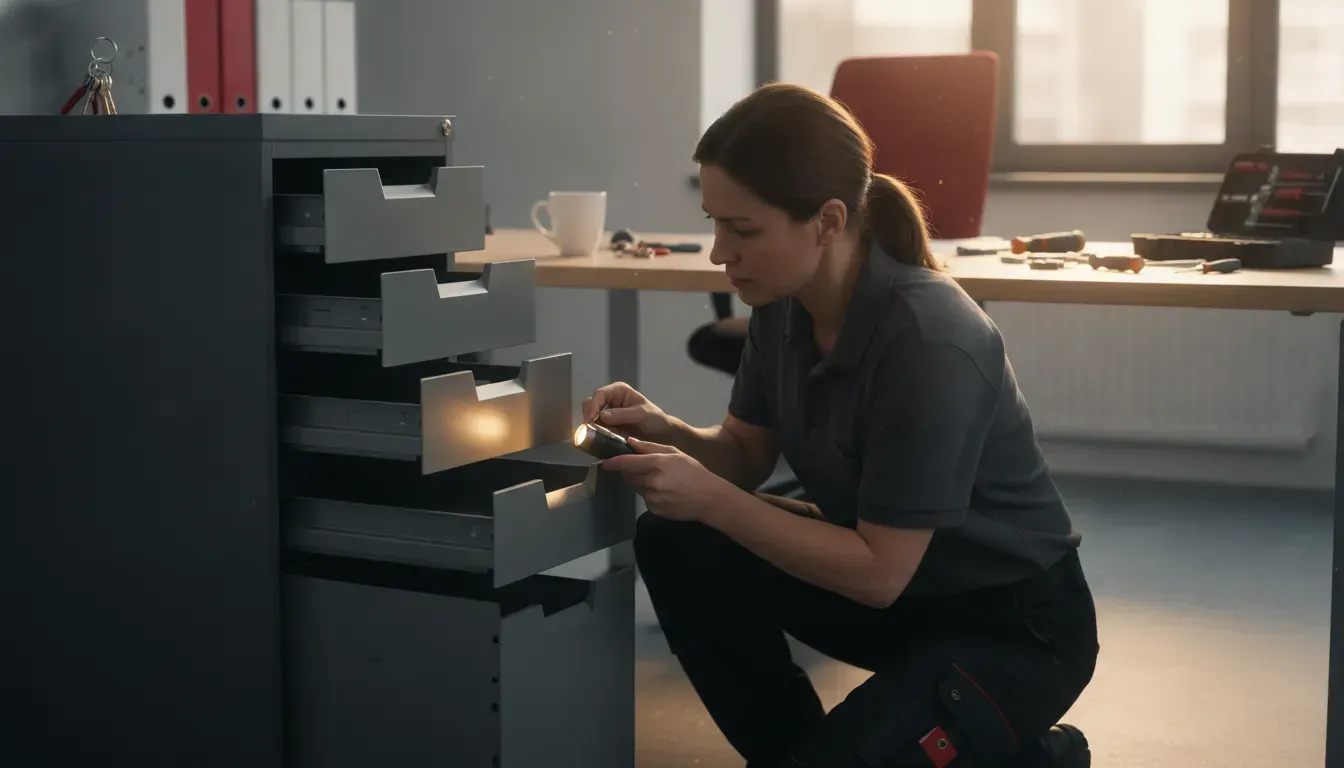
Look at whether the lock is mounted in the handle, front panel, side, or an external bar. Note whether one key controls several drawers, whether the drawers close and align normally, and whether the cabinet must remain accessible during a replacement. Avoid forcing a stiff mechanism or selecting a lock based only on a similar-looking photo. An inspection can distinguish a worn cylinder from a misaligned locking component and can prevent an incompatible purchase.
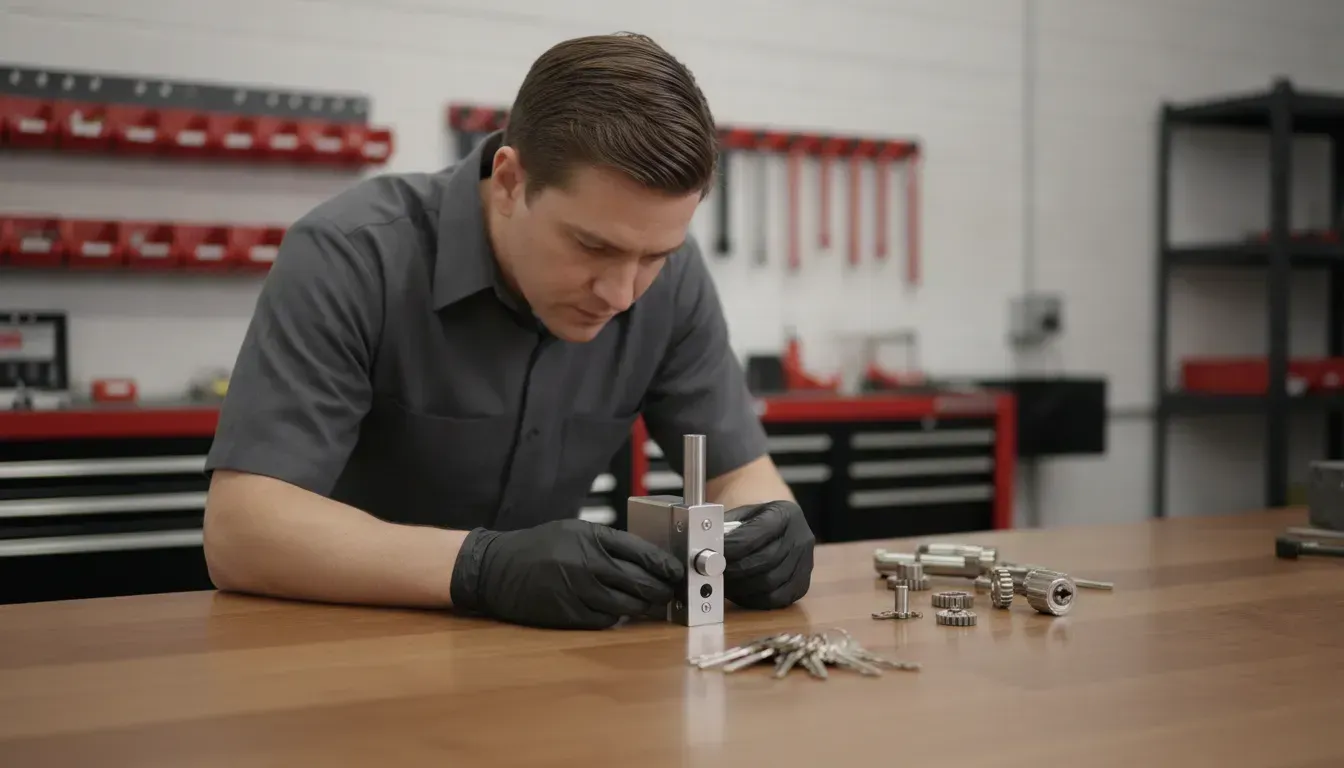
For offices managing several cabinets or sensitive records, a locksmith can discuss the practical difference between replacing a lock, rekeying an existing one, and planning broader key control. The LOCK Shop provides commercial cabinet and file locks service, with the final recommendation based on the cabinet design and the office's access needs.
How do you choose a replacement file cabinet lock?
Start with the cabinet itself rather than choosing a replacement from a picture or a general product description. A file cabinet lock is part of the cabinet's physical design, so the lock location, surrounding material, and drawer mechanism all affect what service or replacement may be appropriate.
- Inspect the cabinet material and lock location. Note whether the cabinet is metal, wood, or another material. Look at whether the lock is mounted in a drawer front, side panel, central locking point, or another part of the cabinet. Record the lock's visible shape and position, but do not assume a similar-looking lock will fit.
- Check how the drawers behave. Are all drawers closing fully? Does one drawer bind, sit out of alignment, or prevent the cabinet from locking? A cabinet that does not close correctly may need more than a lock change. Do not force a key, handle, or drawer to test the mechanism.
- Identify the key or code situation. Determine whether the original key is available, whether more than one key is in circulation, or whether the cabinet uses a combination or another control method. If a key is missing, note that before requesting service. Avoid drilling, forcing, or attempting a bypass.
- Consider access continuity. Decide which records must remain available and whether the cabinet can be taken out of service during the visit. For an office with several cabinets, list each cabinet separately and identify shared access needs. This helps the technician assess whether a lock change, rekeying, or another service option should be discussed.
- Confirm the service needed. The LOCK Shop documents cabinet, file, and desk locks as commercial services, along with commercial lock changes and rekeying. These are distinct options, and the right choice depends on the cabinet and its existing hardware. Review the lock replacement and service options, then provide cabinet photos, measurements, and the lock's location when requesting an assessment.
Compatibility cannot be guaranteed from a description alone. A professional can evaluate the cabinet before recommending a replacement, especially when the lock is damaged, the key is unavailable, or several drawers must continue working together. The goal is a secure, workable solution that fits the cabinet's design without disrupting office access more than necessary.
What should you do if a file cabinet key is lost?
A lost key can create both an access problem and a records-management concern. Before trying to solve it yourself, slow down and treat the cabinet as a security device. The goal is to protect the contents, preserve the lock, and make sure the person requesting access is authorized to open or change it.
If the key later turns up, keep it under the office's normal key-control process instead of making untracked copies. If it does not, a professional can explain the available next steps after reviewing the cabinet and lock.
How can an office improve file cabinet key control?
Good key control starts with knowing which cabinets exist, what each one stores, and who is responsible for access. Create a simple inventory that records the cabinet location, department, type of records or supplies inside, number of keys issued, and the person who approves access. Keep the inventory itself protected, since it can reveal where sensitive materials are stored. Review it when cabinets move, departments change, or a lock is replaced.
Assign responsibility instead of leaving keys in an untracked desk drawer or shared cup. A department lead, office manager, or designated records custodian can maintain the issue log and confirm when a key is returned. Staff should know that keys are for authorized business use, should not be loaned casually, and should be reported promptly if lost, damaged, or copied without approval. Where practical, use a sign-out process for temporary access and keep permanent assignments current.
Limit unnecessary duplicates
More copies do not automatically mean better access. Duplicate only the keys the office actually needs, and document who receives each one. Before authorizing another copy, check whether the request reflects a lasting role or a short-term need. A locksmith can help assess the existing file cabinet lock and explain available lock-change or rekeying options when the key list no longer matches the office team.
Employee departures deserve a specific offboarding step. Collect assigned keys before the person leaves, reconcile them with the inventory, and ask whether any keys are missing or may have been duplicated. If access cannot be accounted for, consider a professional review rather than relying on an informal promise that the key will not be used. This is especially important for cabinets containing personnel files, financial information, client records, or controlled supplies.
For one or two cabinets, a clear inventory and responsible key holder may be enough. When an office has multiple cabinets, departments, or locations, broader planning can reduce administrative gaps. A locksmith can review the hardware and discuss whether a master-key approach or another key-control option is appropriate. Do not assume that one keying arrangement will work across every file cabinet. See this guide to commercial locksmith security planning for related access-control considerations.
When should a locksmith handle the work?
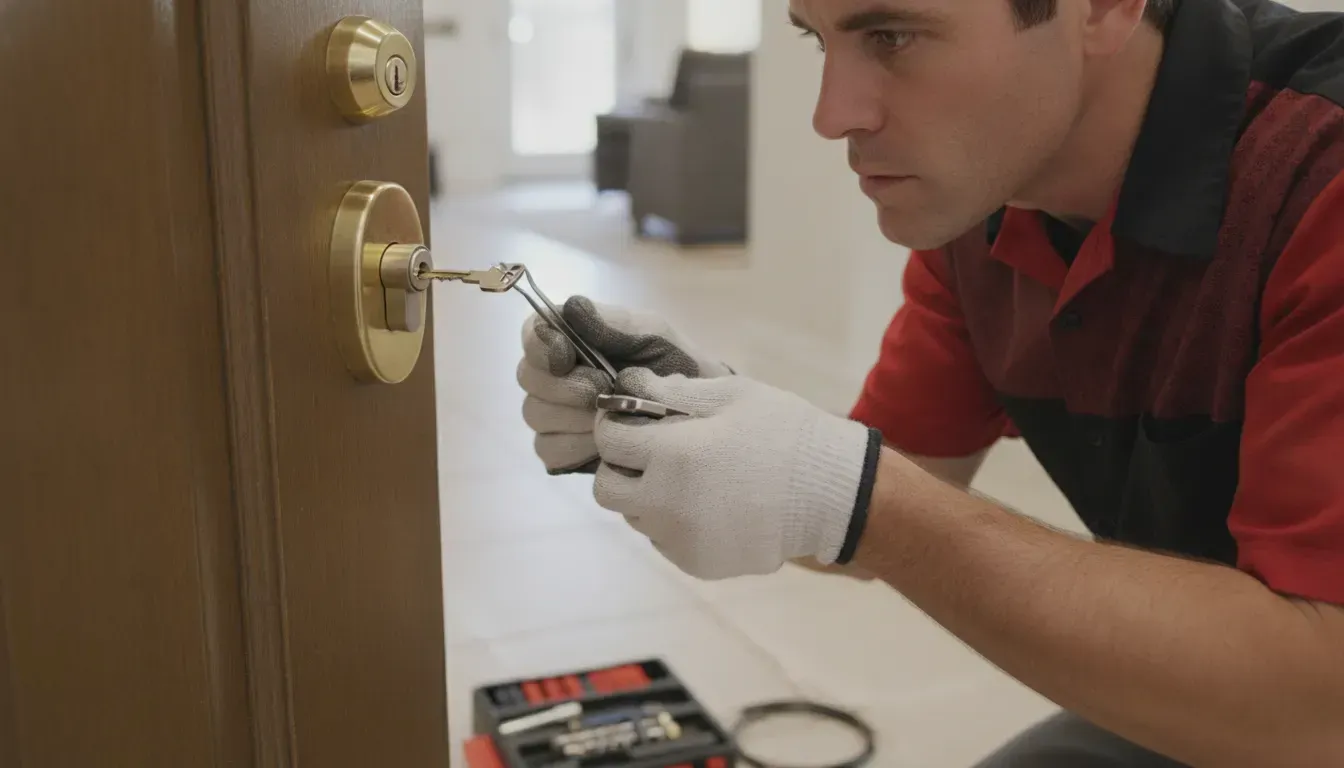
A locksmith should handle a file cabinet lock problem when the lock no longer operates normally, the key is missing, or you cannot confidently identify a suitable replacement. A cabinet that will not lock, unlock, or release its drawer can interrupt access to records and supplies. Trying to force the mechanism may damage the cabinet or leave the contents less secure. A professional assessment helps determine whether the appropriate next step is a lock change, rekeying, or another service option without assuming that one replacement fits every cabinet.
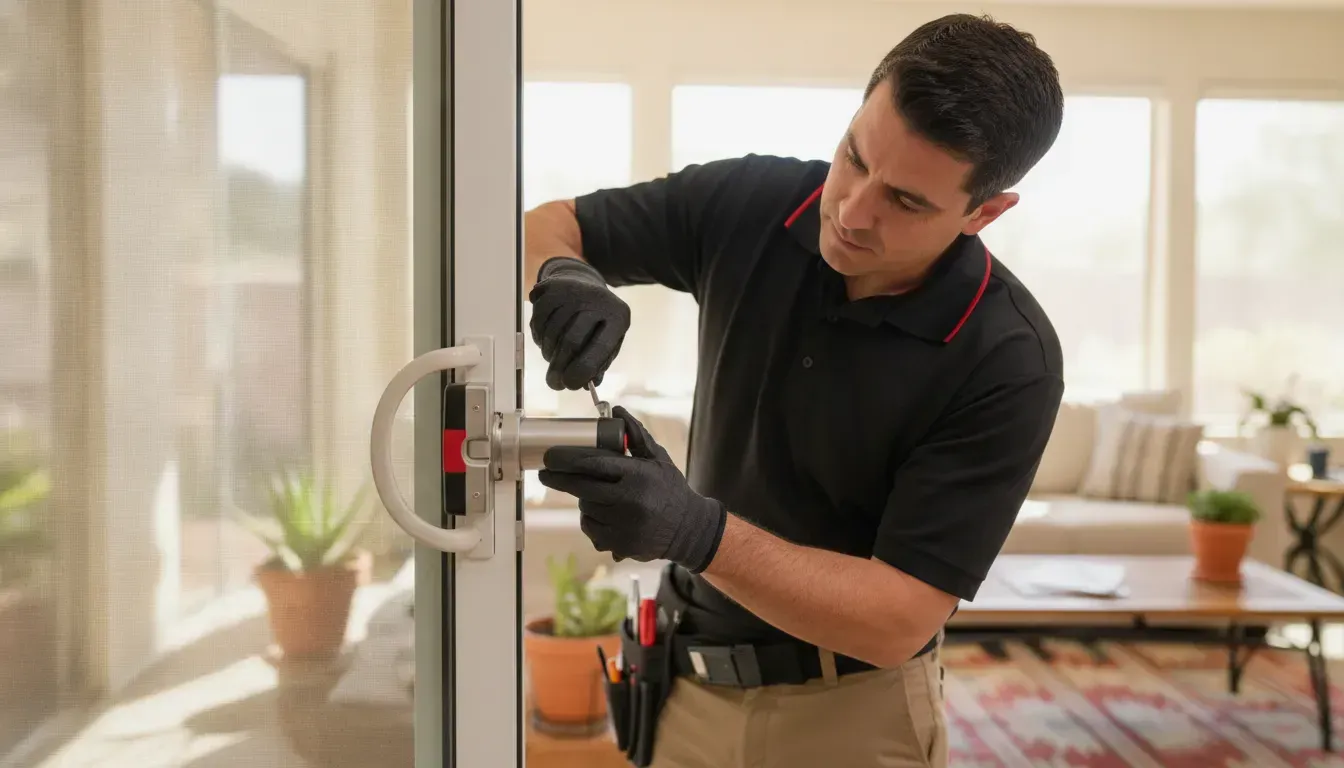
Professional help is also sensible when the cabinet's design or condition is unclear. Different office cabinets can place the lock in different positions, use different operating arrangements, or connect the lock to more than one drawer. If you are unsure about the replacement size, the lock position, or how the drawers should operate together, a locksmith can inspect the cabinet before work begins. The LOCK Shop's commercial service portfolio includes cabinet, file, and desk locks, along with commercial lock changes and rekeying. You can review the available commercial cabinet and file locks services before requesting an assessment.
Call for professional help when several cabinets need attention at once. Replacing or evaluating one lock may be manageable, but a group of cabinets introduces more opportunities for mismatched keys, inconsistent access, and lost work time. This is especially important during an office move, a change in property management, staff turnover, or an effort to organize access across multiple storage areas. A locksmith can discuss the scope, document what needs attention, and explain the options that are actually appropriate for the cabinets on site.
Need help with more than one cabinet? Share the cabinet count and access problem through Request Service before ordering replacement hardware.
Frequently Asked Questions
Can you replace the lock on a file cabinet?
Often, yes, but the right replacement depends on the cabinet, lock position, and how the drawers operate. A locksmith can inspect the existing hardware and discuss whether a lock change or rekeying is the more appropriate option. The LOCK Shop handles cabinet, file, and desk locks as part of its commercial services.
Are file cabinet locks universal?
No. File cabinets vary in construction, lock placement, dimensions, and locking mechanisms, so a replacement should not be assumed to fit based only on appearance. Record the cabinet details and have the hardware assessed before ordering a replacement. This helps avoid a part that cannot be installed or does not secure the drawers correctly.
What should I do if a file cabinet key is lost?
First, confirm who is authorized to access the records and secure the cabinet area. Avoid forcing the drawer or drilling into the lock, since those actions can damage the cabinet and its contents. A locksmith can assess the lock, explain the available service options, and help restore controlled access without guessing at the cabinet's design.
What is the best way to control file cabinet keys?
Keep a current key inventory, limit duplication, assign responsibility for each key, and update access when staff roles change. If an office has multiple cabinets or broader access needs, a commercial locksmith can discuss key-control planning. Those options may not fit every cabinet, so the hardware should be reviewed first.
Plan a file cabinet lock service visit
A clear assessment helps you choose the right next step when an office cabinet lock needs service, replacement, or key-control review. Share the cabinet details through Request Service, or call The LOCK Shop at (480) 452-4505 for a free over-the-phone estimate. The Mesa storefront also supports key cutting, duplication, product sales, and pickup when those services fit the situation.