
Published article
Multipoint Lock: How It Works and When to Repair
Learn how a multipoint lock works, which symptoms point to alignment or a bad gearbox, and what to ask before repair or replacement.
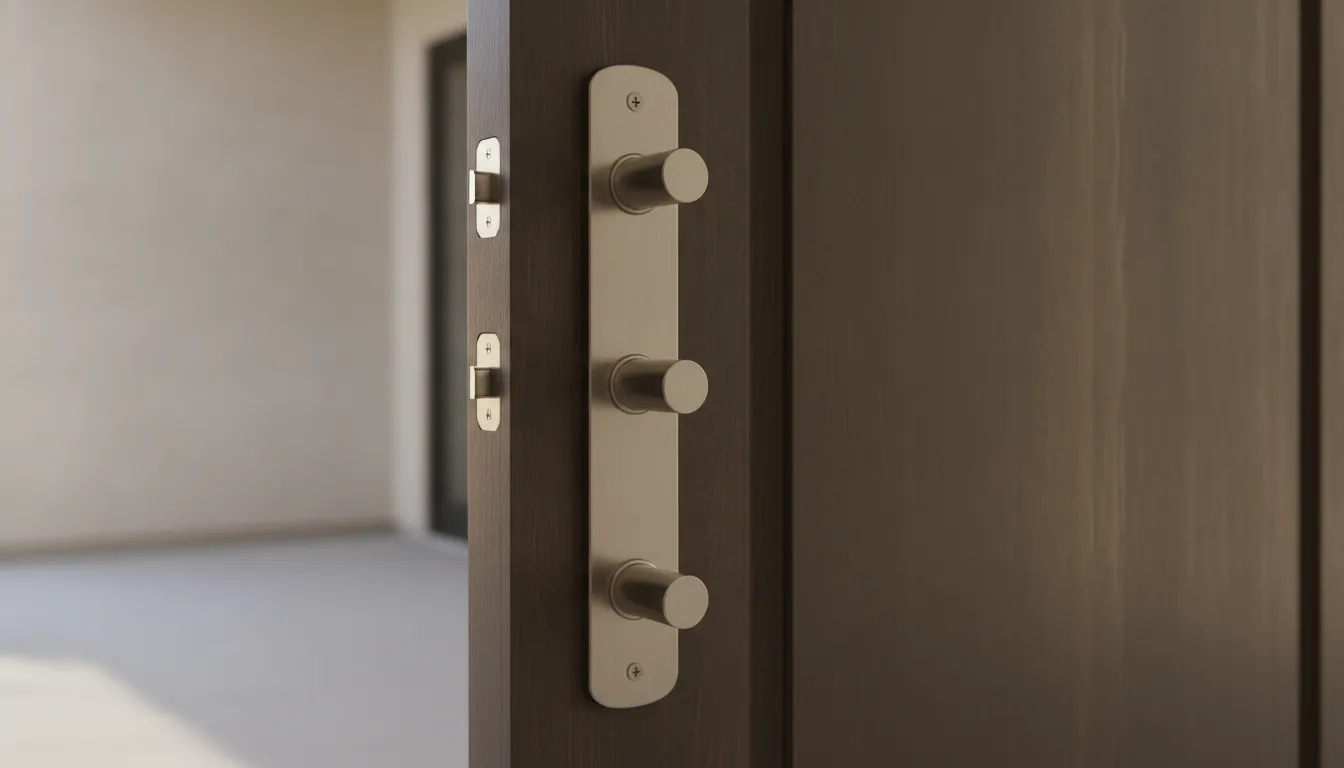
A door that feels secure at the handle can still have a problem at the top or bottom of the frame. Tall hinged entry and patio doors often use hardware that engages more than one point. A small alignment change can then make the handle stiff or the key seem useless.
Call (480) 452-4505 or request locksmith service if the handle will not lift or a bolt is stuck out.
A multipoint lock secures a door at several places along the frame, usually with bolts, hooks, or rollers driven by one handle or key action. Common trouble signs include rubbing, a handle that will not lift, one bolt missing its strike, or a key that turns without moving the mechanism. Repair may make sense when the door, gearbox, rods, and strikes are an identifiable matching set. Replacement depends on their condition and compatibility, not on adding a standard deadbolt.
Before choosing either option, it helps to understand what the hardware is doing and which parts you can identify without forcing the door. The layout of the lock explains why alignment matters, which symptoms point to the frame, and what details to record before asking for service.
What a Multipoint Lock Actually Does
A multipoint lock secures a door at more than one place along the frame. It does not rely on one latch near the handle. The mechanism can engage bolts, hooks, or rollers near the top, middle, and bottom of the door. The points are connected through the lock case and door-edge hardware, so one handle or key action operates them together. As Adams Rite's explanation of multi-point locking describes, this arrangement distributes the door's holding points along its height.
Many hinged entry doors use a three-point layout, and some hinged patio or French doors use similar hardware. A sliding patio door is a different hardware family, so its lock should not be treated as a multipoint entry lock. On a hinged door, look for a long faceplate on the edge and a center gearbox behind the handle. Extra bolts, hooks, or rollers line up with strike plates in the frame.
A standard single deadbolt, by contrast, holds the door at one location, usually near handle height. The top and bottom of a taller door are not secured by that deadbolt. Some systems need the handle lifted before you turn the key or thumbturn. Others drive every point with one turn. If the handle is not lifted when required, the key may not complete the locking action.
A lab rating on a lock does not tell you whether your door still meets the frame. Door construction, how the hardware was installed, and whether the frame has moved all change what you feel at the handle. Treat a stiff handle as a door-and-lock problem, not as proof the hardware has failed.
If you want the wider survey of hardware, start with types of door locks. The distinction that matters here is narrower. A single deadbolt holds one spot. A multipoint system uses one operation to secure several spots on a hinged door. Trim, hinges, and strikes still have to match that door, which is the point of a separate door hardware guide.
Parts You Can See Along the Door Edge
Open the door and look at its narrow edge. A multipoint lock usually has a long metal faceplate running much of the door's height. This plate covers the locking strip and helps guide the moving parts. Near the handle, the center gearbox contains the mechanism that transfers movement to the locking points above and below it.
At the upper and lower ends, you may see shootbolts, hooks, or rollers. These extend into matching strike plates installed in the door frame. The strikes are easy to overlook because they sit in the jamb rather than on the door itself, but their position matters. A bolt or hook can be in good condition and still work poorly if it no longer lines up with its strike.
The visible trim includes the handleset and the lock's cylinder or thumbturn. The cylinder is the part that accepts a key. A thumbturn lets someone operate the lock from inside without a key. Together with the handle, these controls operate the gearbox and the points at the top and bottom of the door.
Two ways the lock may operate
Some doors use a lift-to-lock arrangement. You raise the handle first, then turn the key or thumbturn. Other sets use one turn of the key or thumbturn to drive the entire gearbox. Older doors may have a separate bolt at each locking point. If the handle feels resistant or the key turns without moving the lock, do not force it. The problem may involve alignment, the gearbox, or a connecting rod.
Measurements a technician uses
Two measurements help identify a replacement or repair set. Backset is the distance from the door edge to the centerline of the lock. PZ is the distance from the handle spindle to the center of the cylinder. These measurements are useful identification details, not numbers a homeowner should guess from memory. Faceplate length, the style of the top and bottom points, and the strike layout also separate one set from another. So do the door's material and thickness.
Photos of the door edge, the handleset, and the frame strikes give a locksmith a better starting point. Describe what the door does and whether it closes squarely before asking about service.
Common Multipoint Lock Problems
Multipoint hardware can show several warning signs before the door stops securing properly. Compare what you notice with the possibilities below, but avoid treating the table as a diagnosis. The lock may have a mechanical fault, or the door and frame may no longer be meeting squarely.
| Symptom | What you can observe | What it often points to |
|---|---|---|
| Handle will not lift. | It stops or will not spring back. | Alignment or gearbox. |
| Bolt stays out. | The door will not close. | Rod or strike. |
| Only one point engages. | The top or bottom does not lock. | Rod, gearbox, or alignment. |
| Grinding at the edge. | You hear noise as the handle moves. | Alignment or gearbox. |
| Key turns freely. | No bolt moves. | Cylinder or gearbox. |
| Door feels loose. | The top or bottom moves. | Strike or alignment. |
| Uneven weatherstripping. | You see gaps or uneven compression. | Alignment or strike. |
When alignment may be involved
If the handle is harder in one season than another, watch the door and frame. The same is true when the top or bottom bolt rubs while another point works. In Arizona, heat-related movement or a settling frame can pull a tall door out of square, leaving a bolt short of its strike. Rubbing at the top or latch side, a loose hinge, or weatherstripping that compresses on one side but not the other can support that explanation.
Do not force the handle, hold it down against resistance, or grind the door edge. Forcing a stuck shootbolt can bend the connecting rod, turning an alignment issue into a hardware repair. Do not remove the gearbox. Matching the rods, strikes, and cylinder is part of the repair, not a first step at the door.
A key problem can be separate
A key that turns without moving the lock may involve the cylinder or the gearbox. If the key has actually snapped inside the cylinder, that is a separate problem. See broken key stuck in a lock instead of forcing the remaining piece.
Before requesting help, note whether the door still closes squarely and take photos of the door edge, face, and frame strikes. Describing the symptom and hardware can help determine whether the lock can be serviced without damaging the door.
Checks to Make Before You Force the Handle
- Look for rubbing. With the door closed, check the top edge and latch side for fresh scuffing or places where the door appears to press against the frame. A small shift can keep a multipoint lock from lining up with its strikes. Do not force the handle to overcome that resistance.
- Check the hinges. Confirm that the visible hinge screws are snug. Do not remove the hinges or make major adjustments. The goal is only to notice whether a loose screw may be contributing to a door that sits out of square.
- Test the closing action without lifting the handle. Let the door close normally and see whether it meets the frame and latches without having to lift it by the handle. If you must lift, pull, or push the door to make the lock operate, note that symptom rather than repeatedly trying it.
- Observe the lock edge. From the door edge, note whether one bolt or hook is sitting proud of the faceplate while the others appear retracted. A shootbolt that is sticking out can indicate an alignment or hardware problem. Do not bend a shootbolt back in, and do not try to push it into place with force.
- Stop before opening the lock body. Do not remove the gearbox, pry at the faceplate, plane the door edge, or grind any part of the door. Those steps can damage the door and the connected rods, and they can turn a serviceable repair into a larger replacement problem. If you are locked out, contact emergency lockout help instead of experimenting with the mechanism.
Repair or Replace: What Actually Decides It
The decision is not based on one loose handle or a single bolt. Repair is realistic when the gearbox, connecting rods, and frame strikes are an identifiable current set and the door still closes squarely. In that situation, the problem may be limited to alignment, a worn component, or a part that can be matched to the existing hardware.
Replacement becomes more likely when the gearbox is broken, the needed parts are obsolete, or the rods are bent. A bent rod can keep one locking point from moving with the others. A failed gearbox can leave the handle, key, or thumbturn turning without driving anything. Forcing the handle can make the damage worse, so describe the symptom and stop when the hardware resists.
Before changing anything, note the markings on the door-edge faceplate and its overall length. Also note the backset and the PZ measurement from the handle spindle to the cylinder. It also helps to identify whether the moving points use tongues, hooks, or rollers, and whether the door still closes squarely. Photos of the door edge, the handle side, and each strike can help identify a compatible set. The LOCK Shop has not published a multipoint parts list, so do not assume that a visually similar replacement will fit.
A standard deadbolt is not a drop-in substitute for a multipoint lock. It secures the door at one location and requires different door preparation; installing one is not simply a matter of removing the existing faceplate. If you are comparing ordinary entry hardware, see these front door lock options. That guide is about choosing a lock, not about repairing this one.
The LOCK Shop publishes no multipoint price because the hardware condition, measurements, door material, and available replacement parts affect the work. The shop can review the description and say whether the hardware may be serviceable. See what affects a locksmith quote for the details that make an estimate useful.
Questions to Ask Before Changing the Hardware
A useful request describes the door and the symptom. It does not start with a guessed part number. The LOCK Shop has not published a multipoint parts catalog. A photo and a few measurements do more than a brand name copied off a similar handle.
What to look for on the door
- Faceplate marks. Look for a maker's name, a model stamp, and any handing mark on the long plate at the door edge. Do not scrape paint off to find one.
- Faceplate length. Note whether the plate runs most of the door height or only through the middle. A short plate and a full-height plate are not the same set.
- Backset and PZ. Backset is the distance from the door edge to the center of the handle hole. PZ is the distance from the handle spindle to the cylinder. These are identification measurements. Leave the guessing to the person matching parts.
- What actually moves. Say whether the extra points are straight tongues, hooks, or rollers. A hook that grabs a strike is not a roller that presses into one.
- The door itself. Note the material, an approximate thickness, and whether it is a single hinged entry door or a pair of French doors. A sliding patio door is different hardware.
- How it closes. Say whether the door meets the frame evenly with no one lifting it, or whether the top or latch side rubs.
Photos that save a second trip
Four pictures usually cover it. Photograph the full door edge, both faces, and each strike, including the top and bottom. Include any stamp on the faceplate. If a bolt is stuck out, photograph that before anyone pushes on it.
Bring that description to a shop that already works on home hardware. Residential locksmith services at The LOCK Shop cover rekeying, lockouts, mailbox locks, storm-door hardware, jamb and strike work, and keypads. Multipoint service is a question to ask about your specific door, not a line item with a published price. The Mesa shop is at Power and Southern, and the mobile vans cover the East Valley.
Frequently Asked Questions
What is a multipoint lock?
It is entry hardware that secures a hinged door at more than one place along the frame, usually at the top, middle, and bottom. One handle lift or one turn of the key or thumbturn drives the points together through a gearbox and connecting rods. A sliding patio door lock is a different mechanism.
What are the common problems with multipoint door locks?
The handle may refuse to lift or spring back. One bolt may stay out so the door will not close. Only one point may engage. Grinding, a key that turns with no movement, a loose top or bottom, and uneven weatherstripping are the other patterns worth noting. Misalignment is a frequent cause. Forcing the handle can bend a rod.
What is the difference between a single-point lock and a multi-point lock?
A single-point lock, such as a standard deadbolt, holds the door in one place near handle height. A multipoint lock holds it in several places from one operation. The deadbolt does not replace the multipoint set without a different prep cut into the door.
When should a multipoint lock be repaired instead of replaced?
Repair is the realistic path when the gearbox, rods, and strikes are a matching set you can still identify, and the door still closes square. Replacement of the lock set is more likely when the gearbox is broken, the rods are bent, or the parts are no longer made. The shop publishes no multipoint price because the door and the parts decide the work.
What should I photograph before asking a locksmith about a multipoint lock?
Photograph the door edge, both faces, each strike, and any stamp on the faceplate. Note the faceplate length, whether the extra points are tongues, hooks, or rollers, and whether the door rubs. That is more useful than a brand name taken from the handle alone.
Talk Through the Door Before Anyone Orders Parts
Describe the door, the symptom, and what you photographed. A locksmith can tell you whether the hardware looks serviceable before anyone pulls the gearbox apart. The LOCK Shop has not published a multipoint price list. Describe your door instead of guessing at a replacement.
Request locksmith service and include the door type and what the handle is doing.