Published article
Front Door Locks: A Homeowner’s Buying Guide
Find out how to choose front door locks that fit your home, security needs, and style. Compare types, features, and tips for easy installation.
A front door lock should support your security plan, not create another daily headache. If the key sticks, the deadbolt stops short, or the door only locks when you pull it upward, the problem may involve the frame or alignment rather than the lock alone. Homeowners replacing older hardware also need to weigh mechanical strength against modern convenience. Keypad and smart front door locks can simplify access for families, caregivers, renters, and service providers. Traditional deadbolts remain a dependable choice for people who prefer simple operation. This guide covers what to look for, how to check compatibility, and when professional installation makes sense.
Key Takeaways
- Match the lock to your door and lifestyle: Check the door’s measurements, frame condition, access needs, and preferred entry method before choosing keyed, keypad, smart, fingerprint, mortise, or multipoint hardware.
- Secure the entire entry system: Pair exterior knobs or levers with a quality deadbolt, reinforced strike plate, sturdy screws, and proper alignment for dependable protection.
- Use professional support when needed: The LOCK Shop provides front door lock installation, repair, replacement, rekeying, smart lock setup, and emergency mobile service throughout Mesa, the East Valley, and nearby Phoenix Metro communities.
What Types of Front Door Locks Can You Choose?
Front door locks come in several designs, and each one suits a different home, door, and access routine. A homeowner who wants straightforward protection may prefer a keyed deadbolt. Someone managing frequent visitors, children, or deliveries may appreciate a keypad or smart lock. If appearance matters, a handleset can add style while coordinating with the rest of your entryway.
The right choice also depends on your door’s construction. Door thickness, backset, existing boreholes, edge bores, trim, and frame alignment all affect whether new hardware will fit. A lock that looks ideal online may not work with your current door without additional modifications. Measure the door and compare the existing hardware before purchasing, or have a locksmith inspect it first.
Think about how people use the door every day. Do family members need quick, key-free access? Will you give codes to guests, cleaners, or tenants? Is there glass near the lock that could affect your choice? Do you need a fast interior exit during an emergency? Answering these questions will help you compare security, convenience, appearance, and cost.
The LOCK Shop provides residential lock services, including front door lock installation, repair, replacement, and rekeying for homeowners in Mesa and surrounding areas.
Single- and Double-Cylinder Deadbolts
Deadbolts use a solid bolt that extends into the door frame, making them a dependable choice for exterior doors. A single-cylinder deadbolt has a key cylinder on the outside and a thumb turn on the inside. This design is common because it offers a practical balance between security and a quick interior exit.
A double-cylinder deadbolt requires a key on both sides. It can make a door harder to open through nearby glass because someone cannot simply reach inside and turn the lock. However, it may slow evacuation if the interior key is missing or not readily available. Check applicable safety requirements before installing one.
For either type, installation matters as much as the lock itself. A reinforced strike plate, long screws, and a properly aligned frame help the bolt resist kicking, prying, and other forced-entry attempts. A locksmith can also confirm that the bolt extends deeply enough into the strike and operates smoothly.
Keyed Entry Sets and Handlesets
A keyed entry set combines an exterior handle with a key-operated lock. Handlesets typically include a decorative grip on the outside and a separate deadbolt above it. They are popular for front doors because they provide a finished look while offering a wide range of styles, shapes, and finishes.
When selecting a handleset, check whether the deadbolt is included. Some packages contain only the handle and latch, while others include matching deadbolt hardware. If the lower handle has a locking button, treat it as a convenience feature rather than your primary security measure unless the product is specifically designed and rated for exterior use.
Handlesets work well when you want front door hardware to complement your entryway. Match the finish to your door light, house numbers, or other exterior fixtures, but make security the first priority. The handle should support the door’s daily function, while a properly installed deadbolt and reinforced strike provide the main resistance against forced entry.
Knob and Lever Locks
Knob locks place the handle and locking mechanism in one round unit. Lever locks use a horizontal handle that is easier to operate, especially for people with limited hand strength or mobility. Both styles come in many finishes and can work well on interior doors, side doors, and garage entries.
For a main exterior door, a knob or lever should generally work alongside a deadbolt rather than replace it. The lock cylinder sits inside the handle, which can leave it more exposed to force than a separate deadbolt. Consumer Reports recommends pairing knob locks with deadbolts instead of relying on a knob lock as the only exterior locking mechanism.
Consider the door’s daily use when comparing the two. Levers are easier to operate with an elbow or closed fist, while knobs may be less likely to catch on clothing or bags. Whichever style you choose, make sure the latch fully extends into the strike and the door closes without forcing the handle.
Smart, Keyless, and Fingerprint Locks
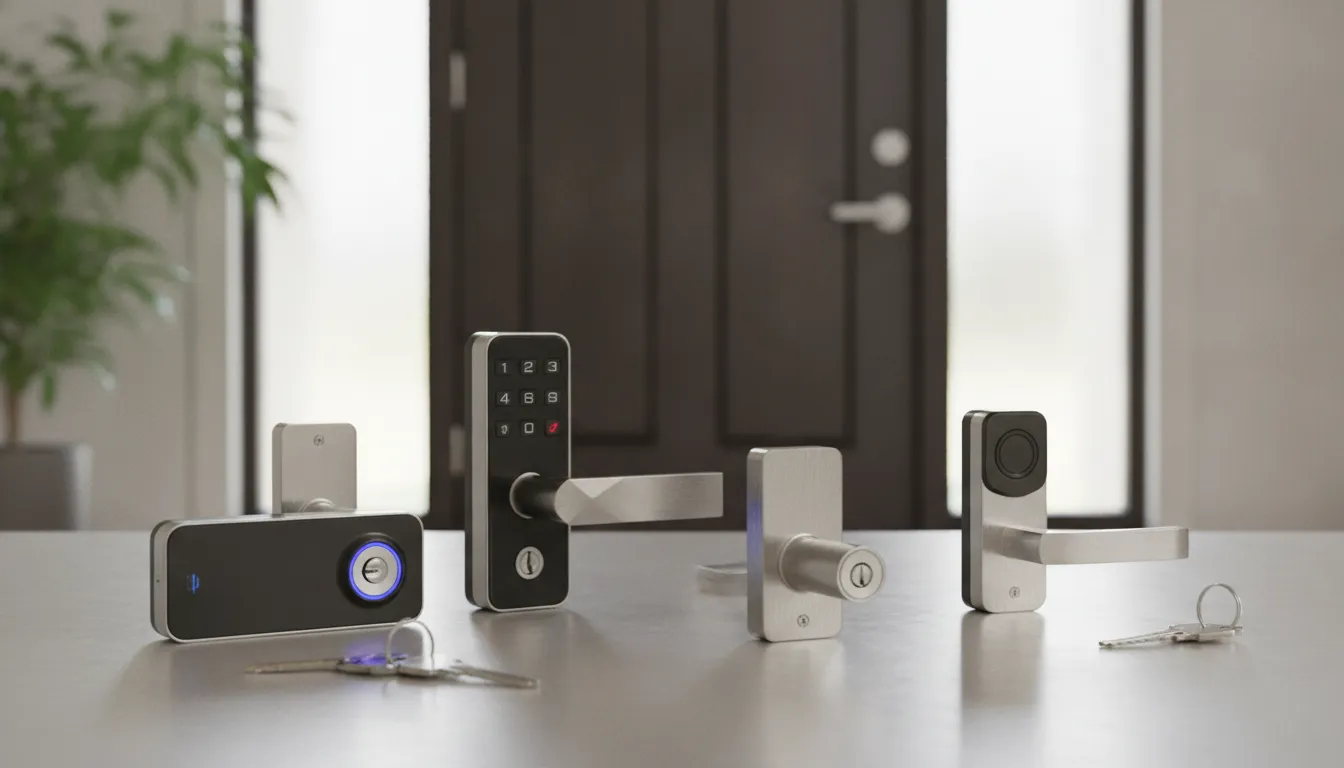
Smart locks replace or supplement a traditional key with a keypad, smartphone app, fingerprint reader, or another electronic credential. Depending on the model, you may be able to lock the door remotely, receive activity alerts, create temporary codes, or connect the lock to a voice assistant.
Keypad locks are useful for families, guests, cleaners, and contractors because you can assign a code instead of handing out a physical key. Fingerprint locks can make entry quick for approved household members, although performance may vary with wet, dirty, or damaged fingers. A smart lock should still include strong physical hardware, such as a durable bolt and secure strike.
Before buying, check the power source, battery warning system, and backup entry method. Some products support a physical key, an external battery connection, or emergency power contacts. Schlage compares smart locks with traditional deadbolts, including differences in remote access and mechanical operation.
Mortise and Multipoint Locks
Mortise locks fit into a pocket, or mortise, cut into the edge of the door. Their larger internal case can provide a sturdy locking system and may combine the latch, deadbolt, and handle in one assembly. You may see mortise locks on older homes, custom doors, commercial properties, and some high-end residential entries.
Multipoint locks secure a door at several locations, usually through bolts or hooks near the top, middle, and bottom of the frame. They are common on certain patio doors, tall entry doors, and European-style systems. When properly adjusted, this hardware distributes holding force across the door instead of concentrating it at one latch.
These systems are not always direct replacements for standard cylindrical locks. The door may need specific pockets, edge bores, trim, and hardware spacing. Mortise and multipoint repairs can also require specialized parts. If your home has this type of entry, photograph the door edge, face, and existing hardware before ordering a replacement.
Why Exterior Knobs and Levers Need Deadbolts
An exterior knob or lever is convenient, but it should not usually serve as the only lock on a front door. Because the cylinder is built into the handle, the hardware may be more vulnerable to force than a separate deadbolt. A deadbolt places a longer, stronger bolt into the frame and adds another layer between the outside and your living space.
For better protection, pair the knob or lever with a quality deadbolt that fits the door and frame. Look for a reinforced strike plate secured with appropriately long screws, and make sure the bolt extends fully when the door is closed. Anti-bump and anti-drill features may also be worthwhile, particularly if you want added resistance against common lock attacks.
Do not overlook maintenance. Loose screws, worn cylinders, dry components, and a door that rubs against the frame can make any lock harder to use. The LOCK Shop can assess your residential locks, repair alignment problems, rekey existing hardware, or recommend a replacement that matches your home and access needs.
Which Front Door Lock Fits Your Home?
The right front door lock depends on more than appearance. Start with how your household uses the entrance, who needs access, and what level of control you want over the home. A keyed deadbolt may suit a homeowner who prefers dependable mechanical security, while a keypad or smart lock can make daily entry easier for families, caregivers, and frequent visitors.
Your door’s construction matters just as much. Wood, steel, fiberglass, glass-paneled, and older doors may require different hardware or installation methods. Check the door thickness, backset, boreholes, frame condition, and available clearance before buying. A lock cannot compensate for a weak door or damaged frame, and smart features cannot make an existing deadbolt stronger if the hardware is vulnerable to forced entry. Consumer Reports recommends evaluating the underlying deadbolt instead of focusing only on a lock’s digital features.
Consider your budget, comfort with technology, and plans for the property. A homeowner may prioritize long-term simplicity, while a landlord may need temporary codes and remote access. If you are unsure which option fits, a locksmith can inspect the opening and recommend hardware that works with the door instead of forcing an incompatible lock into place.
Security and Household Access
Your front door is your home’s main access point, so choose a lock that matches your security concerns and household routines. A quality deadbolt paired with a reinforced strike plate and long screws can provide dependable protection, especially when the surrounding frame is solid. A keyed lock may be the right fit if you want a straightforward system that does not rely on batteries, internet service, or a mobile app.
Think about who enters the home regularly. Families with children may prefer a thumb-turn deadbolt that is simple to operate from inside. Homeowners who travel often may appreciate rekeying, remote alerts, or temporary access codes. Whatever you choose, the lock should protect the entrance without making everyday use frustrating. The residential lock services from The LOCK Shop can help you compare options based on your door and household needs.
Keys, Codes, Apps, and Biometrics
Front door locks offer several ways to verify entry. Traditional keyed locks are familiar and dependable, but you must keep track of physical keys and replace or rekey the lock if a key is lost. Keypad locks remove that concern by allowing entry with a personal code. Smart locks may add app control, remote management, activity notifications, and compatibility with voice assistants, features that Bayview Windows describes as alternatives to traditional mechanical security.
Fingerprint locks can provide quick entry without a key or memorized code. Still, every electronic feature adds another consideration, including battery life, software updates, and backup entry. Look for a model with a mechanical keyway, exterior battery contacts, or another dependable way to enter if the battery fails. Choose technology that addresses a real need rather than paying for features your household is unlikely to use.
Guest, Rental, and Multi-User Access
If you regularly welcome guests, manage a rental property, or share your home with several people, access control should be a major factor. A keypad or smart lock can let you create separate codes for family members, cleaners, dog walkers, or contractors. You can remove a code when access is no longer needed without collecting and replacing every physical key.
Rental owners and property managers should consider activity records, remote management, and simple user changes. A lock that works well for one household may not suit a property with frequent turnover. Decide whether each user needs permanent, scheduled, or one-time access. Your choice should reflect the property, the people using it, and the level of technology you are comfortable managing, as Dusaw notes in its smart lock guidance. For larger properties, commercial locks and access solutions may provide more suitable control than standard residential hardware.
Accessibility and Daily Convenience
A front door lock should be easy for every authorized person to operate. Lever handles are often easier to use than round knobs for people with limited hand strength or mobility. Keypad locks can help anyone who finds small keys difficult to grip, while fingerprint readers may reduce the need to carry keys or enter a code.
Pay attention to visibility, reach, and lighting. A keypad with backlit numbers may be easier to use at night, and a clearly marked thumb turn can simplify interior operation. If the door is difficult to close, however, a smart lock will not correct the underlying problem. The latch should align smoothly without excessive force. A locksmith can adjust the hinges, frame, or strike so the lock operates safely and comfortably. Before buying a smart model, read customer reviews that address reliability and ease of use, not just appearance, as Lockly recommends.
Style, Finish, Glass, and Door Design
Your front door lock should complement the door’s design without sacrificing function. Handlesets, levers, and deadbolts are available in finishes such as matte black, satin nickel, polished chrome, and oil-rubbed bronze. Choose a finish that coordinates with the hinges, door knocker, light fixtures, and other exterior hardware.
The door itself may limit your choices. Narrow-rail doors, decorative glass panels, multipoint systems, and unusual trim can require hardware with specific dimensions. Glass near the lock may also affect privacy and security, particularly if someone could reach through a broken pane to operate an interior thumb turn. Consider the complete entrance, not just the lock package. The LOCK Shop’s request service page makes it easier to arrange an assessment before ordering replacement hardware.
Thumb Turns, Egress, and Double-Cylinder Tradeoffs
A single-cylinder deadbolt uses a key on the exterior and a thumb turn on the interior. This arrangement is convenient during an emergency because occupants can usually open the door without searching for a key. It is a common choice for entrances without nearby glass or other openings that could allow someone to reach the interior thumb turn.
A double-cylinder deadbolt requires a key on both sides. It can provide additional control when glass is close to the lock, but the interior key requirement may slow evacuation during a fire or other emergency. Building and fire-safety requirements may also affect where double-cylinder locks can be installed. Ask a locksmith to review the entrance before choosing one, and make sure every household member knows how to exit quickly. The best option balances resistance to unauthorized entry with safe, uncomplicated egress.
Which Security Features Should Front Door Locks Have?
A front door lock should do more than keep the door closed. It should resist common tampering methods, work smoothly every day, and connect securely to the door and frame. Even a high-quality lock may offer limited protection if the strike plate is loose, the deadbolt stops short, or the frame is weak.
When comparing front door locks, consider three areas: physical strength, access control, and dependable operation. A keyed deadbolt may suit a homeowner who prefers a simple setup. A smart lock with individual codes may be more practical for a household with children, caregivers, or frequent visitors.
Your door hardware should also match the property. A busy rental, office, or multifamily building may need stronger key control than a single-family home. The LOCK Shop provides residential lock services, including installation, repair, replacement, and rekeying in Mesa and surrounding areas.
ANSI/BHMA Grades and Durable Materials
ANSI/BHMA grades offer a helpful starting point when comparing lock durability. Grades range from Grade 1 through Grade 3. Grade 1 and Grade 2 locks are generally better suited to exterior doors that need stronger protection, while Grade 3 may meet the needs of basic residential applications. Review the available ANSI/BHMA lock grade guidance before choosing a product.
Materials matter as well. Look for solid metal components, a hardened bolt, and a durable cylinder. An exterior-rated finish can help the hardware hold up against heat, dust, and moisture. If the door receives direct sunlight or heavy daily use, choose a lock designed for those conditions rather than relying on appearance alone.
Bump, Pick, Drill, and Pry Resistance
A lock may face several types of tampering. Bumping manipulates the pins inside a cylinder, while picking targets the cylinder directly. Drilling attempts to damage the lock, and prying usually targets the door, frame, or strike plate.
For a main entry door, look for a lock with anti-bump and anti-drill features. These designs can reduce the risk of common attacks, particularly when replacing an older or inexpensive lock. Anti-bump and anti-drill protection works best as part of a complete security setup.
The surrounding hardware still matters. A reinforced door, strong frame, properly installed strike, and long mounting screws can make it much harder to force the entry. Ask a locksmith to inspect the full assembly if you notice damage, loose hardware, or repeated attempts to defeat the lock.
Strong Bolts, Latches, Strike Plates, and Screws
A deadbolt should extend fully into the strike without sticking or stopping short. On a primary exterior door, a solid deadbolt usually provides more resistance than a spring latch alone. The bolt and latch should move smoothly when the door is closed, without requiring you to pull, lift, or push the door into position.
The strike plate deserves just as much attention as the lock itself. A heavy-duty metal box strike can provide stronger support than a thin plate, especially when installed with screws that reach the wall framing. Consumer Reports recommends using the supplied hardware or considering three-inch screws for a strike plate when they suit the door and frame.
Avoid choosing hardware based only on the exterior finish. Ask whether the bolt, strike, and screws are appropriate for your door construction. A locksmith can also check whether the strike is attached to solid framing instead of decorative trim.
Strong Door Frames and Proper Alignment
A lock is only as strong as the entry around it. If the frame splits easily or the strike is attached only to thin trim, someone may force the door before the lock itself fails. Hollow-core doors also provide less resistance than solid wood, metal, or reinforced exterior doors.
Inspect the frame for cracks, loose trim, movement, and signs of previous damage. When the door is closed, the bolt should enter the strike cleanly and extend completely. If the lock operates easily with the door open but binds when the door is closed, alignment may be the problem.
Do not ignore a lock that suddenly becomes difficult to turn. Seasonal movement, worn hinges, a sagging door, or a shifting frame can create pressure on the bolt. A locksmith can adjust the hardware, reinforce the strike area, or determine whether the door needs additional repairs.
Restricted Keys, Rekeying, and Key Control
Traditional keys can be copied, misplaced, or shared without your knowledge. Restricted key systems limit who can duplicate a key, while rekeying changes the lock cylinder so previous keys no longer work. These options are useful after moving into a home, losing a key, changing tenants, or ending access for a former employee or service provider.
Start by listing who currently has a key and whether each person still needs access. If you have several matching locks, rekeying may allow you to keep the existing hardware while bringing the locks onto one key. It can also be more practical than replacing every lock after a tenant change.
The LOCK Shop can provide residential rekeying and key services for homeowners who want better control over existing entry hardware. Ask about restricted keys if you need tighter limits on future duplicates.
Tamper Alerts, Authentication, and Activity Logs
Smart locks can provide information that traditional locks cannot. Depending on the model, you may receive an alert when someone locks or unlocks the door, review an activity history, or require a code, fingerprint, or app approval for entry. These features can help households monitor access for children, caregivers, cleaners, and visitors.
Choose a lock that supports secure authentication instead of relying on one shared code. Individual codes make it easier to identify users and remove access when someone no longer needs it. Avoid obvious combinations, such as a street address or birthday, and change codes if you believe they have been exposed.
Before buying, check how the lock stores activity records and whether notifications require a subscription. Review the manufacturer’s privacy policies, app permissions, and account security options. A feature is only useful if you understand how it works and can manage it consistently.
Weather Resistance, Battery Life, and Durability
Exterior locks must withstand heat, dust, moisture, and repeated use. Look for hardware rated for outdoor conditions, particularly in Mesa’s dry, hot climate. A durable finish can help prevent corrosion and discoloration, while a sealed keypad may better resist dust and moisture than an indoor-rated model.
Smart locks also need dependable power. Check the expected battery life, low-battery warnings, and backup entry method before installation. Some models accept a temporary external power source, while others include a physical key override. Keep replacement batteries available, and test the lock after changing them.
A smart lock should continue to protect the door if the battery is weak, the phone is unavailable, or the internet connection fails. For help selecting and installing a durable front door lock system, The LOCK Shop can assess the door, frame, and existing hardware together.
Are Smart Front Door Locks Safer or More Convenient?
Smart front door locks can offer both stronger access control and greater convenience, but they are not automatically safer than traditional locks. The best choice depends on your door, household, daily routines, and ability to maintain the lock. A smart model may let you use a keypad, fingerprint reader, smartphone app, or temporary access code instead of carrying a metal key. These options can make it easier to manage entry for family members, guests, caregivers, and service providers.
Smart features also introduce new considerations. The lock may depend on batteries, an app, a wireless connection, or an online account. A stolen phone, forgotten code, weak password, or poor installation can create problems if you do not have a backup plan. Before buying, check that the lock fits your door and works with your preferred smart-home system. A locksmith can also help compare electronic and traditional options through residential lock services in Mesa and nearby communities.
A smart lock should still have a strong deadbolt, durable latch, secure strike plate, and properly aligned door. Digital convenience cannot compensate for a weak frame or hardware that does not resist forced entry. Think of the electronics as one part of your home security plan, not a substitute for sound mechanical protection.
Remote Locking, Monitoring, and Alerts
Many smart locks let you check or secure your front door through a smartphone app. This feature can help when you leave home and cannot remember whether you locked up. It may also allow you to let in a family member while you are away, without hiding a spare key.
Depending on the model, the app may send alerts when someone locks the door, enters a code, or attempts access. Some systems keep an activity log, which can help homeowners and property managers review entry history. Vivint’s overview of smart locks explains how remote control and monitoring can support household access management. Keep your phone protected with a strong passcode, and turn on two-factor authentication for the lock’s account whenever it is available.
Keypads, Fingerprints, and Temporary Codes
Keypad locks let household members enter a personal code instead of carrying a key. Fingerprint models use biometric access, which may be convenient when your hands are full or you do not want to remember a number. Both options can reduce concerns about lost, copied, or loaned keys.
Temporary codes are helpful for guests, cleaners, caregivers, and contractors. You can create a code for a specific person and remove it when access is no longer needed. Some locks also allow codes to work only on certain days or during set hours. Before choosing a fingerprint model, consider whether the reader will work reliably with wet or dirty fingers. A keypad and physical keyway may provide a more dependable backup for some households.
Wi-Fi, Bluetooth, Hubs, and Smart-Home Integration
Smart locks use different connection methods. Bluetooth usually works when your phone is close to the door. Wi-Fi can support remote access from outside the home, while some models require a separate hub or bridge to connect with Wi-Fi, voice assistants, security systems, or other devices.
Check compatibility before you buy. The lock must fit your door, and its software should work with the smart-home products you already use. Security.org’s smart lock buying guide recommends reviewing both door compatibility and ecosystem requirements. Also consider the setup process. A lock that needs several apps, a separate hub, or frequent troubleshooting may be less convenient than a simpler model that provides the features your household actually needs.
Encryption, Two-Factor Authentication, and Updates
A smart lock manages sensitive information, including access codes, phone permissions, and entry activity. Choose a reputable manufacturer that explains its security practices and provides regular software or firmware updates. Encryption helps protect communication between the lock, app, and connected devices.
Two-factor authentication adds a second step beyond a password, such as a code sent to your phone. This can help prevent access if someone obtains a reused or weak password. SafeHome’s smart lock buying guide recommends looking for strong encryption standards, including AES-128 or AES-256, and checking whether the manufacturer issues updates for newly discovered vulnerabilities. Keep the app, phone, hub, and lock firmware updated, and avoid sharing one account with every user.
Battery Failure, Outages, and Backup Entry
Most residential smart locks run on batteries, so a household power outage will not usually stop the lock from operating. The greater concern is a battery that runs out without warning. Many models send low-battery notifications, but you should still check the batteries regularly, particularly before traveling or during periods of extreme heat.
Choose a backup entry method that works for your household. Depending on the model, this may include a physical keyway, an exterior emergency power connection, or another authorized device. Keep spare batteries available, but avoid placing a spare key in an obvious outdoor location. If the lock uses Wi-Fi or a hub, confirm which features remain available when the internet is down. The lock should also allow safe exit from inside the home without relying on the app or wireless connection.
Lost Phones, Forgotten Codes, and Access Control
A smart lock can reduce key-related concerns, but it creates new access responsibilities. If your phone is lost, use the manufacturer’s account controls to remove the device or change your password. Do not save access codes in an unprotected note, and avoid sharing the main account when individual user profiles are available.
Create separate codes for household members, guests, and service providers whenever possible. Delete codes for former tenants, contractors, or anyone who no longer needs access. If you forget a code or the keypad stops responding, a physical key or another approved backup can help prevent a lockout. Rental properties and shared homes should use systems with clear user management and activity records. The LOCK Shop’s locksmith team can review your access needs and help you choose a practical entry solution.
Mechanical Security Versus Digital Convenience
A smart lock is only as secure as its deadbolt, latch, strike plate, door, and frame. Look for durable hardware and a properly installed strike plate secured with long screws that reach the structural framing. Correct alignment matters too. If the bolt drags, stops short, or requires force to operate, the door may be less secure and the lock may wear out sooner.
Traditional locks have fewer electronic components and do not depend on batteries, apps, or wireless connections. Smart locks offer controlled access, temporary codes, activity alerts, and fewer concerns about copied keys. Neither option is automatically right for every home. A quality keyed deadbolt may suit homeowners who prefer straightforward operation, while a smart lock may be more useful for families, rentals, and households that need flexible access. In either case, choose dependable hardware and have it installed so the door closes, latches, and locks correctly.
How Can You Check Front Door Lock Compatibility?
Before buying a new front door lock, confirm that it fits your door, matches the existing lock mechanism, and supports the way your household uses the entrance. A lock can have excellent security features, but it will not perform properly if the door is too thick, the boreholes are in the wrong place, or the latch does not line up with the strike plate.
Smart locks require a few additional checks. Along with physical measurements, you may need to confirm phone compatibility, wireless connectivity, battery access, and integration with your existing security system. Taking time to review these details can prevent installation problems, unexpected adapters, and returns.
If your door sticks, sags, or fails to close securely, address that issue before installing a new lock. A locksmith can identify alignment and hardware problems that may not be obvious during a quick visual inspection.
Door Thickness, Backset, Boreholes, and Edge Bores
Measure the door’s thickness first. Many residential locks fit standard door sizes, but older homes, custom doors, security doors, and doors with decorative panels may require different hardware. A lock made for another thickness may not sit flush or leave enough room for the interior thumb turn.
Next, measure the backset, which is the distance from the edge of the door to the center of the lock bore. Common residential measurements are 2 3/8 inches and 2 3/4 inches. Also measure the diameter of the large face bore and inspect the smaller edge bore where the latch or bolt extends.
Always compare your measurements with the manufacturer’s specifications. Lockly’s smart lock compatibility guide explains why these dimensions matter when selecting electronic door hardware.
Deadbolts, Latches, Mortise, and Multipoint Mechanisms
Identify the mechanism currently installed on your door. A standard deadbolt usually sits above a knob or lever and operates separately from the spring latch. A mortise lock combines the latch and deadbolt in one larger case inside the door. These lock types are not interchangeable without the correct replacement hardware.
Some doors use multipoint mechanisms that secure the door at several locations along the frame. They are common on certain patio, European-style, and specialty doors. A standard deadbolt will not replace a multipoint system without significant changes to the door.
When comparing smart locks, check whether the model replaces a single-cylinder deadbolt, a complete lockset, or another mechanism. Security.org’s smart lock buyer’s guide provides a useful overview of lock types and compatibility considerations.
Door Handing, Swing, Trim, Glass, and Clearance
Stand outside the door and note which side holds the hinges. This identifies the door handing. Also determine whether the door swings inward or outward. Some levers, keypad locks, and electronic components must be installed in a particular orientation.
Inspect the space around the lock as well. Decorative trim, narrow door stiles, glass panels, storm doors, and security screens can limit room for a keypad or interior lock body. A smart lock may fit the borehole but still strike the trim or frame when you turn it.
The door should close without forcing the latch or deadbolt into the strike plate. Proper alignment helps the lock operate smoothly and makes it harder to defeat. Vivint’s keyless entry guide also highlights alignment and calibration as important installation steps.
Retrofit Smart Locks Versus Full Replacement
A retrofit smart lock works with some of the existing interior hardware while adding app control or automatic locking. It can be a practical choice if you want to keep the exterior key cylinder and preserve the appearance of the door. However, retrofit models only work with specific deadbolt shapes and configurations.
A full replacement removes the existing deadbolt or lockset and installs new hardware. This option provides more choices, including touchscreen keypads, fingerprint readers, new finishes, and different cylinder styles. It may be the better option when the current lock is worn, damaged, or incompatible with smart technology.
Before ordering a retrofit model, compare your existing lock with the manufacturer’s approved compatibility list. Consumer Reports’ door lock buying guide explains why retrofit designs must be matched carefully to the lock already installed.
Phone, Hub, Wireless, and Security-System Compatibility
Smart locks use different connection methods. Bluetooth models generally work when your phone is nearby. Wi-Fi models can offer remote locking, alerts, and access management from outside the home, but they need a reliable signal near the entry door. Some products require a separate hub to connect with Wi-Fi or a broader smart-home system.
Check whether the lock supports your phone’s operating system, preferred voice assistant, and home automation platform. If you already use a video doorbell, alarm system, or other connected devices, confirm that the new lock can work with them.
Review the lock’s user management features, too. Some models offer individual codes, activity logs, scheduled access, and automatic locking, while others provide only basic app control. A compatible residential access solution can be easier to manage as your household’s needs change.
Keypads, Battery Access, and Backup Entry
Think about where the keypad will sit and how it will handle the local conditions. Direct sun, dust, rain, and temperature changes can affect exterior electronics. Make sure the keypad is easy to reach and that you can open the interior battery compartment without removing the entire lock.
Review expected battery life, low-battery warnings, and the replacement process. Every electronic lock should also provide a backup entry method, such as a traditional key cylinder, mechanical override, emergency power contact, or concealed physical key.
Test your backup plan before installation is complete. Know where the emergency power terminals are located and keep a spare key or battery available when appropriate. SafeHome.org’s smart lock guide recommends reviewing encryption and emergency access features before choosing a smart lock.
Measurements, Photos, and Compatibility Guides
Record the door thickness, backset, bore diameter, edge bore location, and distance between the lock and nearby trim. Take clear photos of both sides of the door, the door edge, the strike plate, and the frame. Photograph the door while it is open so the latch, deadbolt, mortise case, or multipoint mechanism is visible.
Compare those details with the product’s installation template and compatibility chart. Do not rely on appearance alone. Similar-looking locks may use different latches, mounting plates, hole locations, or adapter systems. Read the installation instructions before purchasing, and confirm whether the package includes every required part.
If the measurements are unclear or the door does not close smoothly, have a locksmith inspect it first. The LOCK Shop can assess your existing hardware, recommend compatible options, and provide front door lock installation and replacement service in Mesa, the East Valley, and nearby Phoenix Metro communities.
Which Front Door Lock Brands Should You Consider?
The best front door lock brand depends on more than its appearance or app features. Your door’s construction, household routines, preferred access method, and security goals all matter. A homeowner who wants a dependable keyed deadbolt may need something different from a property manager who needs temporary codes, activity logs, and simple rekeying.
Local conditions matter, too. Homes in Mesa and the East Valley experience intense sun, dust, heat, and temperature changes. Quality hardware and accurate installation can help a lock operate smoothly over time. The lock should fit the door, align with the frame, and provide practical access for everyone who uses the home.
The LOCK Shop works with trusted hardware brands, including Schlage, Kwikset, ASSA ABLOY, and Arrow Lock & Door Hardware. A locksmith can compare options based on your door and priorities. Review the company’s residential lock services to learn more about installation, repairs, replacement, and rekeying.
The LOCK Shop’s Local Guidance and Hardware
A front door lock is both a design detail and an important part of your home’s security. It is one of the first pieces of hardware visitors see and one of the most frequently used. That makes quality, fit, and ease of operation just as important as the finish.
The LOCK Shop can help homeowners compare keyed deadbolts, handlesets, rekeyable locks, smart locks, and other entry hardware. Technicians can also identify problems that are easy to overlook, such as a weak strike plate, loose screws, worn cylinders, or a door that does not sit squarely in its frame.
Because the company provides mobile service, a technician can assess the lock at your property instead of asking you to remove the hardware and bring it to a shop. Request residential lock installation or repair when you need help choosing, fitting, or replacing a front door lock.
Schlage Deadbolts and Smart Locks
Schlage is a popular choice for homeowners who want sturdy mechanical hardware, smart access, or both. Its product line includes traditional single-cylinder deadbolts, keyed entry sets, keypad locks, and connected smart locks in several finishes and styles.
Schlage explains that its smart locks include security and durability features similar to those found in its single-cylinder mechanical deadbolts, along with added access and convenience functions. Depending on the model, homeowners may use a key, code, app, or another approved entry method.
When comparing Schlage options, check how the lock connects to your phone or home network, whether it supports temporary codes, and how you will enter if the battery runs low. Read Schlage’s comparison of smart locks and traditional deadbolts, then ask a locksmith to confirm that the model fits your door.
Kwikset Keyed, SmartKey, and Smart Locks
Kwikset offers practical choices for homeowners, from standard keyed deadbolts to SmartKey locks and connected smart locks. SmartKey technology allows an authorized user to rekey certain compatible locks without replacing the entire cylinder. This can be helpful after moving, losing a key, or changing tenants.
Kwikset smart locks may support keypad entry, app control, and integration with selected home automation systems. Compatibility varies by model, so check the specific product rather than assuming every Kwikset lock works with the same platform. A smart lock buyer’s guide can explain how Kwikset, Yale, and Schlage products work with different systems.
Kwikset may suit households that want flexible access and straightforward rekeying. Before purchasing, have a technician check whether your existing door hardware is compatible with the replacement lock or retrofit option you are considering.
ASSA ABLOY and Arrow Hardware
ASSA ABLOY is a global security hardware company with products used in residential, commercial, institutional, and access control settings. Its portfolio includes brands and systems designed for different security levels, door types, and property needs. Arrow Lock & Door Hardware is another established name associated with dependable door hardware and access solutions.
These brands may be worth considering when you need more than a basic residential lock. A larger property, multi-unit building, or home with integrated access equipment may require hardware that works with an existing system. Before buying, confirm how the lock will communicate with your access control system and whether replacement parts will remain available.
Integration matters when a property already uses electronic credentials, smart-home devices, or multiple entry points. The right hardware should work as part of the larger setup instead of creating a disconnected system that is difficult to manage.
Yale, August, and Eufy Smart Locks
Yale and August offer smart lock products for homeowners who want keyless entry without giving up familiar access methods. August is known for retrofit locks that install on the inside of an existing deadbolt, allowing the exterior keyed portion to remain in place. This can be useful if you want smart features without replacing the outside trim.
Eufy also offers smart locks with combinations of keypad entry, fingerprint recognition, physical keys, and app control. These features can make daily entry easier, but the best model depends on your door, preferred access method, and privacy expectations.
Consumer Reports explains the difference between retrofit smart locks and full replacement models in its door lock buying guide. Before ordering, verify the deadbolt type, door thickness, interior clearance, battery access, and smart-home compatibility.
Best Locks for Security, Convenience, and Budget
There is no single brand that is best for every front door. A quality mechanical deadbolt may suit a homeowner who wants simple, dependable operation and does not need remote access. A keypad lock may be more useful for a family with children, frequent guests, or service providers. A connected lock can make sense if you want activity notifications or remote control.
Your budget should include more than the price on the box. Consider installation, rekeying, replacement batteries, hubs, keypad accessories, and future repairs. A less expensive lock that does not fit correctly can create recurring problems, while a well-installed lock with the right features may offer better value over time.
Think through your daily needs first. Ask who needs access, how often codes will change, whether you want a physical key, and what should happen if the power, internet, phone, or battery fails. Then compare brands within that category.
Reviews, Testing, Standards, and Warranties
Reviews can reveal practical details that product descriptions often leave out, including battery life, app reliability, installation difficulty, and performance under frequent use. Look for patterns across multiple customer experiences instead of relying on one especially positive or negative review. Smart lock reviews can also help you identify questions to ask before buying.
Pay attention to ANSI/BHMA grading, materials, warranty coverage, and replacement policies. A recognized grade does not guarantee that every lock is right for your door, but it gives you a useful point of comparison. Check whether the warranty covers electronic components, finishes, installation-related issues, or only manufacturing defects.
Before installation, ask a locksmith to inspect your door and existing hardware. A technician can confirm the lock’s fit, identify frame weaknesses, and explain backup entry methods. This check helps ensure that the brand and model you choose perform as intended.
How Much Do Front Door Locks Cost?
Front door lock costs depend on more than the hardware itself. The lock type, security grade, brand, door design, and installation requirements all affect the final price. A basic keyed deadbolt may be relatively affordable, while a smart lock with a keypad, hub, and professional setup can cost more.
The condition of your current door also matters. A locksmith may need to adjust the strike plate, repair the frame, replace worn hardware, or correct alignment before installing a new lock. If you are comparing estimates, ask whether the quote includes the lock, labor, removal of old hardware, programming, and any required door adjustments.
Think about how your household uses the front door before choosing an option. A traditional lock may be the right fit if you prefer simple mechanical security. A keypad or smart lock may be worth the added expense if several people need access or you want to manage entry remotely. The right choice should fit your security needs, door, and budget.
Basic Keyed Locks and Entry Sets
Basic keyed locks are generally the most affordable front door option. This category includes traditional deadbolts, keyed knobs, levers, and handlesets. They use a physical key, so they do not require batteries, apps, wireless equipment, or ongoing software support.
A keyed entry set often combines a deadbolt with an exterior handle and an interior lever or knob. Prices vary according to the brand, finish, construction, and included hardware. When comparing models, look beyond appearance. Your front door lock is one of the first features visitors see and touch, but it also serves as a primary security barrier, as Door Locks Direct explains.
Premium Grade-Rated Deadbolts
Premium deadbolts usually cost more because they are made with stronger materials and more durable internal components. They may include reinforced bolts, hardened cylinders, protected keyways, and features that help resist drilling, picking, bumping, and forced entry.
Check the lock’s ANSI/BHMA grade when comparing products. Grade 1 hardware offers the highest level of durability in this rating system and is commonly selected for exterior residential doors. Grade 2 locks can provide dependable protection for many homes, while Grade 3 products are intended for lighter-duty use. A higher-grade deadbolt may be a sensible investment when the front door is your main entrance or the existing lock feels loose, worn, or unreliable. The ANSI/BHMA standards can provide helpful background when reviewing product specifications.
Smart Locks, Hubs, Keypads, and Accessories
Smart locks typically cost more than mechanical locks because they combine a physical locking mechanism with electronic controls. Your total may include a keypad, fingerprint reader, Bluetooth connection, Wi-Fi access, a separate hub, or integration with an existing home security system.
A simple keypad deadbolt lets household members enter a code instead of carrying a key. A connected smart lock may also support remote locking, activity history, app notifications, and voice assistant integration. As IVEISE explains, digital locks range from basic code-entry models to connected systems with several management features.
Remember to include batteries and optional accessories in your budget. Some smart locks require a hub for remote access, while others work directly through Wi-Fi or Bluetooth. Professional setup can add to the price, especially if the lock needs to be paired with a phone or home automation system.
Installation, Rekeying, Repair, and Replacement Costs
Labor can make up a substantial part of your total cost, particularly when the door or frame needs attention. Installation may involve drilling, replacing a strike plate, correcting a misaligned latch, or modifying the door to fit new hardware. Smart locks may also require app pairing, code setup, firmware updates, and testing.
Rekeying is often a practical alternative to replacement when the lock is in good condition but you want old keys to stop working. Homeowners commonly request rekeying after moving, losing a key, or changing tenants. Repairs may address loose screws, worn cylinders, sticking bolts, or broken latches. If the lock is damaged or repeatedly fails, replacement may offer better long-term value.
For help choosing and installing residential hardware, The LOCK Shop provides residential lock services in Mesa and nearby areas. A locksmith can inspect the door before recommending the most suitable option.
Features Worth the Extra Cost
A higher price makes sense when a feature solves a specific security or access concern. Reinforced bolts, hardened cylinders, protected keyways, and heavy-duty strike plates can be valuable on a vulnerable exterior door. Restricted key systems may also be worthwhile when you want greater control over who can duplicate a key.
Convenience features can be useful, too. Keypads remove the need to carry keys, while temporary codes make it easier to provide access to family members, guests, cleaners, or contractors. Activity logs and alerts may help you keep track of entries when you are away from home.
Before paying for every available feature, consider how you will use the lock. A dependable, high-quality deadbolt may suit your household better than an advanced model with functions you rarely need. If you choose a smart lock, look for practical safeguards such as low-battery warnings and a reliable backup entry method.
Fair Pricing, Guarantees, and Senior and Veteran Discounts
A trustworthy locksmith should explain the expected cost before work begins. Ask whether the estimate includes hardware, labor, service charges, removal of the old lock, programming, and door adjustments. You can also ask about warranties or guarantees that apply to the hardware and installation.
The LOCK Shop is a family-owned and operated locksmith serving Mesa, the East Valley, and the Phoenix metropolitan area. Its team provides residential lock installation, repair, replacement, and rekeying with fair, competitive pricing. The company also offers guarantees on its work, and seniors and veterans may qualify for discounts.
For a recommendation based on your door and access needs, request front door lock service. Sharing your preferred lock type, current hardware, and budget can help the locksmith prepare a more accurate service estimate.
How Can You Install, Rekey, or Replace a Front Door Lock?
Installing, rekeying, or replacing a front door lock can improve your home’s security, but the best option depends on the condition of your door, frame, and existing hardware. A standard lock replacement may be manageable with basic tools. However, alignment issues, worn components, unusual door dimensions, and smart-lock compatibility can make the job more complicated.
Before purchasing a new lock, identify the hardware already installed. Measure the door thickness, backset, borehole, and edge bore. Also check whether the door uses a deadbolt, mortise lock, or multipoint locking system. Smart locks require additional checks, including interior clearance, battery access, wireless compatibility, and the condition of the existing deadbolt. Lockly’s compatibility guide explains why matching the lock to the door should come before installation.
Rekeying may be enough when the lock works properly but you no longer want the existing keys to function. Replacement is usually the better choice when the lock is damaged, difficult to operate, outdated, or unable to provide the security features your home requires.
Common Fit and Alignment Problems
A replacement lock must match more than your door’s finish and style. Check the door thickness, backset, borehole size, and edge bore before ordering hardware. The backset is the distance from the door edge to the center of the lock borehole. Common backset measurements include 2 3/8 inches and 2 3/4 inches, but some locks support only one size.
Confirm that the replacement hardware matches the type of lock already installed. A standard deadbolt will not necessarily fit a mortise pocket or multipoint mechanism. Smart locks can create additional clearance problems if the interior mounting plate interferes with trim, glass, or a narrow frame.
Taking measurements and clear photos before shopping can prevent installation problems. If the lock does not sit level, the bolt does not extend fully, or the hardware requires force to operate, stop and reassess the fit.
Warped Doors, Tight Frames, and Misaligned Strikes
A lock can be in good condition while the door or frame has shifted. Seasonal moisture, settling, loose hinges, or a warped door may move the latch away from the strike plate. Common signs include a door that must be pushed, pulled, or lifted before the deadbolt turns.
Check the hinges, strike plate, and gaps around the closed door. Tighten loose screws and look for damage around the frame. A heavy-duty metal box strike can provide a stronger connection, especially when installed with the proper screws. Consumer Reports recommends using a heavy-duty strike and 3-inch screws for the strike and hinges when appropriate.
Never force a key or thumb turn through resistance. Pressure can damage the cylinder, bolt, or door. If the door remains difficult to close or lock, have the alignment corrected before installing new hardware.
Smart Lock Pairing, Battery, and Firmware Problems
Smart-lock issues do not always indicate a defective product. Pairing failures can result from weak batteries, outdated apps, poor Bluetooth or Wi-Fi coverage, or a deadbolt that is under pressure. Test the mechanical lock first, with the door open and closed. The bolt should move smoothly in both positions.
Install the battery type recommended by the manufacturer and complete required firmware updates. Follow the setup sequence carefully, particularly when connecting the lock to a hub, phone, alarm, or smart-home system. Choose a product with appropriate security and encryption standards. SafeHome.org’s smart-lock guide recommends reviewing connectivity, encryption, and backup entry options before buying.
Keep a physical key, backup code, or emergency power method available. A reliable backup can prevent a dead battery, phone problem, or network outage from leaving you outside.
DIY Installation and Existing Hardware Challenges
Many standard deadbolts are designed for straightforward installation, but older doors often present surprises. Stripped screws, unusual boreholes, layers of paint, and damaged wood can prevent new hardware from sitting correctly. Removing the old lock may also reveal a weak door edge or an enlarged opening around the strike.
Read the manufacturer’s instructions before removing existing hardware. Avoid enlarging holes unless you know the modification will not weaken the door or affect the lock’s fit. During smart-lock installation, make sure the interior mounting plate and thumb turn remain level and move freely.
Reviews can provide useful information about reliability and installation difficulty, but they cannot replace measurements of your specific door. If the lock connects to an alarm, access-control system, or smart-home platform, confirm compatibility before beginning the project.
When Professional Installation Helps
Professional installation can save time when a door, frame, or lock uses nonstandard hardware. A locksmith can identify the existing system, measure the opening, correct alignment problems, and recommend hardware that works with the door. This is especially helpful for mortise locks, multipoint systems, narrow doors, reinforced doors, and doors with glass or decorative trim.
Professional assistance is also helpful when installing a smart lock without giving up dependable mechanical access. The new lock must work with the deadbolt, frame, network, and any connected security equipment. Multifamily Executive recommends confirming that new locks work with existing doors and infrastructure to avoid expensive modifications.
The LOCK Shop offers residential lock installation and repair in Mesa and surrounding communities. Its mobile service fleet can bring the necessary tools and hardware directly to your home.
Rekeying After Moving, Lost Keys, or Tenant Changes
Rekeying changes the lock cylinder so the old keys no longer operate the lock. It can be a practical alternative to replacing the entire lock when the hardware is still in good condition. Homeowners often rekey after moving into a new property, losing a key, lending one to someone they no longer trust, or changing tenants.
A locksmith can often rekey several locks to work with one key, making daily access simpler while preserving the existing hardware. Rekeying is different from making a duplicate. A duplicate copies the current key, while rekeying changes the internal pins so a different key operates the lock.
Replacement may be more appropriate when the lock is worn, damaged, or missing important security features. Anti-bump and anti-drill components can help reduce common attack risks, as Agent Locksmith explains.
Repair or Replacement Warning Signs
A front door lock may need repair when the key sticks, the latch fails to retract, the thumb turn feels loose, or the lock works only when pressure is applied to the door. Loose mounting screws, a damaged strike plate, and minor alignment problems may be repairable without replacing the entire lock.
Replacement is generally worth considering when the cylinder is cracked, the bolt is bent, the lock has experienced forced entry, or the hardware repeatedly fails. You may also want to replace an outdated lock that lacks the grade, durability, or access features your household needs.
Inspect the door and frame along with the lock itself. A strong lock cannot perform properly when installed in damaged wood or paired with a weak strike. Because the front door is your home’s first line of defense, its condition matters as much as its appearance. A front door lock assessment can help determine whether repair or replacement makes more sense.
Test Latching, Alignment, and Lock Operation
Test the lock before considering the installation complete. With the door open, turn the key or thumb turn several times. The latch and bolt should extend and retract smoothly without scraping, sticking, or unusual resistance. Close the door gently and repeat the test.
Make sure the bolt enters the strike cleanly without requiring you to push, pull, or lift the door. Check the handle, latch, deadbolt, and any secondary locking points. If the lock includes a keypad, fingerprint reader, or mobile app, test every authorized entry method and confirm that old or unauthorized codes no longer work.
Check the low-battery warning and test the backup key or emergency power feature. From inside the home, confirm that the door opens quickly and that the interior release works as intended.
If the lock binds, the door does not latch securely, or smart features behave inconsistently, do not force the hardware. An improperly aligned lock can wear out quickly and may fail when you need it most. Arrange professional service to correct the problem before relying on the lock for daily security.
How Can The LOCK Shop Help With Front Door Locks?
Your front door lock should match your home, daily routine, and access needs. The LOCK Shop helps homeowners choose, install, repair, rekey, and replace front door hardware in Mesa, the East Valley, and the Phoenix Metropolitan Area. Whether you need a traditional deadbolt, keypad lock, smart lock, or a complete replacement, a locksmith can assess the door and recommend a practical option.
Installation quality matters just as much as the lock itself. A strong lock may not work properly if the door has shifted, the strike plate is loose, or the bolt does not fully extend into the frame. The LOCK Shop’s technicians can inspect the hardware, door, and frame to identify the real problem and complete the necessary work. Explore the company’s residential lock services for more information about installation, repair, and replacement options.
Residential Lock Installation, Repair, and Replacement
The LOCK Shop installs and replaces front door locks, including deadbolts, keyed entry sets, handlesets, knobs, levers, and select smart lock systems. A technician can review the door thickness, backset, borehole, frame, and strike alignment before recommending replacement hardware. This helps reduce the risk of buying a lock that does not fit or function correctly.
Repair may be the better option when the lock is loose, sticking, difficult to turn, or not latching securely. A locksmith can adjust the alignment, tighten hardware, repair components, or explain when replacement is more practical. Professional installation also helps ensure that the bolt extends fully and the door closes smoothly.
Rekeying, Key Cutting, and Duplicate Keys
If you recently moved, lost a key, or want to prevent former occupants from entering, rekeying may be a practical alternative to replacing every lock. Rekeying changes the lock’s internal configuration so the existing hardware works with a new key. It may also allow you to use one key for several compatible locks in your home.
The LOCK Shop can cut duplicate keys for family members, caregivers, guests, or emergency use. A locksmith can inspect the current lock and explain whether rekeying is suitable or whether worn hardware should be replaced. For vehicle key duplication, origination, and programming, review the company’s automotive key services.
Smart Lock Setup and Home Access Solutions
Smart locks can simplify daily entry by replacing or supplementing a traditional key. Depending on the model, you may use a keypad code, smartphone app, fingerprint, or temporary guest code. The best choice depends on your door, preferred access method, wireless connection, and backup entry plan.
The LOCK Shop can help with smart lock installation, setup, pairing, and access configuration. A technician can add users, set temporary codes, connect compatible devices, and test the lock from both sides of the door. Before installation, the technician can also check whether the lock fits the existing hardware and works with your smart-home system.
Mobile, Same-Day, and Emergency Locksmith Service
Front door lock problems often require prompt attention. A key may break inside the lock, a deadbolt may stop turning, or a damaged latch may leave your home unsecured. The LOCK Shop operates a fully equipped mobile service fleet that brings the workshop to your location, so you may not need to remove hardware or transport it elsewhere.
Same-day and emergency service can address lockouts, damaged locks, broken keys, and doors that will not secure properly. When you call, describe the issue and share details about the door and lock if possible. You can request locksmith service to provide your information and ask about scheduling.
Service Across Mesa, the East Valley, and Phoenix Metro
The LOCK Shop is based in Mesa and serves homeowners throughout the East Valley and Phoenix Metropolitan Areas. Local service can be helpful when a property has older construction, unusual hardware, or a door frame that needs adjustment instead of a simple part replacement.
The company provides residential locksmith support for houses, apartments, rental properties, and other residential locations within its service area. Review the listed service areas to confirm coverage for your address before scheduling. Property managers can also ask about coordinating rekeys, repairs, or replacements across multiple doors.
Family-Owned Service, Fair Pricing, and Guarantees
The LOCK Shop is a family-owned and operated, woman-owned locksmith business that focuses on fair, honest, and competitive pricing. This approach gives homeowners the chance to discuss their concerns, understand their options, and choose work based on their property’s needs.
The company also offers guarantees on its services, giving customers added confidence in completed repairs and installations. Seniors and veterans may qualify for discounts, so ask about eligibility when requesting an estimate. You can also read the company’s customer reviews to learn about other customers’ experiences.
Request Front Door Lock Service and an Assessment
If you are unsure whether to repair, rekey, or replace your front door lock, begin with an assessment. Explain what is happening, such as a key that sticks, a deadbolt that will not extend, a loose handle, or a smart lock that repeatedly disconnects. Photos of the lock, door edge, strike plate, and surrounding frame may help the locksmith prepare for the appointment.
During the visit, the technician can inspect the hardware, identify fit or alignment concerns, and explain suitable options for your home. Before approving the work, ask about parts, labor, rekeying, installation, guarantees, and available discounts. Use The LOCK Shop’s contact page or service request form to arrange an assessment in Mesa or the surrounding area.
Related Articles
- Smart Door Locks vs. Traditional Deadbolts: What’s the Difference?
- Door Lock Buying Guide
- 4 Must-Check Factors Before Getting a Home Smart Lock
- Smart Lock Buyer’s Guide
- Most Homeowners Don’t Know This About Their Front Door Lock
Frequently Asked Questions
What is the most secure type of front door lock?\ A properly installed deadbolt with a reinforced strike plate, strong screws, and a solid door frame is a dependable choice for many homes. Look for durable materials, an appropriate ANSI/BHMA grade, and features such as anti-drill or anti-bump protection. Installation and door alignment matter just as much as the lock’s brand or design.
Are smart locks a good choice for every home?\ Smart locks work well for households that want keyless entry, temporary codes, activity alerts, or remote access. They require regular battery checks and may depend on an app, hub, or wireless connection. Choose a model with a physical keyway or another backup entry method, and confirm that it fits your existing door before purchasing.
Should I rekey or replace my front door lock?\ Rekeying may be suitable when the lock is in good condition but you want old keys to stop working, such as after moving or changing tenants. Replacement is usually more appropriate when the lock is damaged, worn, difficult to operate, or missing features you need. A locksmith can inspect the hardware and help you compare both options.
How do I know whether a new lock will fit my door?\ Check the door thickness, backset, borehole size, edge bore, lock type, and available space around the hardware. You should also inspect the frame, strike plate, trim, and nearby glass. Smart locks require additional checks for battery access, interior clearance, phone compatibility, and wireless connectivity.
Can The LOCK Shop install or repair front door locks in Mesa?\ Yes. The LOCK Shop provides residential lock installation, repair, replacement, rekeying, and key services in Mesa, the East Valley, and nearby Phoenix Metro communities. Its mobile locksmith team can inspect the door, frame, and existing hardware at your property, then recommend a practical solution based on your security and access needs.