
Published article
How to Prevent Lock Bumping: Practical Home Security Tips
Learn how to prevent lock bumping with better hardware, key control, layered security, and a practical home assessment from a Mesa locksmith.
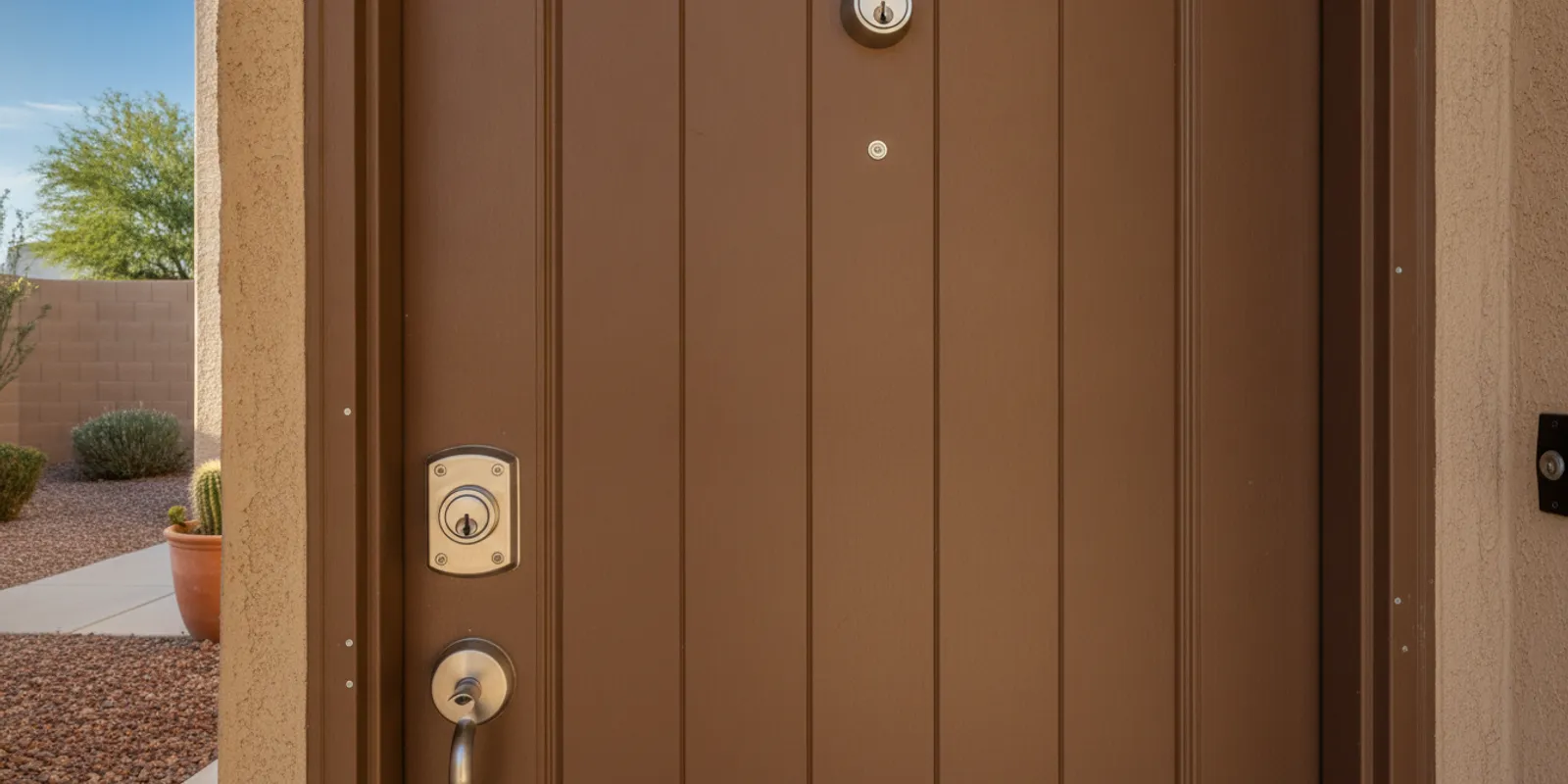
Learning how to prevent lock bumping can help you make practical choices about your home's entry doors without turning security into a source of worry. Lock bumping is one way an intruder may manipulate certain pin-tumbler cylinders, but a single lock is only one part of a home's security. Good hardware, controlled keys, strong door construction, lighting, and sensible habits work together.
Request a home security consultation
What is lock bumping?
Lock bumping is a technique that uses a specially shaped key and a brief impact to move the pins inside some traditional pin-tumbler locks. When the pins align in a particular way, the cylinder may turn. The technique depends on the lock design, its condition, and the person attempting it. It does not open every lock, and it is not the only concern to consider when reviewing a home's entry security.
The important takeaway is not that every door is at immediate risk. It is that older, basic, or poorly maintained cylinders may offer fewer layers of resistance than newer hardware designed with additional security features. A thoughtful review can identify whether your current locks suit the door, the household, and the way keys are managed.
Lock bumping is different from ordinary lock picking, forced entry, and key duplication. Each issue calls for a different response. Replacing a cylinder may address one concern while leaving a weak strike plate, loose hinges, an unprotected side door, or uncontrolled spare keys unchanged.
What should you check before changing a lock?
Begin with an inventory of every exterior entry point. Include the front door, back door, garage entry, side doors, patio doors, basement or utility doors, and any door that connects an attached garage to the home. Check doors that are used rarely, too. A less-used entry can be overlooked during routine maintenance.
For each door, note the following:
- Whether it has a deadbolt, a knob or lever lock, or both.
- The apparent age and condition of the cylinder and surrounding hardware.
- Whether the door closes fully and the bolt enters the strike without pushing or lifting the door.
- Whether the strike plate is firmly attached to the frame.
- How many copies of the key exist and who can access them.
- Whether former residents, contractors, tenants, or employees may still have a key.
- Whether the door has glass, sidelites, a mail slot, or another feature that needs separate attention.
These observations help separate a lock-cylinder question from a broader door-security question. If a key is difficult to turn, do not force it or spray an unknown product into the cylinder. A sticking key may signal misalignment, worn hardware, or another problem that should be diagnosed before an upgrade.
Which hardware features can help prevent lock bumping?
When discussing lock bumping, ask about cylinders and deadbolts designed to add resistance to manipulation. Depending on the product, features may include special pin arrangements, security pins, restricted keyways, hardened components, or other design elements. The exact protection depends on the model and installation, so a product label alone should not be treated as a complete security evaluation.
High-security hardware may also change how keys are duplicated and controlled. Some systems use restricted key blanks or a documented authorization process. This can make casual copying more difficult, but it also means the household needs a plan for replacement keys, authorized users, and future service.
Do not select a lock only by appearance or by the number of features listed on a package. Compare the cylinder with the full door assembly. A strong cylinder installed in a weak, misaligned, or poorly secured door frame may not deliver the result you expect. The correct backset, door thickness, strike, fasteners, and installation all matter.
Brand choice is only one part of the conversation. The LOCK Shop works with products such as Schlage, Kwikset, Mul-T-Lock, Arrow, and Falcon, but the best option depends on the door, the existing system, and how the household wants to manage keys. You can review broader lock services in Mesa before requesting a recommendation.
How do common lock choices compare?
The following comparison is a starting point rather than a product rating. A locksmith should confirm compatibility and installation requirements at the door.
| Option | What it can address | Key-management considerations | Best planning question |
|---|---|---|---|
| Basic pin-tumbler deadbolt | Everyday locking for many residential doors | Copies may be easy to make if blanks are widely available | Is the cylinder worn, outdated, or exposed to uncontrolled keys? |
| Deadbolt with additional manipulation-resistant features | Adds another layer against certain cylinder attacks | Confirm replacement-key process and authorized users | Which features fit the current door and household routine? |
| Restricted or high-security key system | More structured control over key duplication | Keep an accurate list of holders and authorization rules | Who should be allowed to request or receive a new key? |
| Keyed-alike set | Allows selected doors to use one key | One lost key may affect several entry points | Would convenience outweigh the need to separate access? |
| Electronic or smart lock | May support codes, app access, or temporary credentials | Manage batteries, codes, accounts, and backup entry | What happens if power, connectivity, or the primary credential fails? |
A table cannot replace an evaluation of the actual door. For example, a home may benefit from separate keys for the front and garage doors, while another household may prioritize a controlled keyed-alike system. The right choice should reflect who needs access, how often access changes, and what backup method is available.
Why does key control matter?
Preventing unwanted entry is not only a hardware issue. If an untracked key exists, replacing the lock with a stronger cylinder may not solve the household's concern. Key control means knowing which keys exist, who has them, and what to do when a key is lost, copied without permission, or given to someone who no longer needs access.
Make a simple key list for your exterior doors. It can include:
- The door or lock that each key operates.
- The person or role assigned the key.
- The date a key was issued, when practical.
- Whether the key is original, duplicated, or part of a restricted system.
- What action to take when the key is lost or access changes.
Consider rekeying after moving into a home, when a former occupant may still have a copy, or when keys have circulated beyond the group you trust. Rekeying changes the internal pin arrangement so an existing lock can work with a new key. Replacement may be more appropriate when the hardware is damaged, incompatible, outdated, or not suitable for the security goal.
If you want to understand the difference between these approaches, the guide to rekeying locks explains the basic concept. Some homeowners may be comfortable with limited maintenance, but a professional can help when several doors, unusual hardware, or key-control requirements are involved.
What other layers help protect an entry door?
Layered security reduces reliance on one cylinder. Review the entire entry area and focus on improvements that fit the home and daily routine.
Improve the door and frame
A deadbolt should extend into a properly aligned strike. The strike and frame should be secure, and the fasteners should be appropriate for the installation. A door that flexes, rubs, or fails to latch consistently needs attention before you judge the lock's performance. A locksmith can check fit, alignment, and hardware together.
Review glass and nearby openings
Glass in or beside a door may affect how the entry should be secured. A lock upgrade does not address every possible path through or around the door. Consider the position of windows, sidelites, mail slots, pet doors, and other openings when planning improvements.
Use lighting and visibility
Exterior lighting and a clear view of the entry can support awareness. Keep shrubs and other landscaping from creating unnecessary concealment near doors, while following any neighborhood or property rules. These steps do not replace good locks, but they can make routine checks easier.
Consider access habits
Avoid hiding spare keys in obvious locations. Decide how visitors, caregivers, cleaners, contractors, and short-term guests should receive access. If codes or electronic credentials are used, give each person an appropriate credential rather than sharing one permanent code when the system allows separate users.
Keep emergency access in mind
Every security plan needs a recovery plan. Store important contact information in a secure place, keep a permitted backup method available, and know which doors can be reached if one credential fails. A system that is secure but impossible for the household to use reliably may create avoidable lockouts.
When should you request a professional security assessment?
Request help when you are unsure whether the issue is the cylinder, the door, the frame, or key control. Professional input is especially useful when multiple entry points need to work together, when a property has been purchased recently, or when access must change after a roommate, tenant, employee, or contractor leaves.
You may also want an assessment if:
- A deadbolt is difficult to extend or retract.
- The key bends, sticks, spins without operating the lock, or is difficult to remove.
- The door does not close or align consistently.
- You cannot account for all keys to an exterior door.
- You want one key for selected doors but different access for others.
- You are considering high-security, restricted-key, electronic, or smart-lock hardware.
- A rental, business, or multi-unit property needs a repeatable access plan.
A professional assessment should start with questions, not pressure. Explain which doors concern you, what has changed, and what you want the household to be able to do. Ask which parts can be repaired, rekeyed, or reinforced before assuming every lock must be replaced.
How can Mesa homeowners prepare for a locksmith visit?
Preparation helps the visit stay focused and makes it easier to compare options. Write down the doors involved and the symptoms you have noticed. If a key is sticking or the door is misaligned, note when the problem occurs. Gather any existing keys, product information, or prior service records that may help identify the hardware.
Be ready to explain:
- How many people need regular access.
- Whether access needs to change soon.
- Whether you prefer separate keys, a keyed-alike arrangement, or controlled credentials.
- Whether anyone needs a temporary or limited-access solution.
- Whether the property includes gates, garages, detached buildings, or other related entry points.
- Whether you are prioritizing convenience, key control, resistance to manipulation, or a balance of these goals.
Ask for an explanation of the recommended hardware, installation work, key-duplication process, and future service needs. You can also ask whether existing hardware can be reused safely. The goal is a clear plan that matches the property instead of a one-size-fits-all answer.
How does The LOCK Shop help with home lock security?
The LOCK Shop is a family-owned and operated locksmith based in Mesa, Arizona, serving the East Valley and the broader Phoenix metropolitan area. Its hybrid model combines a storefront with a fully equipped mobile service fleet, so customers can seek help for many lock and key needs at the shop or at the property.
The company provides residential locksmith services along with commercial, automotive, and safe services. Its documented offerings include lock repair and rekeying, key cutting and programming, high-security hardware, and related access solutions. The team has more than 30 years of collective locksmith industry experience, and the company offers a 100% Lifetime Labor Guarantee according to its business information. Ask which terms apply to the specific work being considered.
For homeowners who want to review common options first, see the residential locksmith services page. If you are comparing a new electronic entry option with traditional hardware, the guide to digital door locks can help you think through credentials, backup access, and daily use.
The LOCK Shop also serves customers through 24/7 emergency services, while storefront hours and service availability can vary by situation. Call (480) 452-4505 to discuss the concern, request a phone estimate, or ask what information will help with an assessment.
Frequently asked questions
Can any lock completely prevent lock bumping?
No lock should be described as making a property completely invulnerable. Hardware can add resistance to particular techniques, but overall security also depends on the door, frame, installation, key control, and other entry conditions.
Should I replace every lock after moving?
Not always. Rekeying may be suitable when the existing hardware is in good condition and compatible with your needs. Replacement may make more sense when the hardware is damaged, outdated, incompatible, or unable to provide the features and key control you want.
Are smart locks automatically safer than keyed locks?
No. Smart locks can offer useful credential and convenience features, but they require careful management of codes, accounts, batteries, and backup entry. A well-installed system that the household can operate consistently is more useful than a feature-rich lock that is poorly maintained.
What should I do if a key is lost?
Consider who may find or use it, which doors it opens, and whether the key identifies the property. Depending on the circumstances, rekeying or replacing the affected locks may be appropriate. Ask a locksmith to compare the options and help you restore controlled access.
Can a locksmith review more than the front door?
Yes. A useful assessment can include exterior doors, garage entries, gates, frames, key control, and related access points. Tell the locksmith about every area you want included so the recommendations reflect the whole property.
Request service from The LOCK Shop
Make the next step a measured one
To prevent lock bumping, start with the doors you use, identify how keys are controlled, and choose hardware and installation that fit your actual property and routine. A calm, layered review can improve your home's security without relying on exaggerated promises or a single product.