October 10, 2026
Learn how to rekey locks yourself in five easy steps. Get practical tips, essential tools, and expert advice for secure, cost-effective home protection.

Think about how many keys to your property might be floating around. From previous homeowners to former employees, you can’t be sure who still has a copy. This uncertainty is a security risk you don’t have to live with. You can hit the reset button and regain total control over your property’s access. When you rekey locks, you make every old key obsolete in an instant. It’s a proactive and powerful step toward securing your home or business, providing immediate assurance that you and your family are the only ones who can open your doors.
Key Takeaways
What Is Rekeying a Lock?
Have you ever wondered if you need to change all your locks after moving or losing a key? There’s a simpler, more cost-effective solution called rekeying. Think of it as giving your existing lock a fresh start without replacing the entire piece of hardware. Rekeying adjusts the internal mechanism of the lock so that it works with a brand-new key. Once the process is complete, any old keys will no longer be able to open the door, instantly restoring your peace of mind. It’s the perfect way to control access to your home or business when your current locks are still in great shape.
How Does Rekeying Actually Work?
The magic of rekeying happens inside the lock cylinder. This small component contains a series of pins that must align perfectly for a key to turn and unlock the door. During a rekey, a locksmith carefully removes this cylinder and replaces the old pins with a new set that matches a different key. It’s a precise process that essentially re-codes the lock. The original lock hardware, like the handle and deadbolt you see on the door, remains untouched. This method is an efficient way to secure your residential locks without the time and expense of a full replacement, giving you a new set of keys and confidence in who has access.
Rekey or Replace: What's the Difference?
Choosing between rekeying and replacing your locks comes down to one main question: do you need new hardware or just new keys? Rekeying, as we've covered, changes the internal pins so a new key works. Replacing a lock means removing the old hardware entirely and installing a brand-new lock. The biggest advantage of rekeying is the cost savings. Since you’re keeping your existing hardware, you only pay for the service, not for new equipment. Rekeying is ideal when you’re happy with your current locks but need to revoke access. On the other hand, you might choose to replace your commercial locks if they are old, damaged, or you want to upgrade your style or security.
Top Reasons to Rekey Your Locks
Changing your locks might not be the first thing on your to-do list, but certain life events make it a top priority. Rekeying is a simple, effective way to control exactly who has access to your property without the expense of a full lock replacement. It’s a proactive step that gives you immediate peace of mind, knowing that old, unaccounted-for keys are now completely useless.
Think about it: you have no idea how many copies of your keys are floating around from previous owners, old tenants, or former employees. Rekeying is your way of hitting the reset button on your security. It’s a smart move when you’re settling into a new space, dealing with a lost key, or managing access after someone moves out. Let’s walk through the most common situations where rekeying isn’t just a good idea, it’s essential for keeping your home or business secure.
You've Moved Into a New Home
Congratulations on the new place! Amidst all the unpacking and decorating, there’s one crucial security step you can’t afford to skip: rekeying the locks. The previous owners might have given keys to neighbors, dog walkers, contractors, or family members. You simply don’t know who still has a copy. Rekeying ensures that you and your family are the only ones with access. It’s a small investment for the confidence that comes with knowing your new home is truly yours. Taking this step is a fundamental part of securing your residential locks and starting fresh.
You've Lost Your Keys
That sinking feeling when you realize your keys are gone is the worst. Whether they slipped out of your pocket or were left behind somewhere, a lost key is a potential security risk. Instead of worrying about who might find them, you can take immediate action by rekeying your locks. This process changes the lock's internal mechanism so the old, lost key will no longer work. It’s a quick and effective solution that restores your home’s security. This is also a common issue with vehicles, and rekeying your auto lock can save you from a potential theft.
You've Had a Security Breach
If your home or business has experienced a break-in, attempted entry, or even just a suspicious event, your sense of security can be shaken. Rekeying your locks is a fast and cost-effective first step toward feeling safe again. It immediately invalidates any compromised keys and restores your control over the property. In many cases, the lock hardware itself is still perfectly fine, so you don’t need to pay for a full replacement. If you need to secure your property quickly after a breach, you can request service for a prompt and professional rekey.
A Roommate or Employee Leaves
When a roommate moves out or an employee leaves your company, it’s time to rekey. Even if they returned their key, you can’t be certain they didn’t make copies. For business owners, this is a critical step in protecting your assets, sensitive information, and the safety of your remaining team members. For homeowners, it ensures that a past tenant or roommate can’t access your home down the line. Updating your commercial locks is a standard and necessary procedure whenever there’s a change in personnel with key access.
The Benefits of Rekeying a Lock
Deciding to rekey your locks is one of the smartest and most practical moves you can make for your property’s security. It’s a solution that offers immediate peace of mind without the cost and effort of a complete hardware overhaul. When you rekey, you’re essentially resetting your lock’s internal mechanism so that it works with a brand-new key. This means any old keys, whether they were lost, stolen, or just never returned by a previous tenant, become completely useless.
Beyond the immediate security advantages, rekeying brings a level of convenience and financial relief that many people overlook. Instead of investing in entirely new locksets for every door, you can keep your existing hardware and simply have it adjusted. This is especially beneficial if you like the style of your current locks or if they are high-quality models that would be expensive to replace. It’s a targeted approach that solves the problem directly, giving you full control over who has access to your space. Whether you’re securing a new home or streamlining access for your business, rekeying is a powerful tool that balances security, convenience, and your budget.
Save Money Over Full Lock Replacement
One of the most compelling reasons to rekey is the cost savings. Replacing every lock on your property can get expensive quickly, especially when you factor in the price of new hardware on top of installation. Rekeying, on the other hand, is a much more budget-friendly option. Since the process involves changing the internal pins of the lock rather than replacing the entire unit, you’re only paying for a technician’s time and a few small parts.
This makes it the perfect solution if your existing residential locks are still in great shape. If you’ve just moved into a new house, for example, the previous owners might have had high-quality locks installed. Instead of throwing away perfectly good hardware, you can simply have them rekeyed to ensure no old keys will work.
Use One Key for All Your Locks
Tired of fumbling through a heavy keychain just to find the right key for your front door, back door, and garage? Rekeying offers a beautifully simple solution. A professional locksmith can rekey multiple locks in your home or business to work with a single key. This process, known as keying alike, streamlines your daily routine and eliminates the guesswork. Imagine being able to open every entrance with the same key.
This is not only convenient for you but also for family members, trusted employees, or anyone who needs regular access. It simplifies key management and reduces the number of keys you need to track. If you're ready to consolidate your keychain, you can request service to have your compatible locks keyed alike for ultimate convenience.
Know When to Upgrade Instead
While rekeying is an excellent option in many situations, it’s not always the right answer. It’s important to remember that rekeying a lock does not change its fundamental security level; it only changes the key that operates it. If your locks are old, worn out, or damaged, rekeying them won't fix the underlying issues. In these cases, a full replacement is the safer choice.
You should also consider an upgrade if you want to improve your security. For instance, if you’re moving from a standard lock to a high-security or electronic one, you’ll need to replace the entire unit. This is also true if you want to change the style or finish of your hardware to better match your home’s aesthetic. For businesses, upgrading to high-security commercial locks can provide an essential layer of protection that rekeying alone cannot.
Tools You'll Need for a DIY Rekey
Before you can start taking your lock apart, you need to gather the right tools for the job. Rekeying requires a few specific items that you probably don’t have in your everyday toolbox. Having everything ready will make the process much smoother and help you avoid losing tiny, essential parts. If tracking down these specialized tools feels like too much of a hassle, remember that our mobile service fleet comes fully equipped to handle the job for you. You can always request service and let us take care of it.
The Essential Rekeying Kit
The most important item you'll need is a rekeying kit made specifically for your lock’s brand. You can’t use a Kwikset kit on a Schlage lock, so double-check the brand name on your deadbolt or doorknob before you buy anything. A good kit includes a new key and a variety of small pins and springs. When you get a brand-specific kit, you will have all the pin sizes necessary to rekey that particular lock. These kits are designed to make the process as straightforward as possible by providing everything you need in one package.
Plug Follower and Cylinder Removal Tool
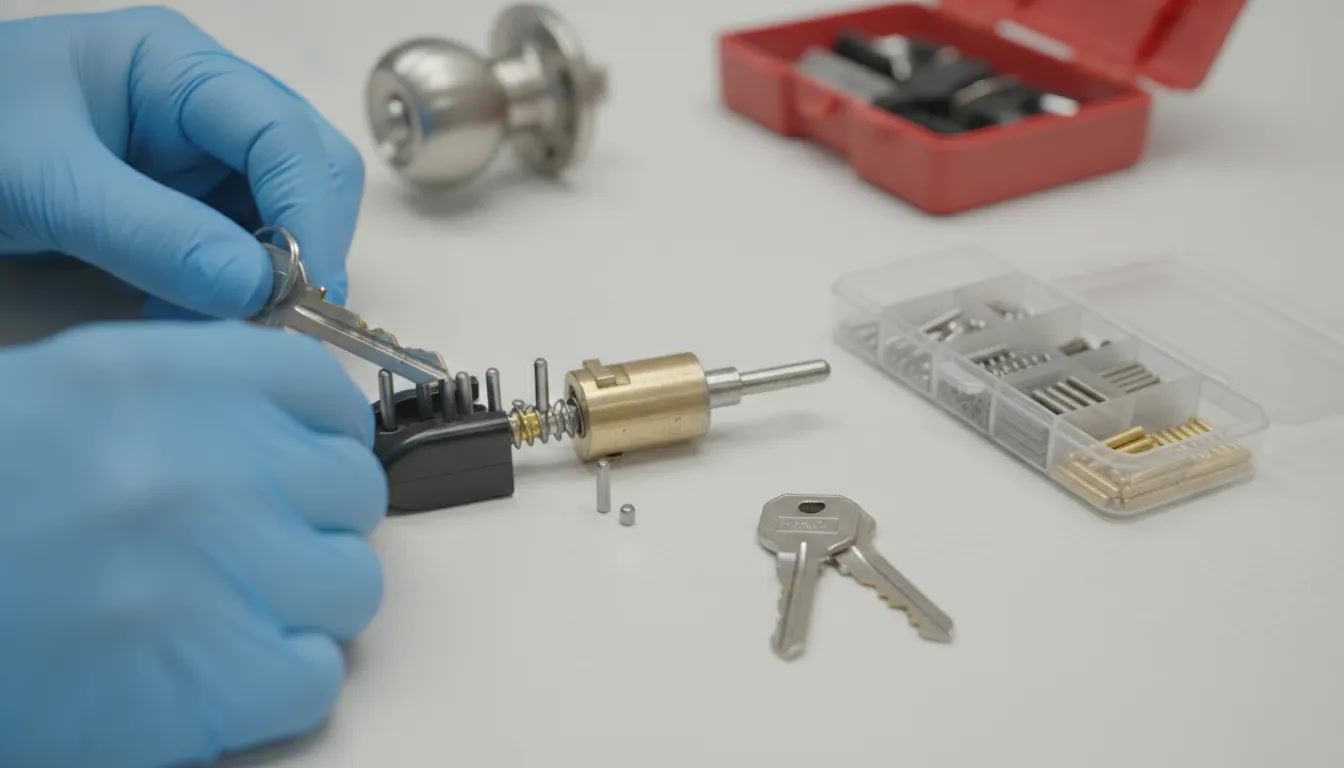
Two of the most critical tools in your kit are the plug follower and the cylinder removal tool. A plug follower is a solid metal tube that you’ll use when you slide the inner cylinder, or plug, out of the lock. This tool takes up space in the cylinder housing, which prevents the tiny top pins and springs from popping out and getting lost. The cylinder removal tool is a simple piece of metal used to depress the retaining clip that holds the lock cylinder in place. Without these tools, you risk turning a simple rekey into a complicated mess.
New Pins and a New Key
The whole point of rekeying is to make a lock work with a new key, and that’s where the new pins come in. The rekeying kit will include a set of bottom pins that match the cuts on your new key. As you place the new key into the cylinder, you will swap the old pins for the new ones. The goal is to have the new pins sit perfectly flush with the top of the cylinder plug when the new key is inserted. This creates a straight shear line, allowing the key to turn and operate the lock smoothly.
Find the Right Kit for Your Lock Brand (Schlage, Kwikset, etc.)
Compatibility is everything when it comes to rekeying. Pin tumbler locks, the most common type found in homes, have slightly different designs from brand to brand. That’s why you must find a kit that matches your specific lock, whether it’s a Schlage, Kwikset, or another brand. Using the wrong kit will lead to frustration and a lock that doesn’t work. If you’re unsure what brand you have or want to explore upgrading your residential locks altogether, our team can help you identify what you need.
How to Rekey a Lock in 5 Steps
Ready to tackle rekeying your locks yourself? It’s a totally achievable project if you’re detail-oriented and have the right tools on hand. The process involves changing the small pins inside the lock cylinder so that it works with a new key instead of the old one. It’s a bit like performing minor surgery on your lock, and when you're done, you'll have a new sense of security knowing exactly who has a key to your home.
Following these five steps carefully is the key to success. Just remember to work in a well-lit area and have a small container handy to keep track of all the tiny parts. If you get stuck at any point, don’t force anything. Our team is always here to help if a DIY project turns into a DIY disaster. A quick call can save you from a bigger headache down the road.
Step 1: Remove the Lock Cylinder
First things first, you need to get the lock off your door. Start by unscrewing the hardware that holds your doorknob or deadbolt in place. Once it’s off, you’ll need to isolate the lock cylinder, which is the part where you insert the key. For most standard residential locks, you can do this by removing a couple of screws and sliding the cylinder out of its housing. Keep your original key handy, as you’ll need it for the next step. This is the point of no return, so take a deep breath and let’s get to the tricky part.
Step 2: Remove the Cylinder Plug
Now, look at the back of the cylinder. You should see a small C-shaped clip holding everything together. Carefully remove this clip with a small flathead screwdriver or the tool from your rekeying kit. Next, insert the original key and turn it slightly. Gently push the cylinder plug out from the back using a plug follower, a special tool that prevents the top pins and springs from flying everywhere. This step is all about precision. If those top pins get mixed up or lost, the lock won't work, and you’ll definitely need a professional to fix it.
Step 3: Replace the Old Pins
With the plug follower holding the top pins in place, you can now focus on the cylinder plug you just removed. Tip it over and dump out the old, bottom pins. These are the only things preventing your old key from working, so make sure you get them all out. You won’t need them or the old key anymore. Give the plug a quick wipe to clear out any dust or grime that might have built up inside. A clean slate ensures the new pins will move smoothly, giving you a perfectly functioning lock when you’re done.
Step 4: Insert the New Key
Grab your new key and slide it into the cylinder plug. Now, using the instructions from your rekeying kit, place the new, color-coded pins into the small holes in the plug. The goal is to have the top of every pin sit perfectly flush with the top of the plug, creating what’s called a shear line. This is what allows the plug to turn when the correct key is inserted. This process is similar to how we handle auto key duplication, where every cut and component must be exact. Take your time and double-check that each pin is seated correctly.
Step 5: Reassemble and Test Your Lock
You’re in the home stretch! With the new key still in the plug, carefully slide the plug back into the cylinder, pushing the plug follower out as you go. Reattach the C-clip on the back to secure everything. Now, test it. Turn the new key back and forth. Does it feel smooth? If so, great! If it catches or feels gritty, you may need to take it apart and check your pins again. Once you’re confident it’s working, reinstall the lock on your door and test it several times before you close it. If it’s not working perfectly, it’s better to request service than to get locked out.
DIY vs. Hiring a Professional Locksmith
Tackling a home project yourself can be incredibly satisfying, and rekeying your locks might seem like a quick win. While it’s tempting to grab a kit from the hardware store, the process is more delicate than it looks. Your home’s security is on the line, so it’s important to weigh the pros and cons before you start taking your locks apart. A small mistake can lead to a much bigger problem than you started with.
Deciding between a DIY rekey and calling a professional often comes down to your comfort level with intricate work and what’s at stake. If you have a simple lock and the right tools, you might feel confident. But for most people, especially when dealing with multiple locks or a lost key, the expertise of a professional locksmith provides peace of mind that’s well worth the cost. Let’s break down the risks of going it alone versus the benefits of hiring an expert.
The Risks of a DIY Rekey
A rekeying kit looks simple enough, but inside your lock are tiny, color-coded pins and springs that can easily get lost or mixed up. Rekeying a lock is much harder than it seems and requires special tools. If you put the wrong pin in the wrong place or lose a spring, the lock won't work correctly. Even worse, a failed attempt can permanently damage the internal mechanism, leaving you with a broken lock that needs to be completely replaced. This can turn a project meant to save money into a more expensive problem. Instead of just needing a rekey, you’ll be forced to buy and install entirely new residential locks. A professional has the right equipment and experience to get the job done correctly without damaging your hardware, ensuring your lock functions smoothly and securely.
Why You Need a Pro If You've Lost the Key
One of the most common reasons for rekeying is a lost or stolen key. Unfortunately, this is also a scenario where a DIY kit won't help you. Rekeying kits require you to have the original key to turn the cylinder to the correct position for removal. Without it, you can’t take the lock apart to change the pins. A locksmith usually needs the current working key to rekey a lock easily. If you don't have the key, a professional locksmith will need to pick the lock first before they can rekey it. This requires specialized skills and tools that go far beyond a basic kit. While it may add to the cost, it’s the only way to rekey the lock and secure your home. If you find yourself in this situation, it's best to request service from a trusted professional.
The Benefits of a Professional Service
Hiring a professional locksmith takes the guesswork and stress out of securing your home. Locksmiths are experts who can handle many different lock types, work quickly, and guarantee their work. This is the best choice if you have complex locks or need to rekey every lock in your house. Instead of spending your weekend fumbling with tiny pins, you can have the job done in a fraction of the time. A professional service also provides an extra layer of assurance. At The LOCK Shop, our technicians are licensed, bonded, and insured, and we stand by our work. We can rekey brands like Schlage and Kwikset with ease and even create a master key system for you. You get the peace of mind that comes from knowing your locks were rekeyed correctly by an expert, keeping your home and family safe.
Let The LOCK Shop Handle Your Rekey
While tackling a rekey project yourself can feel empowering, your home's security isn't the place for guesswork. A single misplaced pin or a slight mistake during a DIY rekey can leave your lock vulnerable or, worse, completely inoperable. Instead of spending your weekend wrestling with tiny springs and tools, you can have complete peace of mind by letting a professional handle it. Our expert locksmiths at The LOCK Shop are trained to rekey all types of residential and commercial locks quickly and correctly the first time.
Choosing a professional service is a smart and surprisingly affordable investment in your security. Rekeying is almost always more cost-effective than a full lock replacement because you're only paying for skilled labor, not brand-new hardware. Our family-owned business prides itself on fair, honest pricing, so you know you're getting great value. Plus, with our fully equipped mobile service fleet, we bring the workshop directly to your doorstep. You won't have to hunt for the right rekeying kit or worry if you have the correct tools; we arrive with everything needed to get the job done.
When you hire The LOCK Shop, you're not just getting a rekeyed lock; you're getting guaranteed work and expert advice. Our technicians can also assess your current hardware and let you know if a simple rekey is sufficient or if upgrading to a higher-security lock would be a better option for your peace of mind. We stand by our work, and our customer reviews reflect our commitment to quality service. If you're ready to secure your property without the hassle, let our family help yours. You can easily request service online, and we’ll take care of the rest.
Frequently Asked Questions
Is rekeying as secure as getting a brand-new lock? Rekeying makes your lock secure again by making sure old keys no longer work. Think of it as changing the password without changing the device. The lock's physical strength and security level stay the same. If you have a solid, high-quality lock already, rekeying is a fantastic and secure option. However, if your current lock is old, worn, or a lower-grade model, replacing it with a new, more secure one would be a better choice for improving your overall security.
I lost my only key. Can I still rekey the lock myself? Unfortunately, this is one situation where a DIY rekeying kit won't work. Those kits require you to have the original key to turn and remove the lock's inner cylinder. Without the key, you can't take the lock apart to change the pins. A professional locksmith has the special tools and skills to pick the lock open first and then perform the rekey. So if your key is completely gone, your best and only option is to call for professional service.
How long does it take for a professional to rekey a house? The process is surprisingly quick when handled by an expert. A professional locksmith can typically rekey a single lock in about 10 to 15 minutes. For an entire house with several locks, the whole job is usually finished in under an hour. This efficiency is one of the biggest perks of hiring a pro, as you get your home secured quickly without spending your entire day on the project.
Can all of my different locks be rekeyed to use the same key? Yes, in many cases, this is possible and it's one of my favorite benefits of rekeying. As long as your locks are from the same brand or have compatible keyways, a locksmith can rekey them all to work with a single key. This is called "keying alike." It's incredibly convenient to have one key for your front door, back door, and garage. A professional can check your existing locks to see if they are compatible for this service.
If my lock is old or sticky, is rekeying still a good idea? Rekeying only changes the key that operates the lock; it doesn't fix any mechanical problems. If your lock is already sticking, difficult to turn, or showing signs of wear and tear, rekeying it won't solve those issues. In fact, it could make them worse. In this situation, it's much wiser to replace the lock entirely. A new lock will not only give you fresh keys but also ensure smooth, reliable operation for years to come.