
Published article
Home Security Assessment: A Practical Checklist for Arizona Homeowners
Use this practical home security assessment to check doors, windows, garages, gates, and keys, then prioritize upgrades for your Arizona home.
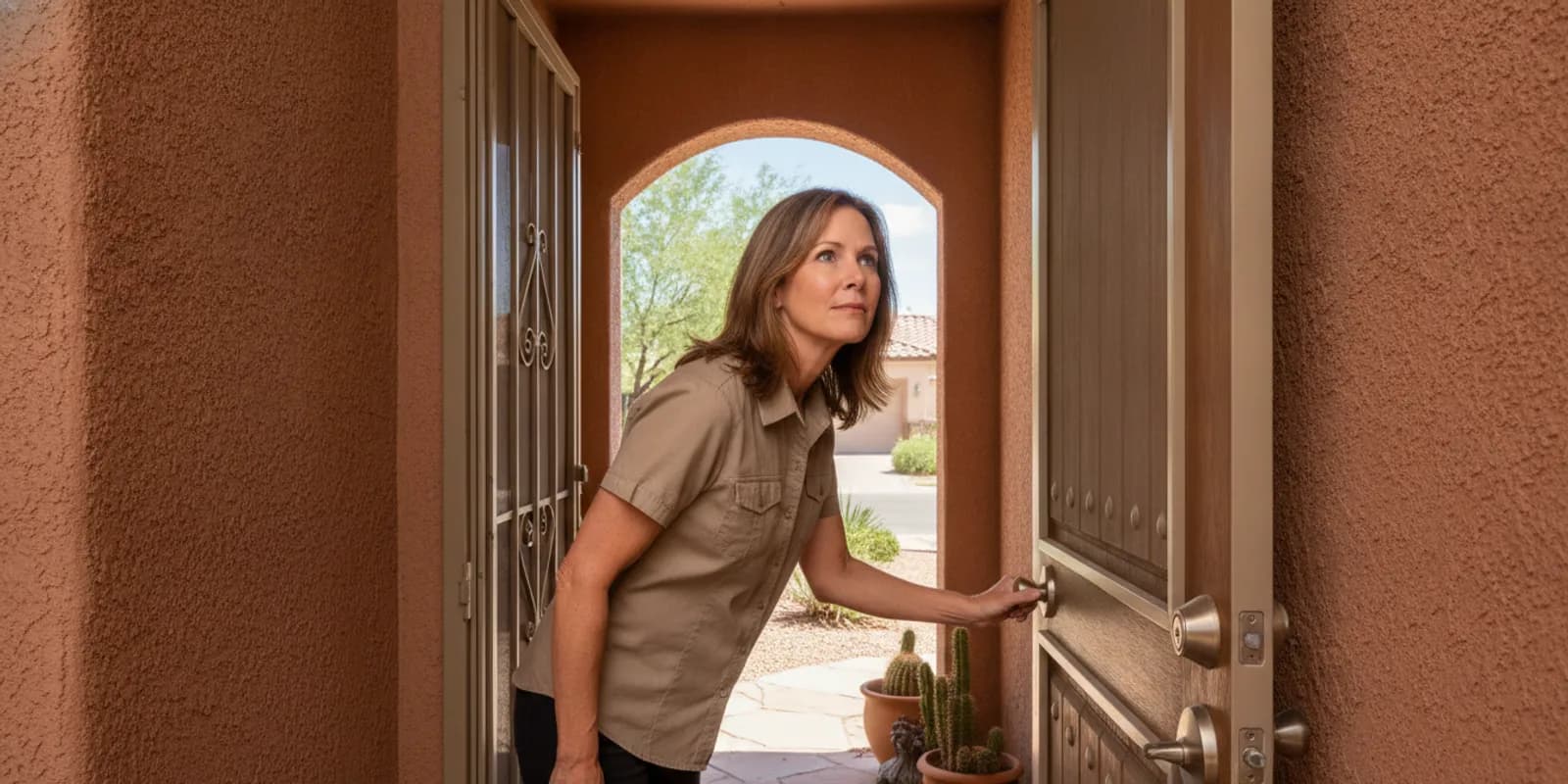
A home security assessment does not need to begin with a shopping list or a complicated system. Start by looking at how people enter your home, what could make those entry points easier to access, and which improvements would make the biggest practical difference. This checklist is designed for Arizona homeowners who want to review doors, windows, garages, gates, and key habits one step at a time.
Discuss a home security concern
What is a home security assessment?
A home security assessment is a structured look at a home's physical entry points and access practices. It helps you spot visible weaknesses, record maintenance needs, and decide what to address first. You can do an initial walkthrough yourself, then consult a qualified locksmith when you need help with a lock, key system, or hardware question.
This checklist focuses on physical access: exterior doors, windows, garage doors and connecting doors, side gates, and keys. It is not a security certification, guarantee against crime, or a numerical rating. A checklist cannot account for every feature of a particular property, and a concern that is not obvious to a homeowner may benefit from an experienced in-person review.
For a more complete view of available residential lock and key help, see residential locksmith services. A locksmith can help assess whether existing locks and hardware fit the door and the owner's needs, and explain available options without treating every home as if it needs the same upgrade.
How should you prepare for a home walkthrough?
Choose a time when you can walk the property without rushing. Bring a notepad or use a phone to record observations. You do not need to share sensitive details or take photographs that reveal where you keep valuables. If you make pictures for your own reference, store them privately and avoid posting them online.
- Walk the exterior in daylight, including the front, back, and sides of the home.
- Check each entry from both sides where it is safe and practical to do so.
- Ask household members which doors they use most and whether any lock or latch is difficult to operate.
- Separate immediate maintenance concerns from optional upgrades.
- Do not force a stuck lock, remove hardware you do not understand, or test a door by damaging it.
As you go, make notes in plain language. For example: “Back door deadbolt turns stiffly,” “side gate does not latch consistently,” or “unsure who has a copy of the old house key.” These descriptions are more useful for planning than a vague note such as “security is weak.” If a door or window is damaged, cannot close properly, or has a lock that fails to engage, put that concern near the top of your list.
What should you check on exterior doors?
Exterior doors are often the first place homeowners look, but the lock is only one part of the entry. Check the door, frame, hinges, latch, and deadbolt as a working set. A strong lock cannot compensate for a door that does not sit correctly or hardware that is loose or worn.
- Test normal operation. Open and close the door, then lock and unlock it using the usual method. The bolt should extend and retract without unusual force. Notice sticking, grinding, loose movement, or a latch that misses its opening.
- Look at the frame. Check for visible splitting, loose trim, gaps, or signs that the strike plate or screws have shifted. Do not assume that a new lock alone will correct a frame problem.
- Check the deadbolt and latch. Confirm that each operates smoothly and that the door can be secured when fully closed. If you are unsure whether the hardware is appropriate for that door, note the lock type and ask a professional to review it.
- Inspect hinges and door alignment. Look for loose or damaged hardware and a door that rubs, sags, or leaves an unusual gap. Avoid adjusting a heavy or damaged door without the right skills.
- Review glass and visibility. Consider whether a nearby window or glass panel changes how the door is used. Think about the home's layout and privacy needs before choosing any change.
- Check every exterior entry. Include side doors, back doors, doors to patios, and any secondary entrance used by household members or service providers.
Make a separate note for a lock that is simply inconvenient and one that does not reliably secure the door. A stiff key may be a maintenance issue, while a bolt that cannot extend fully may prevent the door from locking as intended. If you recently moved, consider who might still have a key and whether rekeying or changing the lock is appropriate. The right choice depends on the existing hardware and your household's needs.
How do you review windows without overlooking their locks?
Check accessible windows on the ground floor, near a roof, balcony, patio, or other route, and in areas that are not easy to see from the street. Open and close each window only as intended by its manufacturer. Confirm that the sash sits properly and that the latch engages. A lock that is present but does not line up or stay secured deserves attention.
- Check that the window opens and closes without forcing it.
- Test the built-in latch and look for loose, bent, or missing components.
- Note cracked glass, a damaged frame, or a gap that prevents normal closure.
- Review windows hidden by landscaping or located beside a door or other accessible area.
- Check any window routinely left open for ventilation and make a clear household plan for securing it when unattended.
Different window designs use different latches and hardware. Do not buy a replacement part based only on appearance; fit and compatibility matter. If a latch has failed, identify the window style and describe the problem before seeking help. The LOCK Shop's article on common locksmith services can also help clarify which concerns may be handled by a locksmith and which may require another trade.
What should you include in a garage and connecting-door check?
A garage can have more than one access point: the vehicle door, a side entrance, and a door between the garage and the home. Review each one separately. Make sure the garage door closes as expected and that its access controls are managed. If it has an automatic opener, follow the manufacturer's instructions for testing and maintenance rather than attempting repairs to springs or other high-tension parts.
Give the connecting door to the house the same attention as any other exterior door. Test its lock and latch, check that the door closes fully, and note whether household members leave it propped open. If the door has a lock, confirm that everyone who needs access knows how it works. Ask a locksmith about the lock and key arrangement if you are unsure whether it fits your household's routine.
Also consider who can enter the garage and how access is shared. If a remote or keypad code is no longer accounted for, review the opener's instructions for changing access. Do not write an access code on a label attached to a remote or leave a spare key in an obvious place. Keep the assessment focused on the actual controls and habits you can verify, not assumptions about what a particular device can do.
How should you assess gates and outdoor access?
Walk along side yards and other routes that lead to doors or windows. Check whether gates close and latch consistently, whether the lock is easy for intended users to operate, and whether a gate is regularly left unsecured. A gate may help manage access, but it should be treated as one part of the overall property review, not a substitute for securing the doors and windows of the home.
- Open and close each gate normally; note dragging, sticking, or a latch that misses.
- Check whether a padlock or other locking hardware is exposed to weather or appears worn.
- Look for a gate that can swing open or does not stay shut after being latched.
- Consider whether landscaping blocks your view of an entry or makes the gate difficult to check.
- Record who needs access and how keys or codes are distributed.
Do not rely on a generic replacement lock without checking whether it is intended for that gate and its conditions. When hardware is corroded, misaligned, or hard to operate, describe the issue and ask a locksmith or appropriate repair professional what options fit the installation.
How can you review keys and household access?
Locks are only part of access control. Think through who has keys, which keys open which doors, and whether you can account for copies. This review is especially helpful after moving, changing roommates, ending a service arrangement, or lending a key that was never returned.
- List the people who need access. Include household members and anyone who has been given a key for a specific reason.
- Identify uncertain copies. If you do not know where a key went or who may have duplicated it, note that uncertainty.
- Keep spare keys controlled. Use a secure, deliberate method instead of an obvious hiding place near the entry.
- Separate keys by purpose. Avoid handing out a larger key ring when someone only needs access to one area.
- Plan for changes. Decide how you will collect, disable, or replace access when a household or property arrangement changes.
Rekeying changes which key operates a compatible lock while retaining the lock hardware; replacing a lock changes the hardware. Which approach is suitable depends on the lock, its condition, and what you want to accomplish. If you are comparing these options, read the guide to rekeying locks for general context, then seek professional help if the lock is unfamiliar, damaged, or not operating correctly. A storefront can support key cutting and duplication, while mobile service can bring locksmith work to a customer's location.
How do you set priorities after the assessment?
A walkthrough can produce a long list. Prioritize based on whether an entry can be secured reliably, how often it is used, and whether a problem is getting worse. You do not need an invented score to make useful decisions. Sort notes into a few practical groups, then decide what action each item needs.
- Address failures first. A door or window that will not close or lock properly, damaged hardware, or a gate that will not latch reliably needs prompt attention. If you cannot secure an entry, take reasonable steps to limit access while arranging an appropriate repair.
- Resolve uncertainty about keys. If you cannot account for who has access, consider whether key control or a lock change should be part of the plan. Explain the history to a locksmith so they can discuss fitting options.
- Handle wear and maintenance. Put sticking, loose, or misaligned hardware on the list. A small operating problem can become more disruptive if it is ignored, but do not force the mechanism in the meantime.
- Consider improvements that fit your routine. Once basic entry points work as intended, compare optional hardware or access changes based on who uses the home, what doors are involved, and how you prefer to manage keys.
- Set a review date. Revisit the notes after repairs, a move, a household change, or a change in who needs access.
When choosing what to do, distinguish a verified issue from a possible concern. “The deadbolt will not extend when the door is shut” is a specific repair need. “I may want easier access for a family member” is a planning question. Treating those differently helps you avoid buying equipment before you know what problem it should solve.
When is it useful to ask a locksmith for help?
Contact a locksmith when a lock is damaged, difficult to operate, or does not secure the door as intended; when you are not sure which replacement part fits; or when you need help choosing between rekeying and replacing a lock. A locksmith can also discuss residential lock and key options after a move or a change in who has access. For emergency lockout needs, The LOCK Shop documents 24/7 emergency service; planned work can be arranged through its service channels.
Before arranging work, write down the entry point, what happens when you operate the lock, and whether there are keys available. If you know the lock's brand or type, include that information, but do not dismantle it to find out. Ask what the proposed work includes and request an estimate. The LOCK Shop offers free over-the-phone estimates; the final scope can depend on the hardware and the issue.
The LOCK Shop is a local, family-owned and woman-owned locksmith and safe-services company based in Mesa, serving the East Valley and Phoenix metropolitan area, as well as 52+ central Arizona communities. It combines a Mesa storefront for key cutting, duplication, product sales, and pickup with mobile service at customer locations. A real local locksmith shop for keys, locks, door hardware and safes. The company documents 30+ years of collective locksmith experience and a 100% Lifetime Labor Guarantee. For a general inquiry, use the contact page; for a planned visit, use Request Service.
Request residential locksmith service
Frequently asked questions
How often should I do a home security assessment?
Review your home's entry points periodically and whenever something changes, such as a move, a new household member, a lost key, a repair, or a change in who needs access. Check sooner if a lock or door begins to malfunction. There is no one schedule that fits every home, so use changes in the property and household as practical reminders.
Can I complete a home security assessment myself?
You can do a useful visual walkthrough and record concerns about doors, windows, garages, gates, and keys. A self-check is not a certification or a substitute for a qualified professional's assessment of a specific hardware problem. Ask a locksmith when you need help diagnosing a lock, selecting a compatible option, or planning a key-control change.
Should I rekey or replace a lock after moving?
It depends on the lock's condition, compatibility, and whether you want to retain the existing hardware. Rekeying may be an option for compatible locks when the goal is to change which key works. Replacement may make sense when hardware is damaged or when you want a different lock. A locksmith can review the actual lock and explain the available paths.
What should I do if a door lock is sticking?
Do not force the key or turn the mechanism harder than usual. Check whether the door closes and aligns normally, and note whether the problem happens with the door open, closed, or both. Those details can help a locksmith distinguish an issue with the lock from one involving door alignment or hardware.
Does a checklist guarantee that my home is secure?
No checklist can guarantee that a home is secure or prevent every incident. It is a practical way to notice issues and make a plan. A careful review of entry points, working hardware, and key access can help you decide which questions to address first, and a professional can advise on the specific locks and conditions at your home.
Keep your notes simple, address entry points that do not secure reliably, and revisit key access when household circumstances change. A practical home security assessment is most useful when it leads to clear, appropriate next steps for your home.