
Published article
Gate Lock Installation: Choosing the Right Lock for Your Property
Learn how gate type, alignment, weather, and entry needs affect gate lock installation, plus what to check before choosing keyed or keypad access.
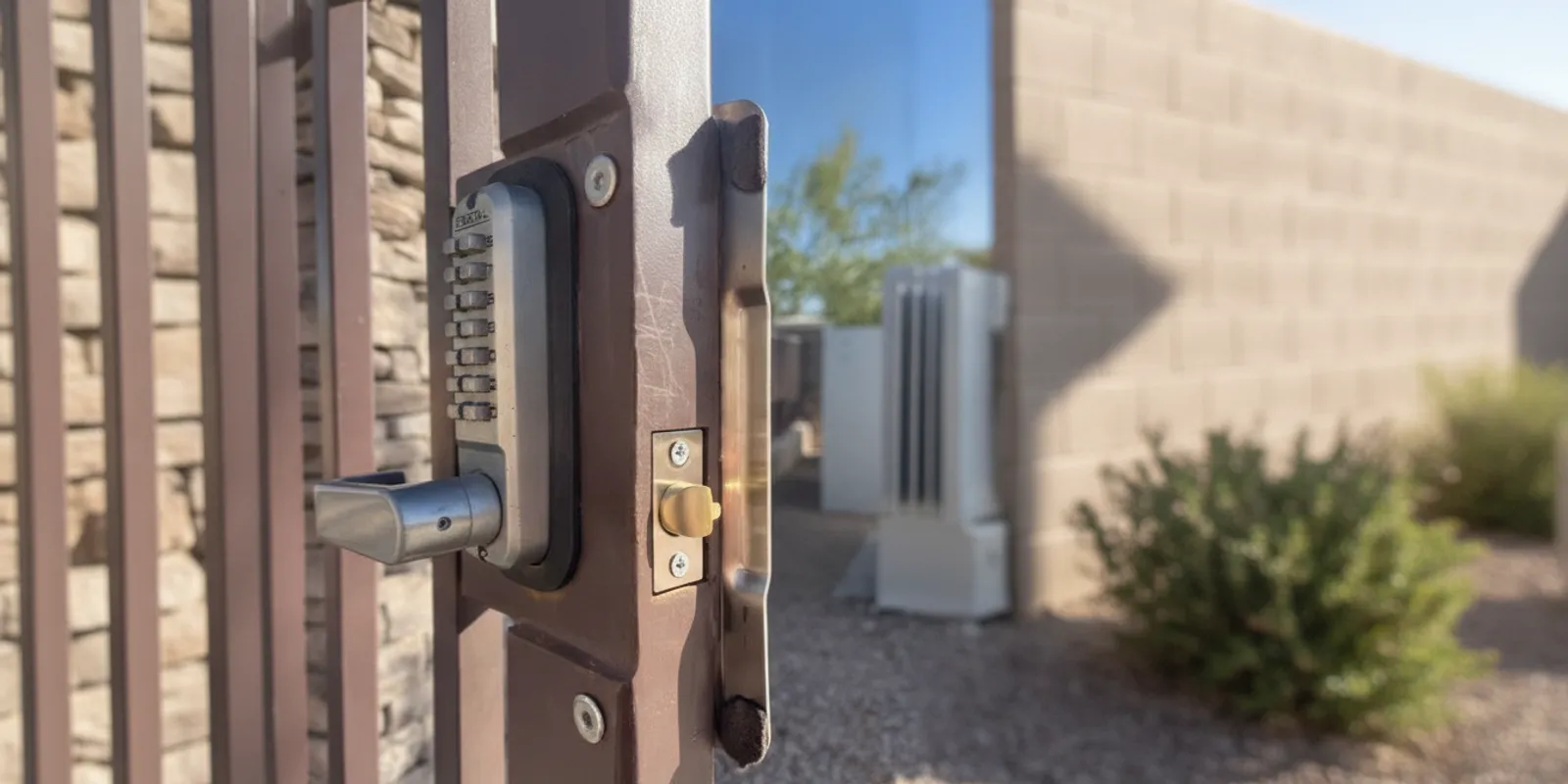
Gate lock installation starts with the gate itself: its material, movement, frame, and existing latch all affect which lock can work reliably. Before choosing keyed or keypad access, check how the gate closes, who needs entry, and how much weather the hardware will face. The right choice should fit daily use as well as the structure.
Ask about a gate lock assessment
What should you identify before choosing a gate lock?
Start by looking at the gate as a complete assembly rather than shopping for a lock by appearance alone. A lock needs a stable place to mount, a compatible latch or strike, and enough clearance for the gate to open and close. A device that fits a door may not fit a thin metal gate, a wooden fence gate, or a gate that moves or sags.
Note the gate’s construction and how it moves. Is it metal, wood, or another material? Does it swing inward or outward, slide, or form part of a larger entry? Is there a solid post or frame beside it where the latch can engage? Look for visible movement, loose hinges, damaged wood, rust, or a latch that catches only when the gate is pushed or pulled.
Also consider the people and routines involved. A side gate used occasionally by one household has different needs from a shared gate used by residents, a service entrance, or staff. Think about who needs access, whether they need a physical key, and whether it matters to change access without replacing the hardware. These details help narrow options before any drilling or fitting begins.
Make a simple user list before deciding. For example, a household might need access for two adults and a caregiver, while a small business could have employees with different schedules and a delivery person who needs only occasional entry. Ask whether the same people will use the gate every day, whether access will change as tenants or staff change, and whether anyone needs to open it while carrying items. The answers help you compare a key-based routine with a code-based one without assuming one is best for every property.
For a broader look at residential hardware, see The LOCK Shop’s residential locksmith services and lock services. A gate can have different mounting and alignment needs than an entry door, so do not assume a door lock will transfer directly.
How does gate type affect installation?
The gate’s construction determines where a lock can attach and how it can engage. A lock mounted to a flexible or narrow section may loosen with repeated use. If the gate and post do not meet consistently, even a properly chosen lock can become difficult to operate. Installation planning should account for both the gate and the stationary frame.
- Wood gates: Check for solid material at the proposed mounting point. Soft, split, or weathered wood may not hold hardware securely. The latch also needs to reach the post without binding.
- Metal gates: Tube shape, thickness, and available mounting area can limit hardware choices. A mounting method that works on a solid door may not suit a hollow metal frame. Avoid assuming that a lock can be attached without checking its structure.
- Sliding gates: The lock must work with the gate’s travel and stopping position. The receiving point needs to line up when the gate is fully closed, and the lock should not interfere with the track or movement.
- Double gates: Determine which side is active and how the inactive side is held in place. Both sides need to meet in a predictable position for the latch or locking parts to engage.
Movement matters as much as material. If hinges are loose, a post has shifted, or the gate drops, correct those issues before expecting a new lock to solve the problem. A locksmith can assess the lock and latch; repair to a fence, post, or gate structure may require a separate trade. For property-wide or shared-entry planning, business owners can also review commercial lock services.
Think through the opening path as well as the closed position. A lock body, keypad cover, or projecting handle should not hit a wall, fence, or neighboring gate as the gate moves. For a sliding gate, note whether the hardware could catch on the track or interfere with the gate’s stop. For a swing gate, check whether the user can reach and operate the lock from the intended side without standing in the gate’s path. These practical checks help avoid a setup that technically fits but is awkward in everyday use.
Why does latch alignment matter so much?
Alignment is one of the most important parts of a usable gate lock. When the gate is closed, the latch needs to meet its receiving point in the intended position. If it sits too high, low, or far to one side, the gate may need to be lifted or pushed to engage. That extra force can make daily use frustrating and put strain on the hardware.
Before selecting a lock, operate the gate several times. Watch whether it closes consistently and whether the latch meets the frame in the same spot each time. Check for seasonal swelling or movement, loose fasteners, and a gap that changes when the gate is pushed. Do not use a lock to pull a misaligned gate into place. That can mask the underlying issue rather than correct it.
A useful check is to note the difference between a one-time catch and a repeatable alignment problem. If the latch misses after the gate has been opened widely, but works when it is guided gently, the hinges or gate position may be part of the issue. If the gate closes smoothly but the latch does not meet its receiver, the latch location or hardware fit may need attention. Avoid forcing it or repeatedly slamming the gate; record what you observe and share it during an assessment.
Some alignment problems are simple to observe, but their cause may be structural. A sagging gate, shifting post, or worn hinge may need attention before installation. A technician can assess the latch location, mounting space, and operation and explain whether the proposed lock is compatible with what is there. If the gate is part of a home’s normal entry points, a locksmith may also discuss how it fits with the other locks on the property.
Should you choose a keyed or keypad gate lock?
Keyed and keypad locks can both be useful. The better option depends on who uses the gate, how often access changes, and whether the gate can accommodate the hardware. No format removes the need to check mounting, weather exposure, and alignment.
| Option | May suit | Plan for | Check before installation |
|---|---|---|---|
| Keyed lock | Households or small groups comfortable carrying a key | Key distribution, spare-key control, and rekeying or replacement if access needs change | Whether the keyway and lock body fit the gate and whether users can reach and operate it comfortably |
| Keypad lock | Users who prefer a code instead of handing out physical keys | Code management, battery maintenance if applicable, and a backup plan if the keypad or power source is unavailable | Weather rating, mounting space, gate thickness, latch compatibility, and how codes can be changed |
| Existing latch with a compatible locking component | A gate whose latch works well but needs a way to secure it | Whether the current hardware is sound and whether its operation can support the added component | Clearance, alignment, material condition, and whether the gate can be secured without binding |
A keypad may be convenient for a household or shared entry, but do not assume every keypad lock is designed for outdoor exposure or for a particular gate shape. A keyed lock may be straightforward, but it requires a plan for keys and future access changes. The hardware’s actual specifications and installation instructions matter more than the label. Review the maker’s guidance and discuss the gate’s conditions before settling on a model.
Consider a common scenario: a homeowner wants to give a temporary code to a contractor. That can be convenient if the selected lock supports code changes and the owner is prepared to manage them. A keyed setup may work better when only a few trusted users need access and there is a secure way to control spare keys. For a rental or shared property, establish who is allowed to distribute credentials and how access will be updated when authorized users change. These are access-management questions, not just product questions.
For another style of access hardware, The LOCK Shop’s guide to smart locks and door compatibility discusses why the door or opening matters when comparing electronic options. A gate is a different installation environment, so use that information as general context, not as proof that a specific product will fit your gate.
What should you consider about weather exposure?
Outdoor hardware faces sun, heat, dust, windblown debris, and occasional moisture. The amount of exposure varies by the gate’s location and how much shelter it has. In the Mesa area, strong sun and heat are practical considerations. A lock that is sheltered under an overhang may face different conditions from one exposed on every side.
Check the lock manufacturer’s instructions for outdoor use and maintenance. For keypad products, confirm the specified environmental limits and battery guidance. Do not treat a weather-resistant description as a promise that the lock will never need cleaning or service. Dust and debris can also affect a latch or moving parts, while corrosion or damaged seals can compromise some hardware over time.
Consider placement as well. A keypad or keyway should be reachable without forcing an awkward hand position, but the lock should not obstruct the gate’s swing or create a pinch point. Users should be able to operate the gate from the intended side. If the gate has a cover, screen, or nearby wall, include that clearance in the assessment.
Ask what routine care the manufacturer recommends and who will be responsible for it. The answer may include periodic visual checks, keeping the latch area clear of debris, or following specific battery instructions for an electronic model. Do not apply oils, cleaners, or lubricants unless the product instructions call for them; an unsuitable product can interfere with some hardware. If operation changes, note whether the problem appears after dust buildup, heat exposure, or a period of disuse, and consult the manufacturer’s guidance or a locksmith rather than forcing the mechanism.
What happens during a technician assessment?
An assessment should connect the lock choice to the actual gate rather than relying only on a product description. The technician can review the gate’s material and thickness, mounting options, latch and strike alignment, swing or slide path, existing hardware, and exposure to the elements. They can also ask how many people need access and whether that access is expected to change.
Useful questions to discuss include:
- Can this lock be mounted securely on this gate construction?
- Does the current latch line up consistently, or should the gate or frame be adjusted first?
- Will the lock interfere with the gate’s movement, hinges, track, or nearby hardware?
- Is the selected model intended for the gate’s level of outdoor exposure?
- How will keys or codes be managed if a household member, tenant, or staff member no longer needs access?
- What maintenance does the manufacturer recommend, and what should users do if the lock becomes difficult to operate?
For a planned installation, share clear photos of the gate from both sides, the latch area, and the post or frame. Include a brief description of the gate’s material, how it opens, and the access problem you are trying to solve. Photos can help explain the situation, but they do not replace an on-site assessment when measurements, alignment, or mounting strength need to be checked.
Before the visit or conversation, gather any product information you already have, such as the lock model or installation guide. If you have not bought hardware yet, say so; there is no need to select a product first. Describe the issue in observable terms—such as “the latch meets the post only when I lift the gate”—rather than guessing at the repair. This gives the technician a clearer starting point and helps distinguish a hardware-fit question from a gate movement problem.
The LOCK Shop is a family-owned locksmith based in Mesa and serves the East Valley and Phoenix metropolitan area. To confirm whether the company can assess your specific gate and location, check the service area information or contact the team directly. For common questions about arranging locksmith help, visit the customer FAQs.
What can you do before requesting installation?
A few observations can make a service conversation clearer and help prevent choosing hardware that does not fit. You do not need to take the gate apart or make changes before speaking with a locksmith. Focus on the existing condition and how you use it.
- Describe the gate: Note whether it is wood or metal, whether it swings or slides, and which way it moves.
- Test normal operation: Open and close it gently. Notice whether it rubs, drops, sticks, or reaches the latch without force.
- Identify the users: Consider who needs access and whether a physical key or code would be easier to manage.
- Check the exposure: Note whether the lock location is fully exposed or partly protected from sun and weather.
- Gather photos and questions: Photograph the latch, frame, and whole gate, then ask about compatibility, alignment, and maintenance.
For example, you might note that a wood side gate swings inward, closes against a masonry post, and is used daily by the household. Add that it catches after windy days or that the latch engages only when the gate is pushed. A concise description like this is more useful than simply asking for a keypad lock, because it identifies both the preferred access method and the physical condition that could affect installation.
A property manager can use the same preparation to clarify responsibilities. Identify which residents or staff require regular access, who can authorize hardware changes, and how keys or codes should be handled during a turnover. For a business, consider whether deliveries require entry and whether employees need to operate the gate from both sides. Keeping the access plan clear can prevent avoidable confusion after the hardware is installed.
Avoid drilling new holes or modifying the gate until the lock and mounting plan are confirmed. An unsuitable opening can weaken a narrow gate section or leave the hardware difficult to reposition. If the gate is part of a rental property or shared community, check who is authorized to approve changes and how access should be handled for all users.
Frequently asked questions
Can any door lock be used on a gate?
No. Gate material, thickness, movement, mounting space, latch alignment, and weather exposure can differ from a standard door. Confirm that the specific lock is intended for the application and can be mounted securely on the gate.
Is a keypad lock always better for a shared gate?
Not necessarily. A keypad can make it easier to manage entry without distributing keys, but users still need a code-management plan, and the product must suit the gate and outdoor conditions. A keyed option may be simpler for some situations. Compare the real access needs and hardware requirements.
Should I replace the lock if the latch is hard to close?
First determine whether the issue is the lock or the gate’s alignment. If the gate sags, rubs, or reaches the latch inconsistently, replacing the lock alone may not resolve the cause. Have the gate and latch assessed before choosing replacement hardware.
What information should I provide when requesting help?
Share the gate’s material, how it opens, what lock or latch is currently installed, what problem you are experiencing, and who needs access. Photos of the whole gate and latch area are helpful. Also provide the property location so the team can confirm service availability.
How can you arrange a gate lock assessment?
A successful gate lock installation depends on choosing hardware that fits the gate, confirming that the latch engages consistently, and planning for the people who will use it. If the gate is loose, damaged, or misaligned, address that condition as part of the plan rather than expecting the lock to compensate.
Describe your gate and access needs, and ask what assessment is appropriate before choosing hardware.