September 18, 2026
Choosing a smart lock for your front door? Learn how to check fit, compare access methods, plan security, and decide when to call a local Mesa locksmith.

A smart lock front door upgrade can make everyday entry easier, but the right model must fit the door, match the way your household uses access, and have a dependable backup plan. Before buying, check the existing deadbolt, think through codes and phone access, and decide whether the installation is a straightforward replacement or a job for a locksmith.
Contact The LOCK Shop for help choosing or installing a residential keyless-entry lock.
What should you check before buying a smart lock for a front door?
Before buying a smart lock for a front door, confirm that the door has compatible existing hardware, measure the opening, and identify how everyone will enter if the battery, phone, app, or network is unavailable. Then compare access methods, physical security, weather exposure, and the installation support you may need.
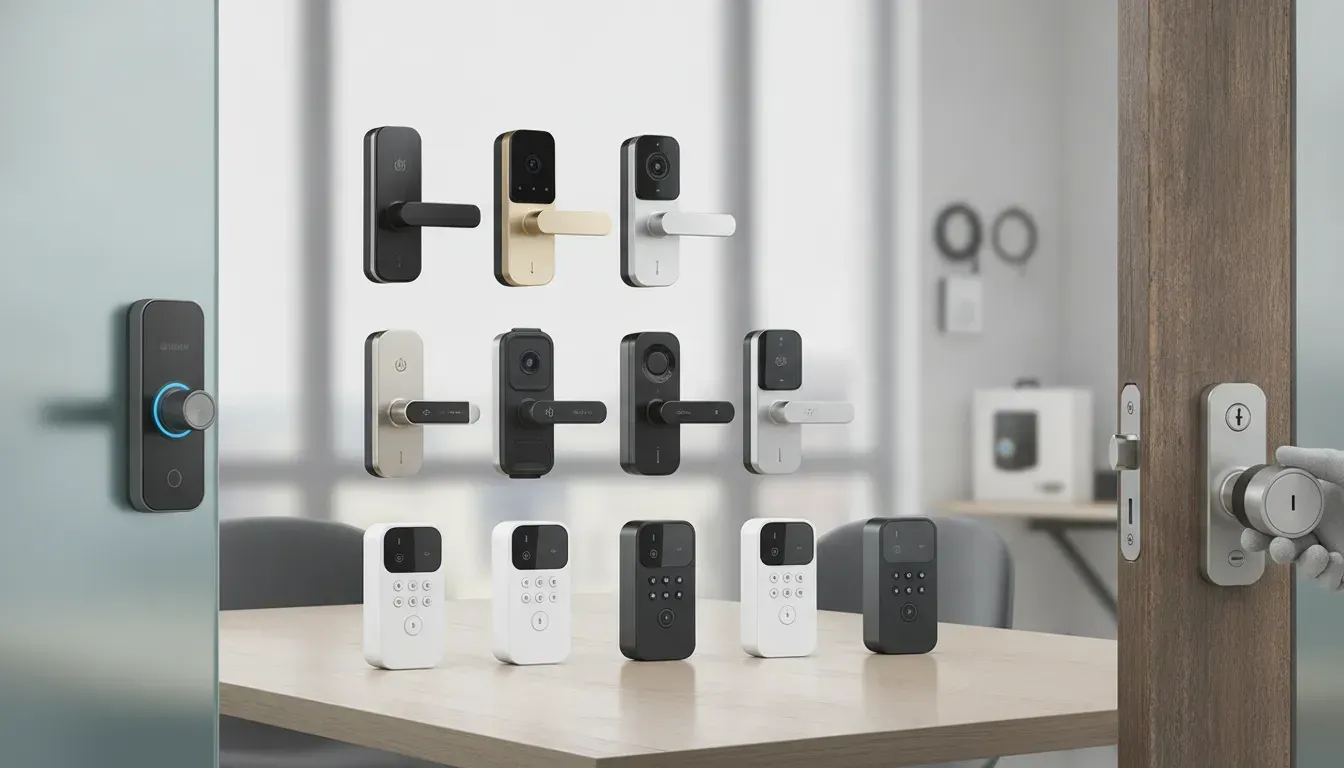
A smart lock is not one universal product category. Some models replace the complete deadbolt. Others retrofit over part of an existing lock. Some use a keypad, while others rely mainly on a phone, card, fingerprint, or another credential. The product manual is the final authority for measurements and compatibility, so avoid choosing based on a feature list alone.
- Start with the door: Check whether it already has a standard deadbolt opening and whether the door closes without pushing, lifting, or pulling.
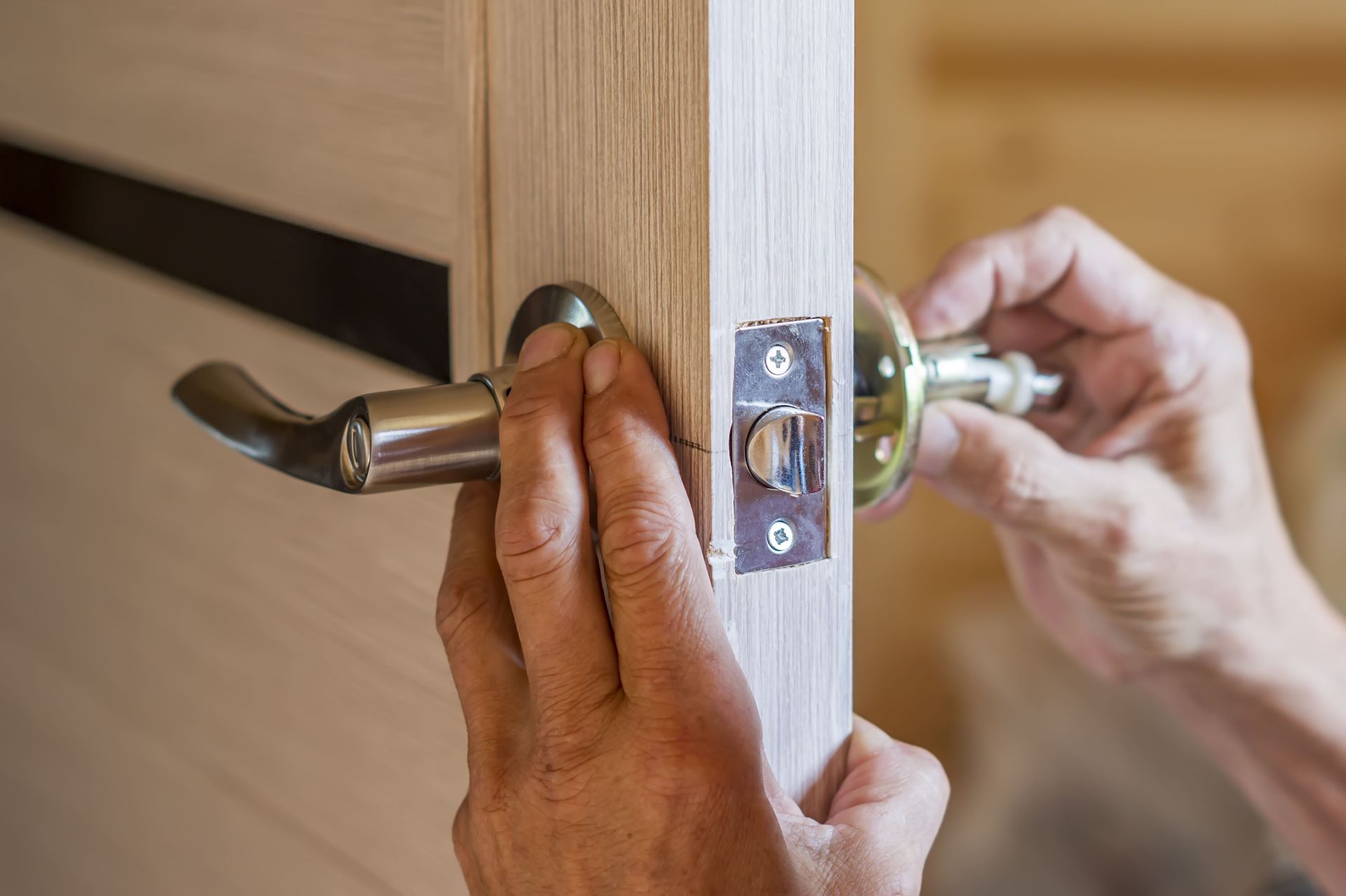
- Measure before ordering: Note door thickness, backset, bore size, trim clearance, and the position of the strike plate.
- List the users: Include family members, guests, caregivers, cleaners, tenants, or anyone else who may need entry.
- Plan for failure: Know how the lock handles low batteries, a lost phone, an unavailable app, or a forgotten code.
- Consider the climate: Exterior keypads and sensors must be suitable for the door's exposure and the manufacturer's stated use.
If the door is warped, the frame is damaged, or the existing deadbolt already sticks, solve that problem first. A motorized lock still has to move a physical bolt through the strike plate. Installing new electronics on a binding door can turn a small alignment issue into a daily reliability problem. The LOCK Shop's residential lock services can help address the underlying hardware before or alongside a keyless-entry upgrade.
Will a smart lock fit your existing front door?
Most smart deadbolts are designed around common residential door openings, but fit is never automatic. A lock may need a particular door thickness, backset, bore, deadbolt style, or interior clearance. A front door with unusual construction, multi-point hardware, glass, or a narrow trim area may require a different approach or professional evaluation.
Measure the important dimensions
Use the lock manufacturer's template or instructions, not a guess. The backset is the distance from the edge of the door to the center of the deadbolt hole. Common residential measurements include 2 3/8 inches and 2 3/4 inches, but the chosen product must explicitly support the measurement on your door.
Also check the door thickness, the diameter of the bore, the shape and length of the existing deadbolt, and the clearance on the inside of the door. Make sure the exterior keypad will not hit a storm door, screen door, security door, or decorative trim. If the smart lock uses a motor to turn the deadbolt, the bolt should move smoothly by hand before the new hardware is installed.
Inspect the door and frame as one system
Look at the strike plate, screws, jamb, hinges, and weather seal. The door should latch into position without excessive force, and the bolt should enter the strike cleanly. A loose strike, cracked jamb, or sagging door can make a smart lock appear defective when the underlying issue is the opening.
Renters should also confirm that the property owner allows a lock replacement. If the lock must be removed later, keep the original hardware and installation parts together. For any unusual opening, take clear measurements and photographs for a professional before ordering hardware.
Which access method is best for a front-door smart lock?
The best access method is the one that your household can use consistently and manage safely. Keypads are convenient for families and guests, phone-based access can add remote management on supported systems, and a physical key or other backup can help when batteries or devices fail. Every feature depends on the specific model.
Do not buy a lock because it advertises the greatest number of entry options. More options can mean more accounts, settings, batteries, and user-management tasks. A simple keypad with a well-managed backup may be a better fit than a highly connected lock that nobody in the household wants to maintain.
For caregivers, guests, and service providers, ask whether the lock supports separate or temporary credentials. For a household with seniors or children, consider whether the keypad, app, and backup method are clear and practical. For a property manager, document who manages access and how codes are removed after a tenant or contractor no longer needs entry.
Are smart locks safe for a front door?
Smart locks can be a practical access-management upgrade, but they are not automatically safer than every mechanical lock. Security depends on the complete door opening, the quality and condition of the hardware, correct installation, account and code management, battery readiness, and a backup plan. Convenience should support security, not replace it.
Questions about the physical lock
- Does the lock use a sturdy deadbolt or latch appropriate for the door?
- Does the supplied strike plate fit the frame and attach with secure screws?
- Can the bolt extend fully without rubbing or binding?
- Does the design leave a useful backup entry method if the electronics stop working?
- Is the exterior hardware appropriate for the front door's weather exposure?
Questions about codes, accounts, and devices
- Can each regular user have a separate code or credential?
- Can you remove a former user's access promptly?
- Are primary codes unique and kept out of shared messages or visible notes?
- Who controls the main account and recovery details?
- Can you check battery status and understand the lock's low-power warning?
If the lock connects to a phone or home network, protect the account with a strong, unique password and keep access limited to people who need it. Avoid assuming that remote control is necessary. A model that stores codes locally may meet the household's needs with fewer connected dependencies, while another home may value supported notifications or remote management.
Review The LOCK Shop residential lock and keyless-entry services before choosing your hardware.
What are the most common smart lock installation problems?
Smart lock installation problems usually begin with an incorrect fit, a door that was already out of alignment, an improperly installed latch or strike, or incomplete setup. Testing the lock with the door open, following the product instructions, and checking manual operation before final calibration can prevent a frustrating lockout.
- The deadbolt does not move smoothly: Check the door alignment and strike before blaming the motor. Do not force the lock.
- The lock sits crooked: Loosen and realign the mounting hardware so the interior and exterior components are seated correctly.
- The latch is the wrong length: Confirm the backset setting and compare the latch with the manufacturer's instructions.
- The keypad or app will not pair: Confirm the required app, permissions, battery installation, and pairing distance for that model.
- Auto-lock behaves unexpectedly: Review the setting and test it with the door open before relying on it.
- The battery warning is missed: Learn where the alert appears and keep the approved replacement batteries available.
Never complete a setup test with the door closed until you know the lock can unlock reliably. Keep the old hardware nearby until the new lock has been physically installed, calibrated, and tested several times. If the manufacturer's instructions call for a specific strike plate or calibration sequence, follow those directions rather than substituting a similar-looking part.
When should you hire a locksmith to install a smart lock?
Professional installation is worthwhile when the door is unusual, damaged, difficult to align, or part of a larger security plan. It is also useful when you want someone to confirm fit, install the hardware, set up supported access methods, and test the finished opening. A locksmith can identify door problems before they become lock problems.
Consider professional help if:
- The front door has no standard deadbolt opening or needs new drilling.
- The door is metal, fiberglass, extra thick, unusually narrow, or fitted with multi-point hardware.
- The deadbolt binds, the door sags, the jamb is damaged, or the strike plate does not align.
- You are unsure whether a retrofit or complete replacement is appropriate.
- Several household members, caregivers, guests, or tenants need an organized access plan.
- You need the lock repaired, rekeyed, replaced, or evaluated after a failed DIY installation.
The LOCK Shop provides residential lock installation, repair, rekeying, security assessments, and documented keyless-entry service. The company operates from a Mesa storefront and also sends fully equipped mobile technicians to customer locations across the East Valley and Phoenix metropolitan area. Ask about the specific door and lock before assuming a product is compatible.
The LOCK Shop is local, family-owned, woman-owned, licensed, bonded, and insured, with a 100% Lifetime Labor Guarantee. Free over-the-phone estimates are available, and the team offers 24/7 emergency assistance when a lock problem cannot wait. For urgent help, review the 24/7 emergency lockout service options or call (480) 452-4505.
How do you choose a smart lock front door setup?
Choose a smart lock front door setup by starting with the opening, not the app. Confirm measurements and alignment, select access methods that fit the users, verify a backup entry plan, and decide who will manage batteries, codes, and accounts. Then choose DIY installation or professional help based on the door's condition and complexity.
- Inspect the current door: Make sure it closes, latches, and deadbolts smoothly without force.
- Record measurements: Check thickness, backset, bore, trim clearance, and strike alignment against the product instructions.
- Map access needs: Decide who needs a permanent code, temporary access, a phone credential, or a physical key.
- Set security requirements: Include physical hardware, account control, unique codes, battery alerts, and weather exposure.
- Plan the failure response: Identify what happens when a phone is lost, a battery is low, or an app is unavailable.
- Choose installation support: Use a qualified professional if the opening is unusual, damaged, or difficult to align.
A smart lock should make the front door easier to manage without creating a new point of confusion. The best choice is not necessarily the lock with the longest feature list. It is the setup that fits the door, gives authorized people a dependable way to enter, and can be maintained by the person responsible for the home.
Contact The LOCK Shop to discuss a smart lock front door installation or residential lock concern.
Smart lock front door questions homeowners ask
Can any front door use a smart lock?
No. Many smart locks are designed for common residential deadbolt openings, but door thickness, backset, bore, trim, lock style, frame condition, and clearance all matter. Check the exact product requirements. Unusual, damaged, or multi-point doors may need a different product or professional evaluation.
Do smart locks still need a physical key?
It depends on the model. Some smart locks include a keyed backup, while others use a keypad, emergency power contact, or another manufacturer-specific method. Before buying, identify the backup method and practice it according to the product instructions.
What happens if the smart lock battery dies?
The answer depends on the model. Review its low-battery alerts and emergency-entry procedure before installation. Keep approved replacement batteries available, and do not wait for a lockout to learn how the backup works.
Is a smart lock more secure than a regular lock?
Not automatically. A smart lock may make user access easier to manage, but security also depends on the deadbolt, strike plate, door frame, installation, codes, accounts, and backup plan. A locksmith can evaluate the complete opening and explain the tradeoffs.
Can The LOCK Shop install a smart lock?
The LOCK Shop documents residential keyless-entry service, including smart-lock installation and programming. Because products and doors vary, contact the team with the lock model and door details so the fit and service scope can be discussed before work begins.