October 15, 2026
Compare SFIC vs LFIC formats for commercial doors, rekeying, maintenance, and system changes. Learn how to choose the right core system for your business.

When a business compares sfic vs lfic before rekeying doors, the core format can shape controlled changes, compatibility, and maintenance. Review it before ordering replacement cores or expanding a master-key plan.
Request a commercial core-system assessment from The LOCK Shop.
In an sfic vs lfic comparison, SFIC is a small-format design used in multiple manufacturer-specific systems, while LFIC is a larger format that is generally more closely tied to the manufacturer and housing. Neither is universally best. The right decision depends on the hardware already installed, keyway and pinning requirements, compatibility, access hierarchy, and how your team handles lost keys, employee turnover, and planned maintenance.
For business owners and property managers, the practical question is not simply which format sounds more flexible. It is how the removable core, control key, operating keys, and surrounding lock hardware work together in the building. Start with the core itself, then use that foundation to evaluate rekeying, compatibility, and system-change planning.
What Is an Interchangeable Core?
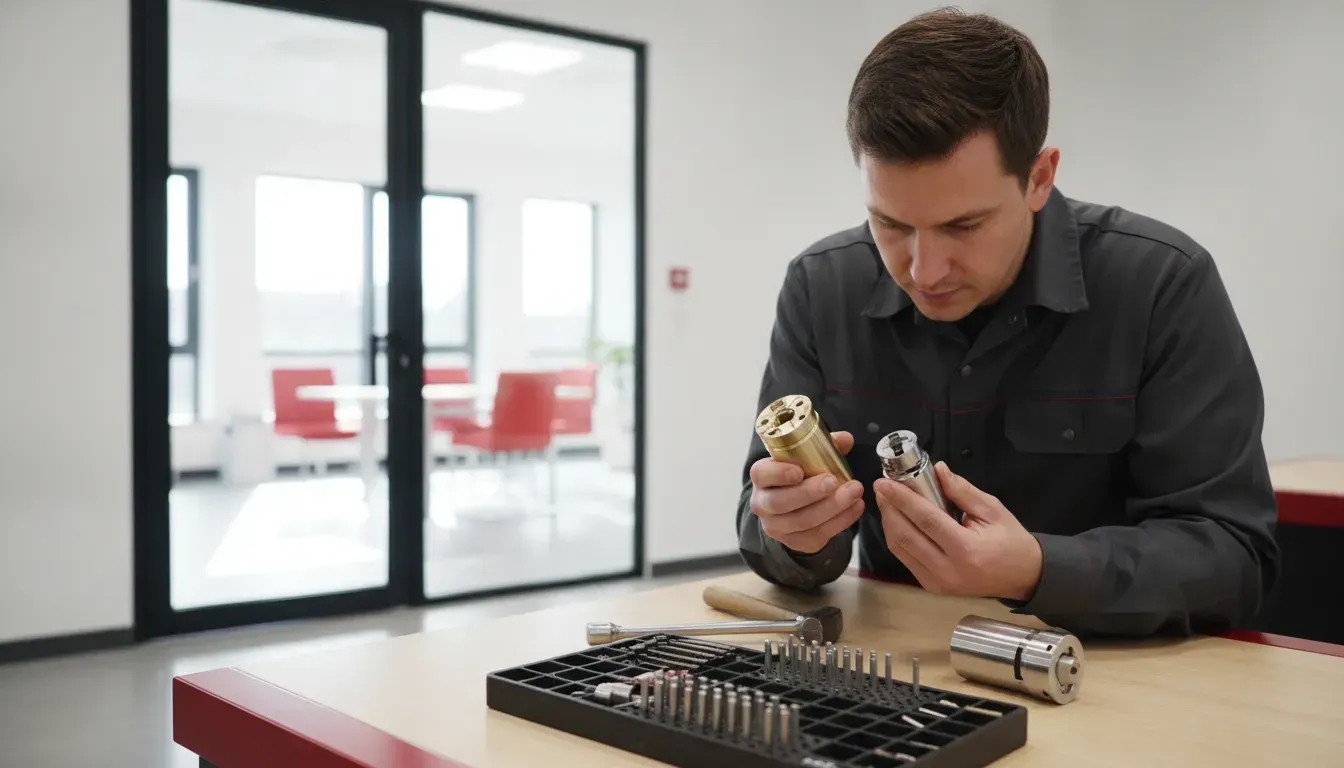
An interchangeable core is a removable lock cylinder that can be taken out of compatible door hardware with a special control key. Instead of disassembling the lock or replacing the entire cylinder, a qualified technician can remove the core and install a different one that is properly matched to the building's keying system. SFIC means Small Format Interchangeable Core, while LFIC means Large Format Interchangeable Core. They are distinct format families, and the exact compatibility rules depend on the manufacturer, housing, keyway, and system design.
Control keys and operating keys serve different purposes
A control key is used by an authorized person to release the interchangeable core from its housing. It is not the same as an operating key, which is the key used to unlock the door during normal daily access. Keeping those functions separate helps a business limit who can change a core and who can enter a space. Control-key custody should be documented and restricted according to the facility's access policies.
Operating keys can be organized into a master-key structure, giving employees access to the doors they need while preserving higher-level access for designated managers or administrators. The exact hierarchy depends on the existing hardware, keyway, and system design. A locksmith should assess those details rather than assume that a new core will match an existing key.
Why commercial facilities use interchangeable cores
Commercial buildings often face employee turnover, lost keys, tenant changes, renovations, and changing access requirements. An interchangeable core can support a controlled rekeying process with less disruption than changing complete locksets. Texas A&M's hardware guidance, for example, identifies small-format interchangeable cores for quick rekeying and requires renovation keying to match the existing building system. That illustrates the planning issue: speed is useful only when the replacement remains part of a documented, compatible system.
For help evaluating commercial master-key systems, The LOCK Shop can review the current hardware, access hierarchy, and rekeying needs before recommending a path forward.
How to Compare SFIC vs LFIC for a Commercial Building
SFIC and LFIC are both interchangeable-core formats, but they are not interchangeable with each other. The right choice depends on the building's existing lock housings, manufacturer, keyway, pin configuration, and master-key design. A format that works well in a new or mixed-brand system may not fit a building that is already standardized around one manufacturer's hardware.
SFIC vs LFIC considerations for commercial planningConsiderationSFICLFICFormatSmall-format interchangeable core with a standardized figure-eight profile.Large-format interchangeable core that is generally tied more closely to a manufacturer's system.CompatibilityMay work across documented manufacturer-specific systems when the hardware is specifically SFIC-compatible.Usually requires a compatible housing and core design from the applicable manufacturer. A core from one manufacturer's system may not fit another's.Keyway and pinsMany systems use six- or seven-pin configurations, but the exact keyway and core system must be verified.Pin count, key section, and keyway vary by manufacturer, so verify the exact housing and core design.Changeover implicationsCan support a planned system built around interchangeable cores, including mixed-brand compatible hardware.May be a practical path when a facility wants to preserve an established manufacturer's keying approach and compatible hardware.When it may fitFacilities that value format standardization or need flexibility across documented SFIC-compatible hardware.Facilities that prefer a single-manufacturer standard or are extending an existing LFIC-compatible system.
Visual inspection can narrow the possibilities, but it cannot identify every SFIC or LFIC system. Confirm the manufacturer, housing, keyway, core dimensions, and pin configuration before ordering. Some manufacturers also use terms such as Full Size Interchangeable Core, or FSIC, for a specific product family, so do not treat FSIC and LFIC as universal synonyms without checking the applicable hardware documentation.
Pin count also should not be treated as a universal security ranking. Research commonly describes SFIC systems as six- or seven-pin and LFIC systems as typically six-pin, but the building's key hierarchy, existing housings, and future maintenance needs matter more than a label alone. Neither format is universally best. Before a changeover, document the current cylinders and housings, confirm the manufacturer and keyway, and review how rekeying, master-key levels, lost keys, and future door additions will be handled.
How Do SFIC and LFIC Affect Rekeying and Maintenance?
The practical difference between SFIC and LFIC becomes most important when access needs to change. Employee turnover, a lost master key, tenant turnover, or a door hardware replacement can create an urgent need to control who still has access. An interchangeable-core system can support a planned rekeying process, but the exact procedure depends on the existing housing, manufacturer, keyway, pin configuration, and master-key design.
Small-format interchangeable cores are commonly selected where quick rekeying is an operational priority. Texas A&M's hardware guidance, for example, specifically describes small-format cores for quick rekeying. That institutional example does not mean SFIC is automatically the right choice for every building. It does show why facilities teams should evaluate how often cores may need to be changed and how much disruption a change can create. LFIC systems may also support efficient rekeying, but compatibility and replacement choices are more dependent on the established hardware standard.
Plan for turnover, lost keys, and construction cores
Before changing a core, identify which doors, departments, tenants, and key levels are affected. A lost key may require more than replacing one cylinder if it operated multiple openings or sat within a master-key hierarchy. Keep control keys secured, limit duplication to authorized channels, and record issued keys, returned keys, and unresolved losses.
Construction cores need a defined handoff. Texas A&M assigns its building access department responsibility for replacing construction cores with permanent cores and returning the temporary cores to the contractor. Your organization should similarly name the person responsible, set the changeover point, and confirm that permanent cores match the approved system.
Make maintenance records part of key control
Maintain a current schedule of core locations, keyways, master-key levels, control-key custody, installation dates, inspections, and service history. Inspect housings and related lock hardware when a core is replaced rather than assuming the core alone explains every problem. Renovation guidance from Texas A&M also stresses matching new locksets and keying to the existing building system. Validate that standard before ordering replacements or expanding the system.
For help assessing compatible hardware, see The LOCK Shop's commercial lock installation and repair services. A documented review can prevent an apparently simple rekey from creating mismatched cores, unclear key control, or maintenance problems later.
Planning a rekey or core-system change? Request a commercial assessment before ordering replacement hardware.
Which Format Fits Your Business or Property?
The right choice depends less on a simple SFIC versus LFIC preference and more on the system already installed. Start by documenting the existing core format, lock housings, manufacturers, keyways, and master-key structure. A core that appears similar may not fit the housing or support the key system your property uses.
Evaluate the hardware already in place
Inspect the affected doors, not just one representative opening. Note whether the property uses mortise locks, rim cylinders, exit devices, electronic locks, or a mixture of hardware. Record the current manufacturers and identify any doors that must retain a particular function or key override. A documented hardware assessment can prevent a format change from creating compatibility problems or unexpected replacement work.
Consider standardization and mixed-brand needs
SFIC is a small-format design used in multiple manufacturer-specific systems, while LFIC is larger and is generally tied more closely to a manufacturer's housing and key section. LFIC is not automatically cross-compatible between manufacturers. If your building is standardized on one manufacturer's hardware and does not need cross-brand interchangeability, staying within that system may simplify planning. If the property has mixed brands, confirm which housings, cores, keyways, and existing keys can work together before selecting a replacement.
Do not assume that a format change preserves the current master-key hierarchy. Review who needs access, which doors belong to each level, and whether new cores must integrate with existing operating and control keys. For larger properties, commercial lock system planning can help organize those decisions before work begins.
Plan around operations, not just the core
List every door affected and decide when technicians can work without disrupting employees, tenants, customers, deliveries, or emergency egress. Consider spare cores, construction cores, key custody, records, and future expansion. A system that looks suitable on paper may be impractical if it requires too many doors to be taken out of service at once.
The best decision is the one that fits your hardware, access hierarchy, maintenance process, and operating schedule. The LOCK Shop can assess those conditions before a planned commercial rekeying or lock-system change, without treating either format as a universal winner.
Can SFIC and LFIC Work in the Same System?
SFIC and LFIC cores can exist within the same building, but they do not interchange directly. A small-format interchangeable core is not a drop-in replacement for a large-format interchangeable core, and the reverse is also true. The core must match the lock housing, related hardware, keyway, and keying system already installed on the door.
That physical difference does not prevent a property from using different systems in different areas. It means the arrangement needs to be intentional. For example, a facility might retain one core format in an established office area while using another format in a newer addition. Each area would need compatible hardware and its own defined keying logic. The master-key plan must clearly show which keys operate which doors, where the systems meet, and which boundaries are deliberate.
Key control is especially important in a mixed environment. Control keys, operating keys, spare cores, and records should be labeled by system rather than treated as interchangeable inventory. Technicians and facilities staff also need to know which core belongs in each housing before a rekey, lock repair, or emergency replacement. Clear documentation reduces the risk of ordering the wrong component or creating an unintended access path.
When evaluating sfic vs lfic for an existing building, start with an inspection of the doors, housings, manufacturers, keyways, and current master-key hierarchy. A locksmith can map those details and identify whether a planned change is a compatible expansion, a separate system, or a larger hardware conversion. The right answer depends on the building's access plan, not on the format name alone.
Questions to Ask Before Changing an Interchangeable Core System
A core change affects more than the cylinder in one door. Before ordering parts or changing the key plan, document the existing system and confirm how the proposed work will affect daily operations, access rights, and future maintenance.
- What format is installed now? Confirm whether the doors use SFIC, LFIC, or another cylinder format. Do not identify the format from a key alone when the hardware can be inspected.
- Who made the core and housing? Record the manufacturer, housing type, and lock function for each affected opening. LFIC compatibility is not automatically shared across manufacturers, so the housing and replacement core must be checked together.
- What keyway and pin configuration are in use? Document the key section, keyway, and pin arrangement. A replacement that looks similar may still fail to support the current keys or master-key plan.
- How is the master-key hierarchy organized? Map operating keys, sub-master keys, master keys, and any restricted access levels before changing a core. Renovation guidance from Texas A&M emphasizes matching new locksets and keying to the existing building system: review the existing-system requirement.
- Who controls the control key? Decide who may authorize core removal, receive control keys, store them, and document their use. Clear custody rules help prevent an informal change from creating an undocumented access path.
- Which doors are affected? List every opening, tenant area, exterior entrance, restricted room, and connected electronic lock. For electronic hardware, preserve an appropriate manual key override where the system design requires one, as described in this project-planning guidance.
- How much downtime can the business tolerate? Plan access coverage, staff communication, and temporary credentials or keys before work begins. Ask whether doors can be handled in phases rather than all at once.
- Are construction cores still in service? Identify temporary cores, who is responsible for exchanging them, and how returned cores will be secured. Texas A&M assigns construction-core replacement and return as a defined building-access responsibility.
- Will the system need to expand? Consider future doors, tenants, departments, master-key levels, and additional buildings. The best choice today should remain documentable and supportable as the property changes.
- What maintenance records will be kept? Preserve a current door schedule, keying records, core locations, authorization history, and service notes. Share the documentation with the locksmith and the person responsible for ongoing access management.
Need help reviewing an existing core system? Request service from The LOCK Shop for documented commercial lock planning and rekeying support, or call (480) 452-4505.
Frequently Asked Questions
What are the key differences between SFIC and LFIC cores?
SFIC means Small Format Interchangeable Core, while LFIC means Large Format Interchangeable Core. They differ in physical size, compatibility rules, keyway conventions, and how they fit the existing lock hardware. SFIC is a standardized format in compatible hardware, while LFIC is more closely tied to the manufacturer and housing.
Are all LFIC cores interchangeable?
No. LFIC cores are not automatically compatible across manufacturers. The core must match the lock housing, brand, key section, and system design. Confirming the manufacturer and existing hardware before ordering or changing cores helps prevent a mismatch. A locksmith can verify the existing format and compatibility before a system change.
Can SFIC and LFIC be mixed in the same building?
They can coexist in a building when the system is deliberately designed around compatible hardware and clearly documented keying boundaries. However, an SFIC core does not simply interchange with an LFIC housing. A locksmith should review the doors, cylinders, keyways, master-key hierarchy, and future expansion plans before combining formats.
Is one format more secure than the other?
There is no universal answer. Security and operational results depend on the specific core, lock hardware, key control, installation, and master-key design. Choose based on the building's existing system and management needs rather than assuming that SFIC or LFIC is always the better option.
Can a locksmith identify an existing core?
Usually, a locksmith can begin with a visual inspection of the core face, lock housing, key, and cylinder. The face can provide useful clues, but identification should also confirm the manufacturer, keyway, pin configuration, and compatibility with the rest of the system. Bring existing keys and access records when available.
Ready to Plan Your Core-System Change?
The right next step is a documented review of your existing housings, keyways, core format, and master-key requirements. That assessment can help your team plan commercial rekeying or a future SFIC or LFIC change with fewer compatibility surprises. To discuss your building's needs with The LOCK Shop, request service and share the details of your current system.