October 9, 2026
Learn how to plan moving a safe, assess weight, route, floors, and doorway risks, prepare safely, and know when to call The LOCK Shop for professional guidance.
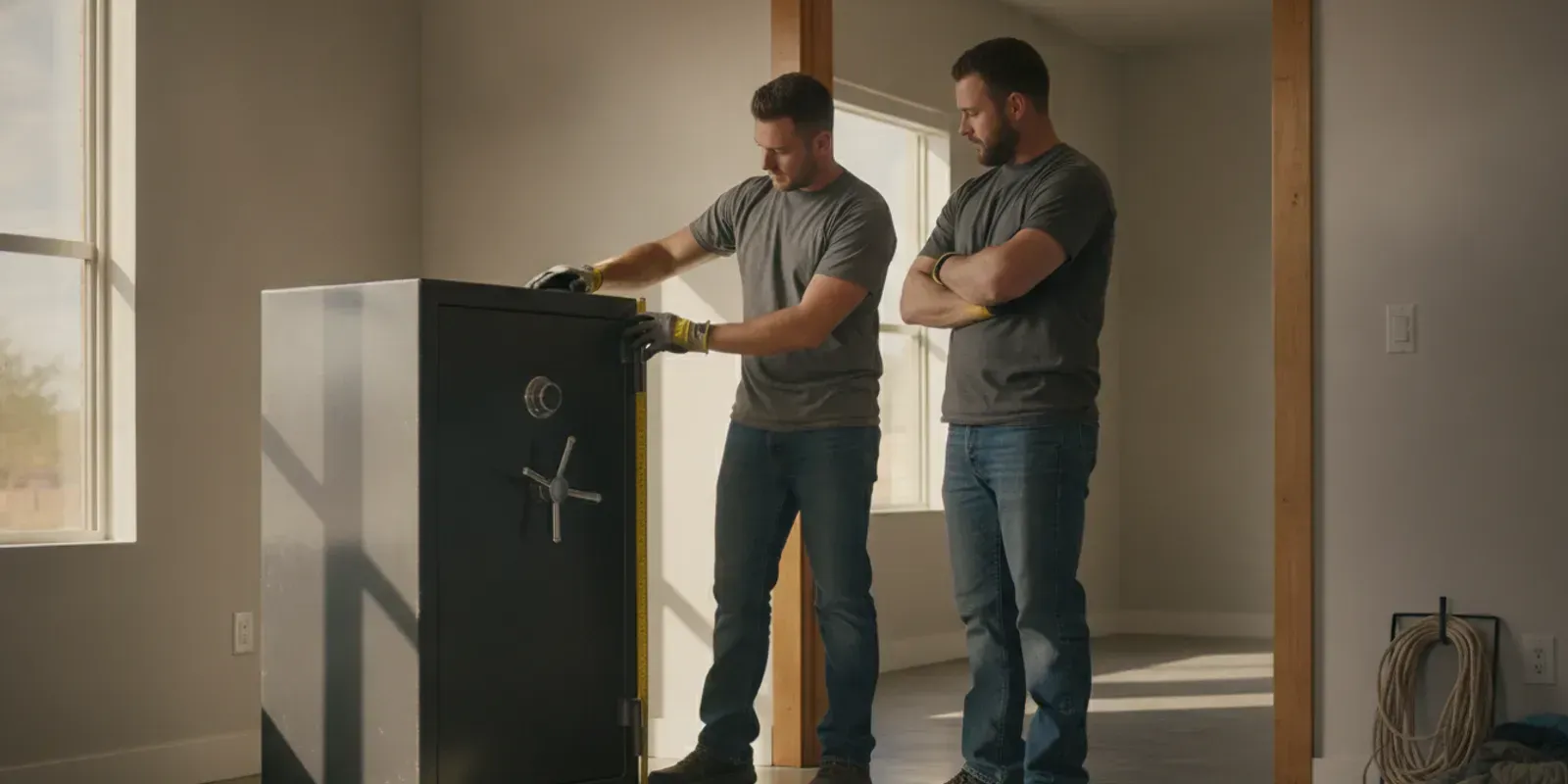
Moving a safe takes more planning than moving an ordinary cabinet. Its weight, shape, center of gravity, and location can make a short trip across a room risky. Before moving a safe, assess the load and the entire route, protect the floor and doorways, and decide whether the move belongs with trained professionals.
Request safe-moving guidance from The LOCK Shop
Why does moving a safe need careful planning?
A safe can be dense and difficult to grip. Its weight may be concentrated in a compact footprint, and the door can affect its balance when open. A safe that seems manageable to push may be hard to stop, turn, or control on a slope. If it tips, it can injure someone, damage the safe, or harm flooring, walls, stairs, and door frames.
Do not judge the task by the distance alone. Moving a safe a few feet over a level concrete floor is different from getting it through a narrow doorway, over a threshold, down stairs, or into a vehicle. The most challenging part may be a single turn or transition.
The safest plan starts with facts, not a guess. Find the safe's make and model if known, its approximate dimensions and weight, where it sits now, and where it needs to go. If you do not know its weight, do not try lifting or tilting it to find out. Check its documentation or ask a safe professional how to assess it.
What should you learn about the safe before moving it?
Record the information that helps someone assess the job. You do not need to open or dismantle the safe to prepare. Take measurements only where you can do so without reaching under it or putting yourself in a pinch point.
- Approximate weight: Look for a model label or owner documentation. If neither is available, explain that the weight is unknown.
- Exterior dimensions: Measure height, width, and depth, including handles, hinges, or other parts that stick out.
- Safe type and condition: Note whether it is freestanding or built in, and whether it appears damaged, unstable, or attached to the floor or wall.
- Contents: Consider whether removable contents can be taken out safely. Do not remove doors, bolts, or other parts unless the manufacturer or a qualified professional instructs you to.
- Lock and access: Make sure you can secure the door for the move. Avoid sharing a combination or access code in an unsecured message.
A safe that is bolted down or integrated into cabinetry is not simply a loose object to roll away. Anchors, trim, electrical lines, and the surrounding structure may affect how it can be moved. If you are unsure whether it is attached, stop and ask before trying to shift it.
How do you check the route and floor?
Walk the complete route from the safe's current spot to its destination. Include each turn, doorway, threshold, ramp, landing, and final placement area. Measure narrow points rather than estimating. Compare the clear opening with the safe's dimensions, including any projecting hardware. Remember that maneuvering space is needed; a safe that fits through a straight opening may not fit around a tight corner.
Look down as well as ahead. Identify floor transitions, loose rugs, cords, clutter, uneven surfaces, and steps. Check for soft or damaged flooring and consider whether a concentrated heavy load could leave dents, scratches, cracks, or other damage. A floor's appearance alone does not confirm that it can safely support the safe and moving equipment.
Stairs deserve special caution. Their slope, width, turns, handrails, and landings all affect the plan. Do not attempt a stair move with improvised equipment or by asking friends to lift from different levels. If any part of the route involves stairs, a steep ramp, or an uncertain floor, treat it as a professional-assessment issue before moving anything.
Clear the route before the move, but do not start shifting the safe to make room. Open doors fully, move loose items, and keep children and pets away. If another person is helping with planning, agree on who will direct access and keep others outside the work area.
What are the main doorway and floor risks?
Doorways can be narrower than they look because of trim, hinges, handles, or a door that cannot open fully. A safe may also need to be angled to pass through, which changes the space it requires and can shift its balance. Do not force it against a frame or remove a door just to make the dimensions work. A professional can assess whether the opening and turning space are adequate and what preparation is appropriate.
Floor damage is another common concern. Wheels or moving equipment can concentrate pressure in small areas. Hard flooring can scratch, while softer flooring may compress or tear. Transitions between rooms can catch equipment and make the load harder to control. Protective boards or other safeguards need to be suitable for both the load and the floor; a thin household mat may not provide meaningful protection.
Also protect walls, corners, cabinets, and the safe's finish. Padding can help prevent incidental scrapes, but it does not make an unstable load safe. Keep hands and feet away from the space beneath the safe and between the safe and fixed surfaces. Never position yourself where you could be trapped if it shifts.
Need help assessing a safe route? Request service details before moving it.
How should you prepare the room and destination?
Choose the final location before arranging a move. Confirm that there is enough clearance to use the safe's door and lock, and that the safe will not block an exit, walkway, or access to other equipment. Think about future access as well as getting it into place today. If the destination is in a different building, confirm the receiving area and route before anyone begins.
Prepare a clear path without dismantling or shifting heavy fixtures. Remove small obstacles, secure pets elsewhere, and make sure the work area has adequate lighting. If the safe needs to pass through a shared hallway or other occupied space, arrange access so bystanders do not walk into the route.
Tell a professional about any access constraints in advance: stairs, tight turns, thresholds, limited parking or loading access, or a destination on a different floor. A few clear photographs of the route can help explain the layout, but photos do not replace measurements or an on-site assessment when one is needed.
Should you move a safe yourself or call a professional?
There is no universal weight cutoff that makes a safe move safe for a do-it-yourself crew. Weight is only one factor. Equipment, experience, safe design, route geometry, floor conditions, and the ability to control the load all matter. A safe's reported weight does not tell you whether a particular doorway, stairway, or floor is suitable.
Consider professional help when the weight is unknown or substantial, the safe is anchored, the route includes stairs or a steep incline, turns are tight, the floor is vulnerable, or you cannot clearly explain how the safe will be controlled throughout the move. These are also good reasons to seek guidance if the safe has a damaged base, an unusual shape, or a door that will not stay securely closed.
A professional assessment is useful even if you are still deciding. Share what you know and ask what details are needed to evaluate the move. The LOCK Shop provides safe services; visit the safe services page to learn more or use Request Service to describe a planned job. Service needs vary, so do not assume every safe or route can be handled the same way.
If you decide to handle a move without professional help, do not improvise a lifting plan for a load you cannot control. Avoid using furniture dollies, straps, ramps, or vehicles unless the equipment is appropriate for the safe and the people using it know how to operate it safely. Never try to catch a tipping safe. If the load shifts, clear the area and get qualified help rather than continuing.
What should you ask before arranging safe-moving help?
A clear conversation helps the provider understand the work and helps you decide what to do next. You can prepare these details before calling or submitting a request:
- What is the safe's approximate size, weight, make, and model, if known?
- Is it freestanding, anchored, built in, or of uncertain attachment?
- Where is it now, and where does it need to go?
- Does the route include stairs, a ramp, a narrow door, a tight turn, or an uneven threshold?
- What are the narrowest measurements along the route and at the destination?
- What floor surfaces are involved, and are there areas that may be damaged or unstable?
- Does the safe have visible damage or a door that will not stay closed?
- What preparation should you complete, and what should you leave untouched?
- What information is needed for an estimate, and does the job require an on-site assessment?
Be direct about what you do not know. It is better to say that the weight, anchor status, or floor construction is unknown than to guess. The LOCK Shop offers free over-the-phone estimates, but the details and scope of a particular job affect what can be estimated. You can also review the frequently asked questions or contact the Mesa team with a general question.
Contact The LOCK Shop before your safe move for a free estimate.
What should you do after the safe is in place?
Once the safe is positioned, confirm it is stable and that the door opens and closes as expected. Check that the lock works, the route is clear, and the safe does not interfere with a doorway or required access. If the safe was secured to a surface before the move, ask a qualified professional whether it should be anchored again at its new location. Do not assume an old anchoring method is suitable for a different floor or wall.
Keep any installation or service notes with your safe documents. If the move involved a change in access, review who knows the combination or has a key, and store that information securely. If the lock or safe behaves differently after the move, stop using it until the issue has been assessed rather than forcing the mechanism.
Frequently asked questions about moving a safe
Can I move a safe with a furniture dolly?
Not necessarily. A furniture dolly may not be rated or configured for a safe's weight, footprint, or center of gravity. The route and ability to control the load matter too. Do not use one unless it is appropriate for the safe and the person directing the move knows how to use it safely.
Should I empty the safe first?
Removing contents may reduce the load, but only take out items that can be removed without risk and that you can secure separately. Do not disassemble the safe or remove its door to make it lighter unless a qualified professional or the manufacturer specifically advises it.
Can a safe be moved up or down stairs?
Some safe moves may be possible, but stairs make the job more demanding and hazardous. The safe's weight and shape, stair construction, turns, landings, and equipment all need to be considered. Do not try a stair move with an improvised team or setup; seek a professional assessment.
How can I tell if my floor can support a safe?
You cannot confirm floor capacity just by looking at the surface. Safe weight, placement, floor construction, and the building all matter. If the load is substantial or the floor is uncertain, consult an appropriate building professional or safe-moving specialist before placing the safe.
What information should I provide when requesting help?
Share the safe's known dimensions and approximate weight, whether it may be anchored, the starting and destination locations, and route details such as stairs, tight turns, and floor surfaces. Say clearly when information is unknown. This helps the provider determine what questions or assessment may be needed.
A safe move is best treated as a controlled logistics job, not a quick lift. When weight, access, or floor conditions are uncertain, pause and get qualified guidance before the safe is disturbed.