September 30, 2026
Overview of practical ways to secure a sliding glass door, from track barriers to lock checks.

A sliding glass door can look secure while relying on a small latch and a track that leaves other entry points worth checking. The safest approach is to evaluate the complete door, including the panel, frame, lock, track, glass, and the visibility around it. That helps you choose practical improvements instead of assuming one add-on fits every home.
Request a residential locksmith assessment from The LOCK Shop
Start with the reason a standard latch may not be enough. Looking at the door as a complete entry system makes it easier to spot weaknesses and balance added security with everyday operation and emergency egress.
Why Sliding Doors Need More Than a Standard Latch
Sliding doors are convenient, bright, and often central to a home's outdoor living space. Their security needs a little more attention than a simple lock check, though. A latch is only one part of the entry. The door panel, locking hardware, and glass all contribute to how well the entire unit resists unwanted entry.
The National Institute of Justice standard for residential sliding glass door units evaluates several separate elements, including resistance to door-panel removal, locking-device strength, and glazing impact strength. That scope is useful for homeowners because it shows why a single-point approach can leave gaps. A latch may engage correctly while the surrounding panel, track, or glass still deserves inspection.
The panel and lock work together
Unlike a hinged entry door, a sliding door moves along a track. The panel must remain properly positioned, and the locking device must hold it in place. If the lock is worn, loose, outdated, or poorly matched to the door, locking the handle may provide less protection than expected. The right fix depends on the door's construction and existing hardware, so avoid assuming that one replacement lock will fit every patio door.
Local police guidance makes the same practical point: homeowners should not assume that a sliding-door latch alone is secure enough. That does not mean every sliding door is unsafe. It means the latch should be treated as one layer in a broader check of the opening. Look at whether the door closes fully, whether the lock engages cleanly, and whether the panel and frame appear stable.
Layered security is a measured approach
Learning how to secure sliding doors starts with matching each layer to the actual weakness. A homeowner may need to address the lock, the panel's movement, or the glass rather than adding hardware at random. A secondary barrier can help limit movement, while an updated locking device may address worn or outdated hardware. Any addition should still allow the door to operate as intended and should not create a safety problem during an emergency.
For that reason, begin with an inspection instead of a guarantee or a one-size-fits-all product. Note the door type, condition, and current hardware before choosing an upgrade. A careful assessment creates a practical security plan without alarmist claims and helps ensure that each improvement supports the rest of the entry.
How to Secure Sliding Doors With Track Barriers
A track barrier adds a physical stopping point behind the door, so the panel cannot simply slide open when the latch is bypassed or fails. It is a practical layer, but it must fit the door and be used with the door's existing lock. The best barrier for your home depends on the track shape, panel movement, frame, and how the door is used day to day.
- Close and lock the sliding door first. Move the panel fully into its closed position and engage the built-in latch. A barrier is not a substitute for locking the door. Glendale Police cautions that homeowners should not assume a sliding-door latch alone is secure enough. While Westchester County recommends keeping sliding glass doors locked and adding a rod or pole in the track. See the Glendale Police guidance and Westchester County home-security guidance.
- Measure the usable track space. With the door closed, check the distance between the moving panel and the jamb or fixed panel, depending on the barrier style. A wooden pole, broom handle, or metal rod should sit securely in the track without rocking, slipping, or putting pressure on the glass. Do not assume that a barrier that works on one patio door will fit another. Track depth, clearance, rollers, and frame design vary.
- Place the barrier where it blocks movement. SIUE advises placing a wooden pole or broom handle in the sliding-glass-door track to keep the door from opening. Westchester County similarly notes that a rod or pole can help prevent a burglar from forcing the panel open or lifting it off the track. Use a piece that is long enough to block the panel's travel, but not so tight that removing it becomes difficult in an emergency.
- Test the barrier from inside the home. Apply gentle pressure to the closed panel and confirm that the barrier stays seated and the door does not move unexpectedly. Check that the pole or bar does not contact the glass, obstruct the handle, damage the frame, or create a trip hazard. Recheck it after cleaning the track or adjusting the rollers, since the available clearance can change.
- Protect emergency egress. Never secure a sliding door in a way that prevents household members from opening it quickly during a fire or other emergency. Everyone who may need to exit should know where the barrier is and how to remove it without tools. Seattle Police advises considering escape needs before adding devices that restrict a window's opening; the same safety principle applies to a secured sliding door. If the barrier is difficult to release, interferes with an approved exit route, or is needed for a vulnerable household member, pause and reassess the setup.
A track barrier works best as one part of layered security, alongside a properly functioning lock and a door that remains aligned. If the panel lifts, drags, will not latch, or has an unusually loose track, avoid forcing a makeshift solution. The door or hardware may need an inspection before you choose a replacement barrier.
Lock and Anti-Lift Upgrades for Sliding Doors
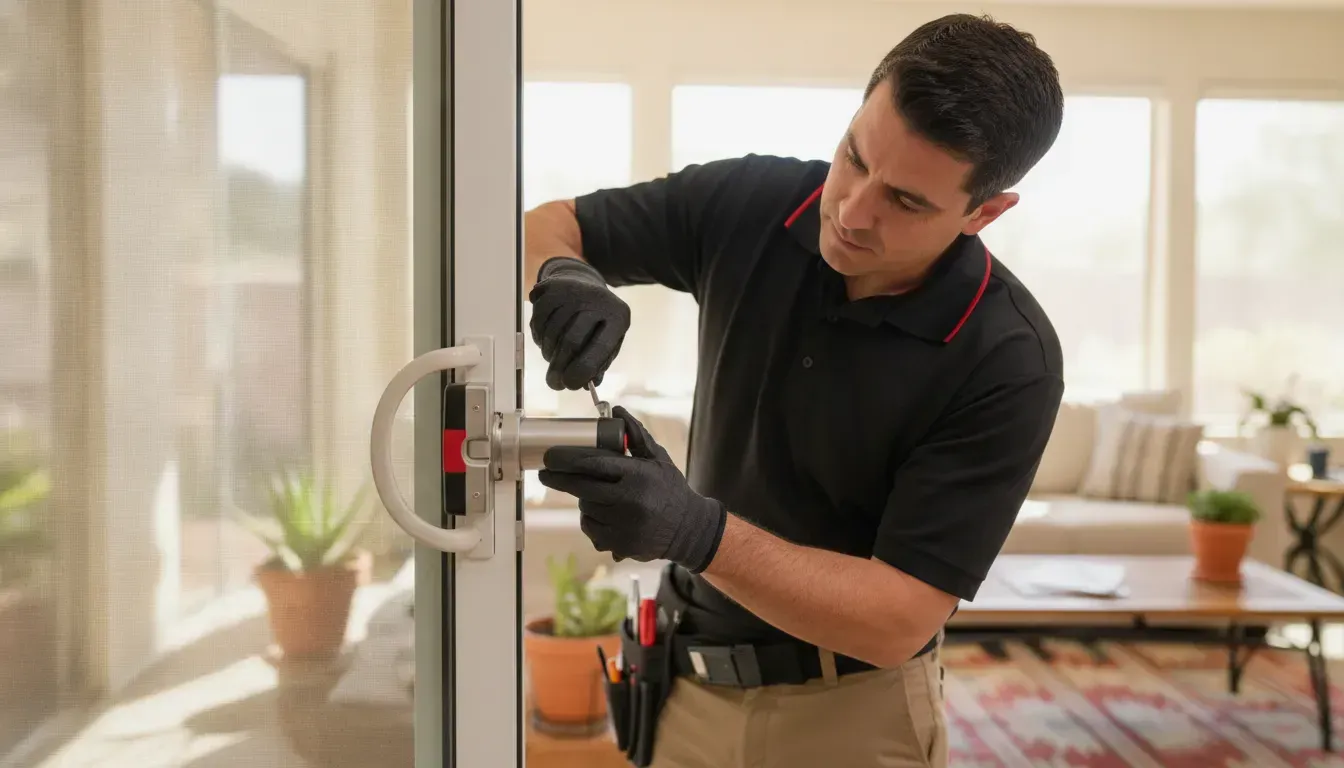
A sliding door's factory latch may be worn, poorly aligned, or simply too limited for the way the door is used. Start by checking whether the latch engages fully when the door is closed. Look for a handle that feels loose, a lock that sticks, or a door that can be moved after the latch is engaged. These signs do not automatically identify the right replacement, but they do show that the existing hardware deserves attention.
Do not assume that a latch alone provides complete protection. Glendale Police specifically cautions homeowners not to rely on the latch as the only security measure. A locksmith can evaluate the latch, strike or receiving point, frame, rollers, and surrounding clearance together. That matters because a replacement lock must fit the actual panel and frame. Sliding-door designs, frame profiles, clearances, and operating directions vary, so a product that works on one door may interfere with another.
When an updated lock makes sense
Replace or repair hardware when the lock no longer closes consistently, the latch does not align with its receiving point, or the mechanism shows damage or excessive wear. An updated lock may provide a better fit or a more dependable locking action, but the correct choice depends on the door's construction. Chaffey College's home-security guidance recommends ensuring that sliding-glass-door locks are up to date, while Westchester County notes that special locks are available for improved sliding-glass-door security.
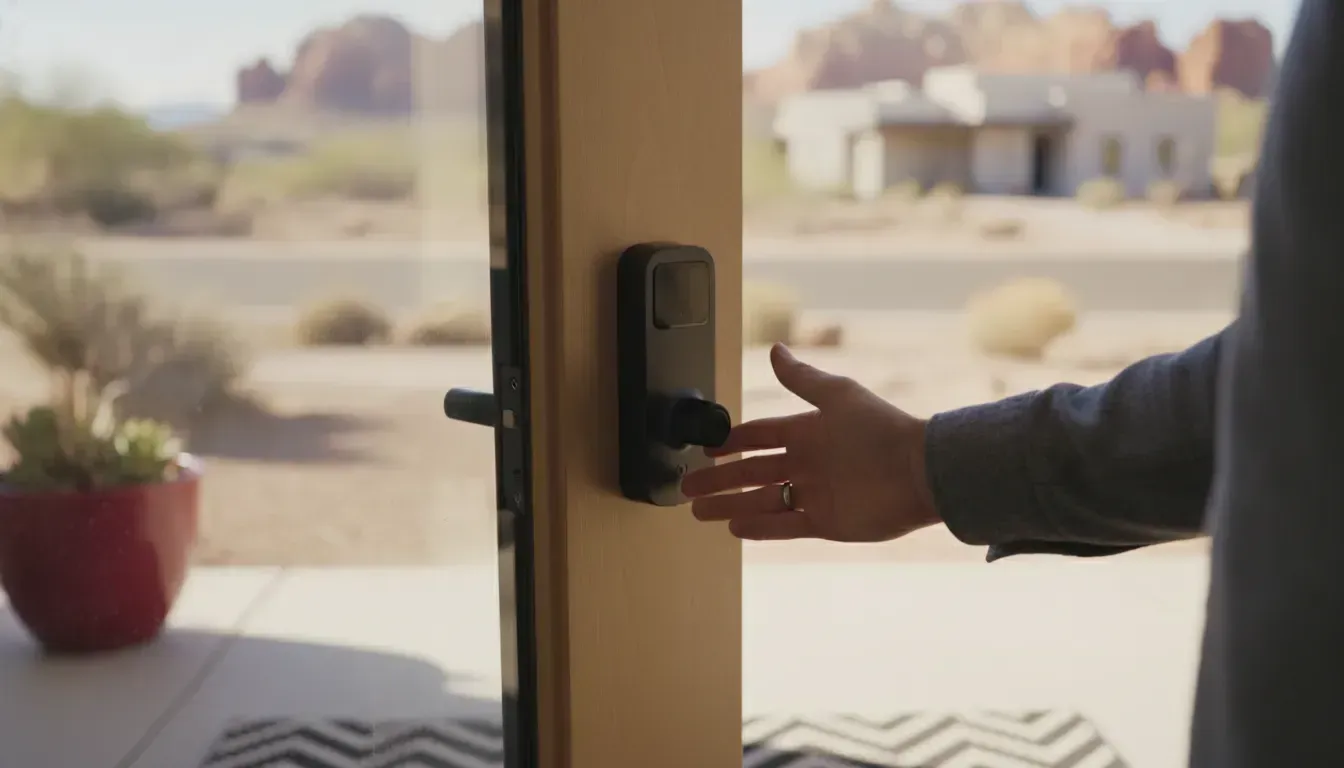
Those recommendations are not a reason to install a specific product without an inspection. Measure and identify the existing hardware first, then confirm that the proposed lock will not prevent normal operation, damage the frame, or create a hazard during an emergency. If you are considering a multi-point or keyless system, compatibility should be verified on the door itself rather than assumed from the product name.
Use secondary blocking and address lifting
A secondary blocking device adds another layer after the primary latch. Depending on the door, this may be a properly fitted bar, rod, or other device that prevents the moving panel from sliding. It should be secure when in use but removable when occupants need to open the door. Westchester County recommends a metal rod or wooden pole in the track to help resist forcing or lifting. And Seattle Police recommends secondary blocking devices for sliding windows where a latch is not enough.
Anti-lift protection requires the same door-specific care. A panel may be vulnerable if it has excessive vertical play or if its frame and rollers allow it to rise too far. Check for unusual movement, damaged rollers, gaps, or a panel that does not sit correctly in the track. Do not drill into the frame or add a blocking device where it could obstruct egress without understanding the consequences. Seattle Police advises considering emergency escape needs before securing an opening against movement. A qualified assessment can balance security, daily use, and safe exit.
For help determining whether your door needs repair, a lock change, or a broader security assessment, review The LOCK Shop's residential locksmith services. The actual door and hardware should guide the recommendation.
Glass, Frame, Visibility, and Lighting Improvements
Security is not only about the latch. The glass, frame, surrounding view, and nighttime lighting all affect how exposed a sliding door is and how easily someone can work at it without being noticed. Treat these features as supporting layers, not as substitutes for a properly fitted lock and a secure track.
Inspect the glass and frame
Look for cracked glazing, loose frame components, damaged rollers, gaps, or movement that lets the panel shift when it is closed. National Institute of Justice testing for residential sliding-glass-door units addresses glazing impact strength, door-panel removal resistance. And locking-device strength, which are useful categories to keep in mind during an inspection. A glass film, screen, or decorative treatment may improve privacy or change how the door looks. But do not assume it will stop a break-in or make the door impact-resistant. Any replacement or reinforcement must match the existing panel and frame, and compatibility should be confirmed before work begins.
Improve privacy without creating a hazard
Blinds or curtains can reduce the view into rooms and help keep valuables and daily routines less visible. Seattle Police recommends using curtains or blinds over doors or windows that are easy to see into. That guidance also highlights an important safety check: before adding a secondary device or other measure that limits opening, consider whether the door or window could be needed for emergency escape. A security improvement should not create a blocked egress route, especially in a bedroom or another occupied room.
Use lighting and landscaping to support visibility
Motion-triggered flood lights can draw attention to movement near a patio or side entrance. Glendale Police highly recommends motion-triggered flood lights and advises trimming trees and shrubs near doors and windows. Landscaping should provide comfort and shade without giving someone a concealed place to work. Chaffey College similarly notes that burglars look for doors and windows blocked by trees or bushes so they can act undetected. Keep the frame and approach visible from the home and, where practical, from neighboring properties.
These changes work best together: maintain the glass and frame, preserve safe egress, reduce unnecessary visibility into the home, and keep the approach illuminated and clear. If the panel, frame, or existing hardware moves unexpectedly, have the entry assessed before choosing an upgrade.
A Practical Sliding-Door Security Inspection Checklist
Use this check before deciding whether your sliding door needs a repair, lock change, or professional assessment. The goal is to identify weak points without drilling, forcing hardware, or blocking an escape route. Door panels, frames, rollers, latches, and surrounding conditions vary, so treat this as an inspection guide rather than a one-size-fits-all installation plan.
For a professional evaluation, residential locksmith services can help determine whether repair, replacement, or another security step is appropriate.
When Professional Sliding-Door Lock Help Makes Sense
Home fixes can improve a sliding door's resistance to casual entry, but they cannot correct every hardware problem. Consider professional help when the panel is difficult to close, the latch no longer lines up with the strike. The lock feels loose, or the door can be lifted or moved more than it should. Damage, settling, worn rollers, and frame movement can all affect how well the locking parts engage. Adding a barrier without addressing that underlying problem may leave the entry inconvenient or less secure.
Compatibility is another reason to ask for an assessment. Sliding doors differ in their frames, panels, tracks, latches, and existing lock preparation. A qualified locksmith can inspect the door before recommending whether a repair, lock change, or installation is appropriate. That does not mean a particular product will fit every door, and The LOCK Shop does not claim a dedicated sliding-door product. The right scope depends on the door and hardware at the property.
What a locksmith can evaluate
A residential locksmith visit may help clarify whether the issue is a damaged lock, misalignment, worn surrounding hardware, or a broader entry-security concern. The assessment can also identify practical improvements for the door's current setup and help you understand the tradeoffs before work begins. If the lock can be repaired, repair may be more appropriate than replacement. If the hardware is no longer reliable or suitable, a lock change or installation may be considered after the fit is verified.
The LOCK Shop provides residential locksmith services, including documented residential lock installation, repair, lock changes, and security assessments. Mobile technicians can provide on-site service in Mesa, the East Valley, and the broader Phoenix metropolitan area. Service availability depends on the situation, location, and hardware, so describe the problem clearly when you call or submit a request.
When to contact a professional
Reach out if you are unsure how to secure sliding doors after moving into a home or after a break-in or attempted entry. Professional help can also make sense when keys or access control have changed. Or when a door must remain dependable for a child, older adult, rental property, or business space. You can review the company's professional lock services and request a free over-the-phone estimate. For urgent concerns, call The LOCK Shop at (480) 452-4505. Avoid forcing a jammed or damaged door, since that can worsen the alignment and increase repair needs.
Request service to review your sliding-door lock, track, and frame.
Frequently Asked Questions
How do you burglar-proof a patio door?
Start with the door's existing lock, then add a secondary barrier in the track, such as a correctly fitted dowel or security bar. Check whether the panel can be lifted from the track, improve lighting and visibility outside, and keep curtains or blinds closed when the room is vacant. Alexandria Police recommends locking sliding glass doors and using a track dowel to help prevent the door from sliding open: home security guidance.
How do you lock a sliding door with no lock?
Use a temporary track barrier only if it fits securely and does not prevent safe exit. A wooden dowel or metal bar can block the panel from sliding, but it is not a substitute for repairing or replacing a damaged latch. Because door clearances, tracks, and frames vary, have the hardware assessed before drilling or installing an auxiliary lock.
Can sliding doors be secure?
Yes. Security improves when you address both ways a panel may be defeated: sliding open and lifting out of the track. A sound primary lock, a compatible anti-lift measure, a secondary track barrier, adequate lighting, and clear sightlines create a layered approach. No single upgrade guarantees that an entry cannot be breached.
How do you keep sliding doors from swinging or moving?
First confirm that the panel is fully closed and the latch engages. A fitted barrier in the track can limit sliding, while an anti-lift device can help limit vertical movement. Do not permanently block a door without considering fire escape needs. Seattle Police advises considering escape routes before adding window or door security devices: home security guidance.
Ready to improve your sliding door security?
A closer look at the door, frame, track, and existing hardware can help identify practical upgrades for your home. The best next step depends on the door configuration and the condition of its components. Share what you have noticed when you request residential locksmith service through The LOCK Shop, and the team can help determine an appropriate next step.