October 1, 2026
Learn how to get a broken key out of a lock safely, what to avoid, and when to call a locksmith for non-destructive help.

A key that snaps inside a lock can turn a routine errand into an urgent access problem. The safest response is usually to stop turning the lock and avoid pushing the fragment farther in. Assess whether any part of the key is visible without disturbing the hardware.
Learning how to get a broken key out of a lock starts with protecting the lock itself: do not force the fragment. Add glue, drill, or keep trying tools if the piece is flush, tilted, or stuck. If the key is not easy to remove without resistance, a locksmith can help limit damage and determine whether the lock also needs repair or replacement.
The right next step depends on where the break occurred, whether the door or vehicle is secured, and how much of the key remains accessible. Start with a calm safety check, then use the following guidance to decide when a low-risk check ends and professional help is the better option.
What to Do First When a Key Breaks in the Lock
Stop turning the key as soon as it breaks. Continued pressure can push the fragment farther into the cylinder or put additional strain on the lock, door, or ignition. Take a breath, keep the area steady, and assess the situation before trying to remove anything.
Check the fragment without forcing it
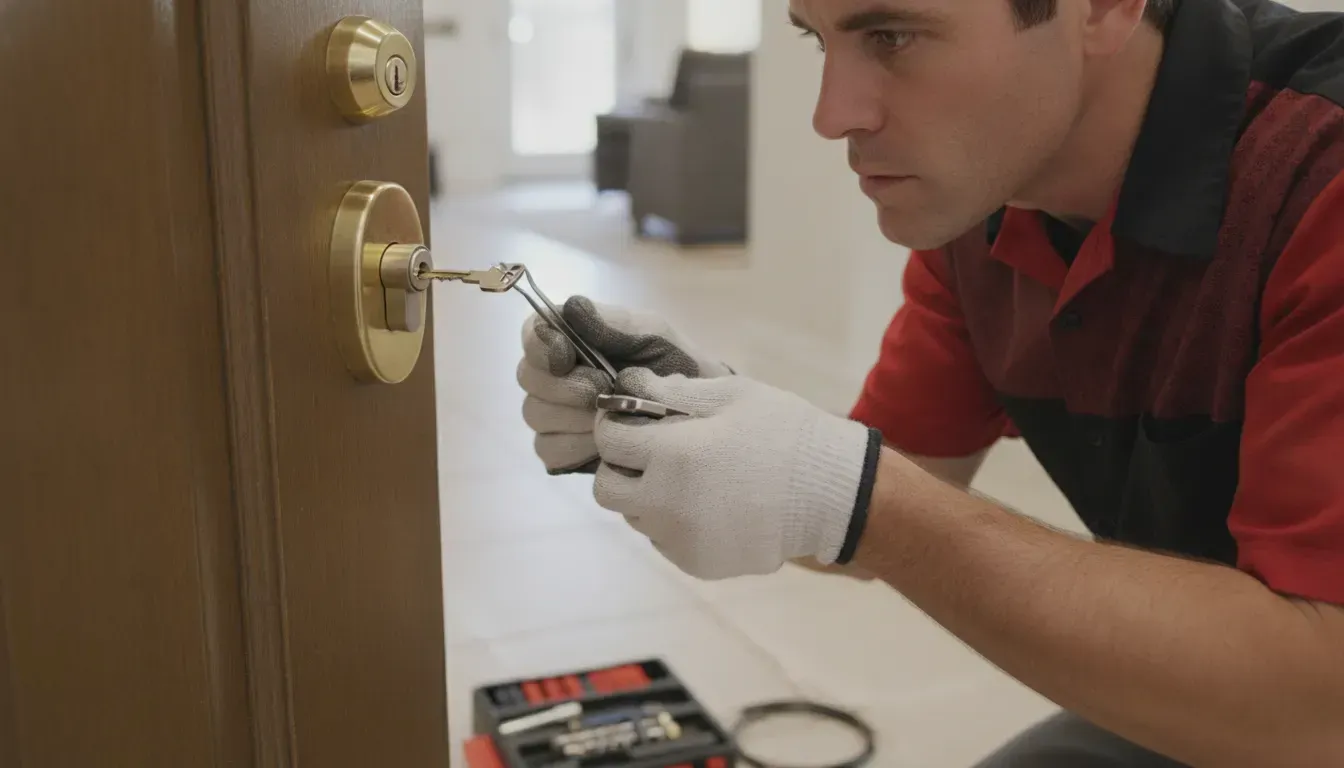
Look at the lock from a comfortable angle and determine whether any part of the broken key extends beyond the keyway. If the fragment is clearly visible and the lock is not under pressure, you can document what happened and decide whether a professional can address it safely. Do not twist, pry, or repeatedly probe the keyway to test whether the piece will move.
Also check whether the door, latch, or vehicle steering system is placing pressure on the lock. A locked home, business, or car in an unsafe location may need prompt assistance rather than experimentation. If someone is unable to enter or leave safely, or a vehicle is obstructing traffic, treat the situation as urgent. The LOCK Shop provides 24/7 emergency lockout help for home, business, and car lockouts.
Know when to stop
Professional extraction is the safer next step when the fragment is flush with the lock, deep inside, tilted, or difficult to see. It is also the better choice when the lock is already sticking. The same applies when the key broke while turned, the lock is under load, or the cylinder will not return to its normal position. These conditions can make improvised removal more likely to damage internal components.
Avoid force, drilling, glue, and improvised blades. Glue can bond the broken piece to the lock, while forceful tools can scratch surrounding surfaces or worsen the damage. Instead, keep the fragment and any remaining portion of the key available for identification. A locksmith can assess whether the lock needs extraction, repair, or replacement. For urgent help, call The LOCK Shop at (480) 452-4505. For a planned home repair after the immediate problem is resolved, see the company's residential locksmith services.
How to Get a Broken Key Out of a Lock Without Damage
A broken key fragment may sometimes come out without replacing the lock. The safest option depends on what you can see and how the lock is behaving. If a small portion of the key is clearly protruding, the lock is stable. And the door or vehicle is not under pressure, you may be able to assess the situation without making it worse. The important part is knowing when to stop. Searching for how to get a broken key out of a lock should not lead to repeated attempts that bend the fragment. Damage the cylinder, or push the key farther inside.
When a low-risk assessment may be reasonable
Start by leaving the lock alone. Do not keep turning the key, push it farther into the cylinder, or put pressure on the door. Look at the key fragment from a comfortable position and note whether its edge is visible. If the fragment is flush with the lock face, tilted, deep inside, or difficult to see, the situation is no longer a simple visual check. A lock that is binding, a door that is pulling against the latch. Or a vehicle ignition that is not sitting normally also calls for professional help rather than more experimentation.
Keep the surrounding hardware still and avoid anything that could leave material inside the keyway. Force, glue, drilling, and improvised blades can turn a broken-key problem into lock repair or replacement. Even an attempt that removes part of the key may leave a second fragment behind or damage the internal pins. The goal is not merely to get the visible piece out. It is to preserve the lock and keep the property secure.
Clear stop conditions matter
- The fragment is flush, deep, tilted, or no longer visible.
- The lock, door, ignition, or latch is under pressure.
- The key broke because the lock was already sticking or malfunctioning.
- An initial gentle assessment changes the lock or pushes the fragment farther in.
- You need access urgently, or the lock protects a home, business, or vehicle that cannot remain unsecured.
At that point, professional extraction is the lower-risk choice. The LOCK Shop provides key removal and lock damage assessment for emergency situations, with mobile service available across the Phoenix metropolitan area. The company documents 24/7 emergency assistance for home, business, and car lockouts and aims to use non-destructive methods where applicable. For urgent help, call (480) 452-4505 or review the 24/7 emergency lockout service options.
What Should You Avoid Trying?
When a key breaks inside a lock, the safest response is usually to stop before the fragment moves deeper or the lock becomes harder to service. A few common household fixes can turn a simple extraction into damage to the cylinder, door hardware, ignition, or surrounding vehicle components. The goal is not to apply more force. It is to preserve the lock and keep the broken piece accessible.
Do not force the key or keep turning it
A broken key may already be under pressure from the lock mechanism. Pushing, twisting, wiggling, or repeatedly trying the key can drive the fragment farther into the cylinder. It can also bend the remaining piece or leave metal edges lodged inside. If the lock is on a door, avoid leaning on the door or turning the handle while trying to manipulate the key. Relieving pressure and stopping is safer than testing one more turn.
Skip glue, drilling, and improvised blades
Super glue is especially risky because it can bond the broken fragment to the lock's internal pins or wafers. Excess adhesive may spread into places that are difficult to clean, leaving the cylinder in need of repair or replacement. Drilling may remove the fragment, but it can also destroy the lock and create additional security and installation work.
Paperclips, knives, sewing needles, hacksaw blades, and other improvised tools can scratch internal parts, break off inside the lock, or injure your hand. Even a tool that seems thin enough may push the key deeper or catch the mechanism instead of the fragment. Do not combine tools or increase leverage when the piece does not move easily.
Know when to stop
If the fragment is flush or deep, tilted, difficult to see, or connected to a lock under tension, further attempts are not a good DIY project. A professional can assess whether the lock needs extraction, repair, or replacement while prioritizing non-destructive entry. The LOCK Shop provides emergency key removal for home, business, and car lockouts, including documented broken-key extraction for automotive locks. For urgent help, call (480) 452-4505 or use the 24/7 emergency lockout service.
Does the Lock Type or Location Change the Next Step?
Yes. The safest response depends on where the broken key is lodged, how much of the fragment is visible. And whether the lock is holding a door, vehicle, gate, or padlock. A fragment in an unlocked household cylinder may allow a careful assessment. A key broken in a car ignition or a locked business entrance can create a more immediate access and security problem.
Next steps by lock location
- Situation: Situation What to do: What to do When to get help: When to get help
- Situation: Home door or mailbox What to do: Stop turning the key and avoid pushing the fragment farther into the cylinder. Keep the door and hardware stable. When to get help: Call for help if the fragment is flush, deep, tilted, or the lock does not operate normally. A repair or replacement may be needed.
- Situation: Business door or access point What to do: Protect the opening and avoid repeated attempts that could increase downtime or damage commercial hardware. When to get help: Use 24/7 emergency lockout help when access, security, employees, or customers are affected.
- Situation: Vehicle door or ignition What to do: Do not twist the remaining piece or insert another key. Keep the vehicle secure while arranging service. When to get help: Broken key extraction is a documented automotive service. See automotive locksmith service for vehicle-specific assistance.
- Situation: Padlock, gate, or similar hardware What to do: Do not force the shackle or improvise tools that could damage the lock or surrounding property. When to get help: Contact a locksmith when the fragment is stuck, the lock is under tension, or the item secures property that must remain protected.
Why the location matters
Automotive service documentation specifically includes careful removal of broken key fragments from vehicle door locks and ignitions, with replacement capability available on site when feasible. That does not mean the same procedure or outcome should be promised for every residential lock. Home cylinders, commercial hardware, padlocks, and vehicle systems differ, so a technician should assess the lock before selecting an extraction or repair approach.
For a home lock that remains damaged after the fragment is removed, residential locksmith services can address repair or replacement. If the situation is not urgent, you can also use Request Service to describe the lock and plan the next step. When access is urgent, call The LOCK Shop at (480) 452-4505 rather than continuing to experiment.
When Should You Call a Locksmith for a Broken Key?
Call a locksmith when the key fragment is flush with the lock, has slipped deeper inside, is tilted, or will not move with a gentle visual check. The same applies when the key broke while the lock was under pressure, the door or vehicle must remain secure. Or you have already tried to pull the fragment and it became more firmly lodged. Continuing to turn, push, or pry can damage the cylinder and make a straightforward extraction more complicated.
A simple decision check
If a small portion of the key is clearly visible and the lock is not under load, stop using the key and avoid forcing the fragment. Do not use glue, drill into the lock, or insert improvised blades. These approaches can damage the lock, leave debris behind, or turn a key-removal problem into a repair or replacement. If the fragment does not come away easily, stop and arrange professional help rather than repeating attempts.
Professional service is especially sensible when the broken key is in a front-door deadbolt, a business entrance, a padlock securing property, or a vehicle door or ignition. The correct approach depends on the lock, the fragment's position, and whether the hardware is already damaged. A locksmith can assess the lock, remove the fragment using a non-destructive approach when possible, and determine whether repair or replacement is needed. For vehicle owners, The LOCK Shop documents broken key extraction as part of its automotive locksmith services.
When the problem is urgent
Call immediately if you are locked out, cannot secure your home or business. A child or vulnerable person is waiting inside, or a vehicle is stranded in an unsafe location. The LOCK Shop provides 24/7 emergency lockout help for home, business, and car lockouts, including key removal. Emergency customers should call (480) 452-4505 so the situation and location can be assessed.
The LOCK Shop is based in Mesa and sends mobile service vehicles to customer locations across the Phoenix metropolitan area and 52+ central Arizona communities. Emergency assistance is available around the clock, while same-day service may be available for applicable standard requests. The goal is to restore access while protecting the lock, door, vehicle paint, and weather seals. If the issue is not urgent, use the planned-service route and describe the lock type and where the key broke before scheduling.
How Can You Prevent Another Key from Breaking?
A broken key is often a warning that the key, the lock, or both need attention. Prevention starts with noticing small changes before the key becomes difficult to use. If a key looks visibly worn, bent, cracked, or thinner along its edges, replace it rather than relying on it for daily access. A duplicate made from a damaged key can carry the same problems forward, so use a sound original when having a replacement made.
Stop using a key that binds
A key should not require forceful turning, repeated wiggling, or extra pressure to operate a lock. If it starts binding, pause and treat the change as a maintenance concern. Continuing to turn a key that does not move normally can bend or weaken it, while also placing stress on the lock hardware. Do not keep testing the lock with the same key after it has already started sticking. Set it aside, note what happened, and arrange an inspection if the behavior continues.
It is also useful to pay attention to when the problem occurs. A key that binds only when a door is pulling against the frame may point to an alignment or hardware issue. A key that feels rough or inconsistent in the cylinder may indicate a problem inside the lock. You do not need to diagnose the cause yourself. Describing these symptoms to a locksmith can help the technician assess the lock and key more efficiently.
Have unusual lock behavior checked early
Professional inspection makes sense when a lock feels loose, sticks without warning, turns unevenly, or has already damaged a key. The LOCK Shop provides lock repair and replacement for damaged or malfunctioning locks, so the solution does not have to be limited to making another key. For a home, see the residential locksmith services available for lock repair or replacement. If the problem involves a vehicle door or ignition, review the automotive locksmith service options instead.
Do not use glue, drilling, force, or improvised tools as a preventive measure. These attempts can turn a worn-key problem into damage to the cylinder, door, ignition, paint, or weather seals. If a fragment has already broken inside, stop using the lock and get qualified help. The LOCK Shop offers 24/7 emergency assistance for home, business, and car lockouts, with mobile technicians serving locations across the Phoenix metropolitan area. For urgent help, call (480) 452-4505.
Frequently Asked Questions
How do you get a broken key out of a lock with a paperclip?
A paperclip is not a reliable extraction tool and can push the fragment deeper or scratch the cylinder. If the broken piece is not clearly protruding, stop experimenting. Keep the lock steady and contact a locksmith rather than adding force.
What tool can I use to remove a broken key from a lock?
The safest tool depends on the lock, the fragment's position, and whether the cylinder is under pressure. Household tweezers, glue, blades, and improvised tools can worsen the damage. A locksmith can choose an appropriate extraction method and determine whether the lock also needs repair.
How do you get a key that is stuck in a lock out?
Do not keep turning, twisting, or pulling a stuck key. If it moves easily and a visible piece can be removed without force, stop if resistance increases. A flush, tilted, or deeply lodged key is a good reason to call for professional help, especially when the door, vehicle, or business cannot be secured.
How do you get a broken key out of a padlock without tools?
Do not shake, strike, pry, or force the padlock. Those actions may damage the lock and make replacement necessary. Set the lock down safely, avoid repeated attempts, and arrange locksmith assistance if the fragment is not plainly accessible. For urgent home, business, or car lockouts, The LOCK Shop provides 24/7 assistance at (480) 452-4505.
Ready to Get Help With a Broken Key?
If the key fragment is stuck, flush with the lock, or the lock is not releasing safely, a professional extraction can help you avoid adding damage. Call The LOCK Shop at (480) 452-4505 for urgent broken-key extraction, lockout help, or same-day locksmith service. For general questions or planned work, use the Contact page.