
Published article
Storm Door Lock Repair: Signs, Options, and When to Call a Locksmith
Learn how to spot storm door lock problems, compare repair and replacement, and prepare for professional storm door lock repair at home.
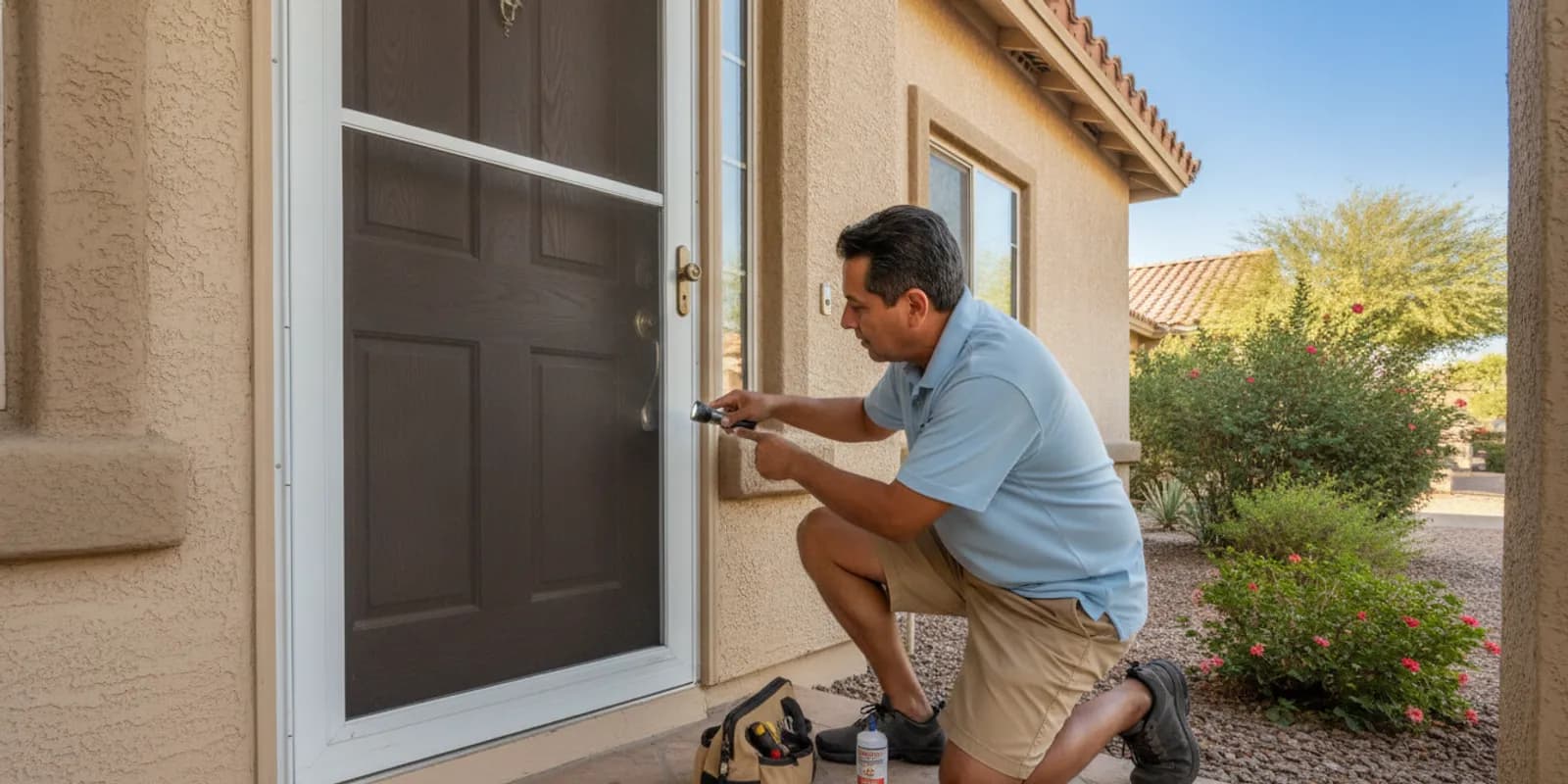
Storm door lock repair can often restore a door that sticks, fails to latch, or no longer feels secure without replacing the entire door. The right fix depends on the lock style, the condition of the door and frame, and whether the problem is caused by the lock or by alignment. A few careful checks can help you describe the issue and decide whether a simple adjustment is reasonable or professional service is the better choice.
Request storm door lock service
What does a storm door lock do?
A storm door lock controls access through the lightweight exterior door installed in front of an entry door. Depending on the design, it may use a lever, knob, push-button, thumb turn, keyed cylinder, or a combination of these parts. The latch should extend into the strike plate when the door is closed, while the handle or button retracts it when you open the door.
Storm doors also help with ventilation, daylight, and an extra barrier at the entry. They are not all built with the same hardware. Some have a surface-mounted latch body, while others use a mortise-style case fitted into the door edge. Replacement parts must match the lock case, door thickness, backset, handing, and mounting pattern. That is why a part that looks similar in a hardware aisle may not fit correctly.
If the main entry lock works but the storm door does not, the storm door hardware may need attention on its own. If both doors are difficult to operate, the issue may involve the frame, hinges, settling, or pressure between the doors rather than the lock alone.
What signs point to storm door lock repair?
Small changes in operation are useful clues. Do not wait for a complete failure if the lock has become noticeably harder to use. Common signs include:
- The key turns but the latch does not move. The cylinder, tailpiece, latch mechanism, or connection between them may be worn or disconnected.
- The key will not insert or remove smoothly. A damaged key, debris, a misaligned cylinder, or internal wear may be involved.
- The handle feels loose. Loose mounting screws can allow the lock body to shift and prevent the latch from lining up with the strike.
- The door closes but will not latch. The strike opening may be out of alignment, or the door may sag slightly on its hinges.
- The latch sticks when the door is open. This points more directly to a problem inside the latch or lock case than to the frame.
- The push button or thumb turn stays down. A broken spring or worn internal component may keep the mechanism from returning.
- The lock works only when you lift or pull the door. That can indicate alignment or hinge movement rather than a failed cylinder.
- The lock has visible cracks, bent parts, or corrosion. Damage may make adjustment unreliable and can justify replacement of the affected hardware.
A storm door that will not latch is different from one whose key cylinder is worn. Note when the problem occurs: with the door open, only when the door is closed, only from one side, or only with a particular key. That information can save time during an inspection.
What should you check before you schedule service?
Start with low-risk observations. You do not need to disassemble the lock to gather useful information.
Test the lock with the door open
With the door open, operate the handle, key, button, or thumb turn. If the latch moves normally while open but binds after the door closes, the lock may be functional and the problem may be alignment. If the latch still sticks while open, the lock body or latch mechanism deserves closer attention.
Look at the strike and latch
Close the door slowly and watch whether the latch meets the center of the strike opening. Look for contact marks, a latch that hits the edge, or a strike plate that has shifted. Do not force the door shut or repeatedly turn the key against resistance. Extra force can damage the cylinder, key, or mounting screws.
Check the hinges and fasteners
A loose hinge can change the height or angle of the door. Loose handle screws can also make the latch appear to fail. Tighten an accessible screw only if it is clearly loose and the correct screwdriver fits. Stop if the screw spins without tightening, the frame material is damaged, or the lock body begins to move.
Try the spare key
If one key is difficult but another operates the lock, the key may be worn or bent. Do not keep using a visibly damaged key. If every key has the same problem, the cylinder or lock mechanism is more likely to be involved.
Record the hardware details
Take clear photos of the inside and outside of the lock, the door edge, the strike, and the mounting screws. Measure the door thickness if you can do so safely. A photo of the lock label or brand mark may also help identify a compatible replacement. Do not remove the lock simply to find a part number unless you are comfortable reinstalling it.
Is the problem the lock or the door alignment?
Alignment problems are common because a storm door is lighter than the main entry door and may move with repeated use, hinge wear, temperature changes, or pressure from a closer. The symptoms can look like a failed lock.
| What you notice | Possible source | First response | When to seek help |
|---|---|---|---|
| Latch misses the strike | Door sag, shifted strike, or hinge movement | Inspect the gap and visible fasteners | When adjustment does not restore smooth latching |
| Latch sticks with door open | Worn or damaged latch mechanism | Stop forcing the handle | When the latch needs disassembly or replacement |
| Key binds in every position | Worn cylinder, damaged key, or debris | Try a spare key and note the result | When the key still binds or will not turn |
| Handle is loose | Loose fasteners or damaged mounting points | Check whether screws can be tightened gently | When screws strip, spin, or will not hold |
| Lock works open but not closed | Strike alignment or door pressure | Observe where the latch contacts | When the door, frame, or closer needs adjustment |
| Lock is cracked or badly corroded | Physical or weather-related damage | Avoid relying on the damaged lock | When matching hardware or installation is needed |
This comparison is a starting point, not a diagnosis. Storm door models differ, and a lock can have more than one problem at the same time. A professional can test the lock separately from the door alignment and explain which part needs attention.
Can you handle a storm door lock repair yourself?
Some basic maintenance is reasonable for a homeowner. You can clear visible dirt, inspect the strike, check accessible screws, and compare operation with the door open and closed. Follow the hardware manufacturer’s care instructions. If lubrication is recommended, use only a product suitable for the lock and apply it sparingly. Too much product can attract dirt or migrate onto the door.
More involved work deserves caution. Removing a cylinder, changing a mortise case, drilling through a door, enlarging a strike opening, or forcing a stuck key can turn a small repair into a damaged door or lockout. A repair may also affect the way the door closes, the way the latch engages, or the compatibility of the keyed system with other doors.
Professional help is appropriate when the key is stuck, the lock is the only way to secure the door, the mechanism is damaged, the door will not latch, or you cannot identify a compatible replacement. It is also useful when a rental, condominium, business, or managed property has rules about hardware changes. The residential locksmith service team can assess the lock and door together rather than replacing a part based only on appearance.
When does repair make sense?
Repair is often worth considering when the lock body is in good condition and the issue is limited to alignment, loose fasteners, a replaceable latch component, or a key that needs duplication. Repair may preserve the existing appearance and avoid changing how household members use the door.
Ask what the proposed repair includes. A useful explanation should identify the failed or misaligned part, describe how the technician will test the result, and make clear whether any new hardware is needed. The final test should include locking and unlocking from the intended sides, closing the door without unusual pressure, and confirming that the latch engages fully.
For a vehicle, business, or home with several related locks, mention the larger system before work begins. A replacement cylinder that uses a different key may be inconvenient. The LOCK Shop also provides lock repair, rekeying, and other lock services, so a technician can discuss how the storm door fits into the rest of the entry.
When is replacement the better option?
Replacement can be more practical when the lock case is cracked, the internal parts are unavailable, the mounting points are damaged, or corrosion has affected reliable operation. It may also make sense when a previous repair has not solved the same problem or when the existing hardware no longer fits the door.
Replacement does not always mean replacing the whole storm door. In many cases, only the lock set, cylinder, latch case, handle, or strike needs to change. However, the new part must match the door’s construction and measurements. A technician may need to check the backset, door thickness, hole spacing, latch length, handing, and strike position.
Before approving replacement, ask these questions:
- Is the door itself straight and in good condition?
- Which part is being replaced, and why?
- Will the new lock use the current key or a new key?
- Will the replacement affect the main entry door, screen insert, closer, or handle?
- How will the technician confirm that the latch engages fully?
- What should you do if the same sticking or alignment issue returns?
If you are comparing hardware for a broader home project, the locksmith quote guide explains why job scope and hardware selection affect an estimate. It is better to request a clear estimate than to choose a part solely because it has the lowest purchase price.
How should you prepare for a locksmith appointment?
Tell the locksmith what happens and when it happens. “The key will not turn” is useful, but “the key turns with the door open and binds when the door is closed” points toward a different inspection. Share whether the door was recently painted, adjusted, hit, exposed to unusual weather, or fitted with a new closer.
Have the door accessible and remove items that block the inside handle or threshold. Keep all keys for the lock available. If you rent or manage the property, confirm who can authorize hardware work. Photos taken before the appointment can help if the issue changes between uses.
Ask for a phone estimate when possible and explain that the lock may need either repair or replacement. The LOCK Shop serves Mesa, the East Valley, and the broader Phoenix metropolitan area with a mobile service fleet. You can also review the company’s locksmith FAQs before contacting the team.
What should you do if the storm door lock fails suddenly?
First, avoid forcing the key, handle, or door. If the door is open, keep it in a safe position and do not leave the property unsecured while you search for parts. If it is closed and you are locked out, use the emergency lockout service page to request appropriate assistance. Describe whether the storm door or the main entry door is preventing access.
If the door can be opened but will not secure, use a temporary measure only if it does not damage the door or create a trip hazard, and arrange service promptly. Do not remove a functioning main entry lock just to make the storm door work. The goal is a reliable, correctly fitted repair, not a rushed change that creates a second problem.
Frequently asked questions
Can a storm door lock be repaired instead of replaced?
Often, yes. A technician may be able to correct alignment, tighten or replace fasteners, repair a compatible latch component, or replace only the cylinder or lock set. Replacement is more likely when the case, mounting points, or internal mechanism is badly damaged or when suitable parts are not available.
Why does my storm door lock work when the door is open?
This commonly suggests that the latch is contacting the strike or frame when the door closes. Hinge movement, a shifted strike, a bent door, or pressure from a closer can contribute. The lock itself may still need service, but the door alignment should be checked before ordering a replacement.
Should I use household oil in a storm door lock?
Use the product and method recommended for the specific hardware. Household oils can attract dirt or leave residue, and excess lubricant may not solve a mechanical or alignment problem. If the key still binds after a basic inspection, avoid forcing it and ask for service.
How do I know which replacement storm door lock to buy?
Match the lock style, door thickness, backset, handing, hole spacing, latch dimensions, and strike position. The brand and model can help, but visual similarity is not enough. Photos and measurements can help a locksmith identify compatible hardware before installation.
Can a locksmith adjust the storm door as well as the lock?
A locksmith can inspect how the lock, latch, strike, hinges, and door interact and explain the needed service. If the issue involves major door or frame damage outside the lock hardware, another type of repair may be appropriate. Ask what the technician found and what work is included in the estimate.
Talk with The LOCK Shop about your door
What is the next step for storm door lock repair?
Start by noting the symptoms, testing the lock with the door open and closed, and photographing the hardware without forcing anything. If the problem remains, contact The LOCK Shop for practical guidance and service in Mesa, the East Valley, or the Phoenix metropolitan area. A careful inspection can show whether storm door lock repair, a targeted part replacement, or an alignment adjustment is the most sensible next step.