Published article
What Is a Skeleton Key? Uses, History, and Limits
A skeleton key is more than an antique curiosity. Learn what a skeleton key is, how it works, where it’s used, and why it has limits today.
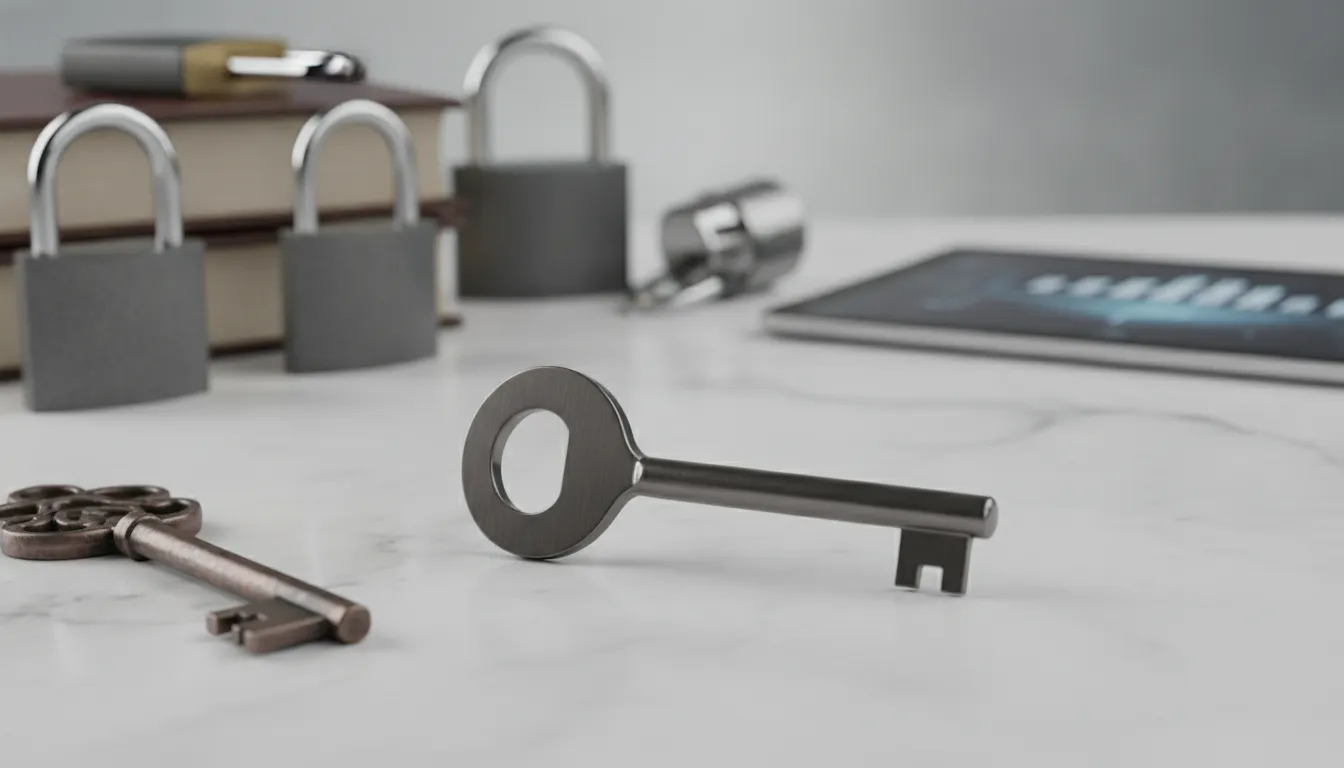
That old key in your drawer may have more history than you realize. A skeleton key often belonged to an antique lock, historic home, cabinet, trunk, or piece of furniture. Its narrow, cut-down design helped it pass around fixed barriers inside certain warded locks. However, it was never a master key for every lock. Compatibility depends on the keyway, shaft, bit, and internal mechanism. Decorative reproductions add another layer of confusion because they may look authentic without operating anything. If you recently found a skeleton key in your Mesa home or inherited one with an antique item, handle it carefully. Learning what it is can help you protect both the key and the lock.
Key Takeaways
- Skeleton keys only fit compatible locks: Their cutaway design works with certain older warded or lever locks, not modern residential, commercial, or vehicle systems.
- Handle antique hardware with care: Do not force, bend, file, or repeatedly test an unfamiliar key. Ask a locksmith to inspect the key and lock safely.
- Replace outdated security when needed: Keep original hardware for low-risk decorative areas, but consider repair, rekeying, or modern replacement for exterior doors, businesses, rentals, safes, and vehicles.
What Is a Skeleton Key?
A skeleton key is a traditional key made to operate certain types of warded locks. Its name refers to the amount of metal removed from the key’s central section, which gives it a thin, open appearance. You may find original skeleton keys in antique homes, older apartments, historic buildings, cabinets, trunks, and furniture.
Despite their reputation in stories and movies, skeleton keys are not universal keys. They work only with compatible locks that have similar keyways, wards, and internal mechanisms. A key that operates one antique mortise lock may not fit another lock that looks nearly identical.
The term can also refer to modern reproductions made for jewelry, crafts, costumes, or home décor. A decorative skeleton key may resemble a working antique key but have no usable cuts or mechanical function.
Key definition: a cut-down warded key
A skeleton key, sometimes called a passkey, is a physical key modified to operate more than one compatible warded lock. Warded locks contain fixed metal barriers inside the keyway. These barriers block keys with the wrong shape from reaching the part of the lock that turns the mechanism.
By filing or cutting away much of the key’s central section, a skeleton key can pass around some of those barriers. The remaining portion of the key still needs the right size and shape to engage the lock’s turning mechanism. This design is described in the history of skeleton keys, which explains why they became associated with older warded and lever-style locks.
A skeleton key may work with several locks that share a similar internal design, but it will not operate every lock. Compatibility depends on the lock’s construction, dimensions, and condition.
Key parts: bow, shaft, bit, and wards
A traditional skeleton key has three main visible parts. The bow is the handle or ring at the top, giving you a place to grip the key. The shaft is the long, narrow section that enters the lock. The bit is the shaped end that interacts with the lock’s internal lever or turning mechanism.
The wards are located inside the lock, not on the key. These fixed barriers form a pattern that blocks incorrectly shaped keys. A standard warded key includes enough metal to match the spaces around those barriers. A skeleton key has much of that metal removed, allowing it to move through the keyway with less interference.
Original keys may show hand-forged tool marks, uneven edges, decorative bows, or signs of wear. Those details can offer clues about age, but they cannot confirm that a key is antique or identify the lock it fits. A locksmith or qualified appraiser can provide a more reliable assessment.
How removing metal lets the key turn
The wards inside a lock act like a series of fixed obstacles. When you insert a key with the wrong shape, its metal catches against those obstacles. The key may stop before it reaches the operating mechanism, or it may fit but refuse to turn.
A skeleton key has less metal around its central section, so it can pass through spaces that would block a fuller key. If the key’s shaft and bit match the lock’s dimensions, the bit can reach the lever or other internal part that releases the lock.
This design allowed one key to operate several locks with similar ward patterns. It did not eliminate the need for a compatible key. Differences in the keyway, ward placement, lock size, and internal mechanism can prevent a skeleton key from working.
Never force an unfamiliar key into an old lock. A damaged key can break inside the keyway, while pressure can bend or damage fragile antique hardware.
Skeleton key vs. master key and passkey
The terms skeleton key, master key, and passkey are often confused, but they do not always describe the same thing. A skeleton key is a physical key shaped to pass around the wards of compatible locks. Passkey is commonly used as another name for a skeleton key, particularly in historical writing.
A master key is part of a planned locking system. It is designed to operate multiple locks, while separate keys may give users access to only one lock or a defined group of locks. Modern master-key systems use carefully arranged pins, levers, or other components, rather than simply removing metal from a key.
For a business, rental property, or multi-unit building, a professional can design a master-key system around the property’s access needs. The LOCK Shop provides commercial lock services for businesses in Mesa and the surrounding East Valley.
Why one skeleton key cannot open every lock
A skeleton key cannot open every lock because locks differ in their construction. Even two antique warded locks may have different keyway sizes, ward patterns, lever arrangements, or operating depths. A key that works in one mortise lock may not enter another, or it may enter without turning.
Skeleton keys are also generally ineffective against modern pin-tumbler cylinders, restricted keyways, high-security locks, electronic access systems, and vehicle locks. These systems rely on different features, such as precisely aligned pins, controlled key blanks, access credentials, or programmed transponders.
If you discover an old lock at your Mesa property, avoid experimenting with random keys or forcing a key that does not turn smoothly. A locksmith can identify the hardware and recommend appropriate repair, rekeying, or replacement. The LOCK Shop offers residential lock services for homeowners who want to preserve original features while improving everyday security.
What Locks Can a Skeleton Key Open?
A skeleton key is mainly associated with older lock designs, especially warded locks. Its open, cut-down shape allows the key to pass around fixed barriers inside the lock while its bit reaches the mechanism that releases the bolt. This design made some skeleton keys useful across several locks with similar internal layouts.
However, a skeleton key is not a universal key. Its success depends on the lock’s keyway, ward pattern, barrel size, shaft length, and bit shape. Two locks may look nearly identical while requiring different keys. A key that fits into the opening may still fail to turn, and forcing it could damage the lock or the key.
Skeleton keys are most often found in older homes, historic buildings, antique furniture, trunks, and cabinets. If you discover an unfamiliar lock on a property or heirloom, avoid repeated attempts to open it. A locksmith can identify the mechanism and suggest a safe repair or replacement. This overview of skeleton keys explains how their design relates to older warded locks.
Warded locks and older warded keyways
Skeleton keys were primarily made for warded locks. These locks contain fixed metal barriers, known as wards, inside the lock body. The key needs enough open space around its shaft to pass between the barriers, while the bit engages the locking mechanism.
Traditional skeleton keys removed metal that was not essential to the lock’s operation. That allowed one key to pass around several ward patterns and operate more than one lock. Still, the locks needed compatible dimensions and layouts. The key’s barrel diameter, length, shaft, and bit all had to be suitable.
Warded locks were common in older houses, outbuildings, institutions, and furniture. They are less common in modern residential security because their simple internal design offers limited protection against unauthorized entry.
Antique mortise locks with matching wards
Some antique mortise locks can work with skeleton keys, especially when the key and lock share a compatible ward arrangement. A mortise lock is installed inside a pocket cut into the edge of a door, a design frequently found in older homes and commercial buildings.
The outside of the lock may look straightforward, but its internal barriers can vary widely. A key may enter the keyhole and still fail to turn because the shaft contacts a ward or the bit cannot reach the correct part of the mechanism.
Original mortise hardware can add character to a historic property, so replacement is not always the first choice. If the lock sticks, the key is missing, or the mechanism has become unreliable, residential lock repair and replacement can help preserve the door while addressing its security needs.
Some lever locks with matching bits and levers
Some older lever locks may accept a skeleton-style key. In a lever lock, the key’s bit lifts internal levers to specific heights. When the levers align correctly, the lock can release.
A skeleton key may operate several locks when they share a compatible design or belong to the same master-key system. Even so, lever locks are not interchangeable by appearance alone. One may use three levers, while another uses five or a completely different arrangement.
The key must have the correct bit profile and dimensions to move the levers properly. A decorative reproduction may look authentic but lack the precise shape needed for operation. Avoid forcing a key into an antique lever lock, since pressure can bend the key or damage fragile internal components.
Cabinet, trunk, and furniture locks
Older cabinets, trunks, desks, dressers, and other furniture often used small warded locks. Some skeleton keys could operate more than one of these locks, particularly when the pieces came from the same period, manufacturer, or design tradition.
Compatibility is never guaranteed, though. A key that opens one antique cabinet may not work in another that looks similar. Furniture can also shift over time. Wood expands and contracts with changes in moisture, and that movement may misalign the lock with the strike or surrounding hardware.
For collectors, an original key can be part of an item’s history and should be handled carefully. If a trunk or cabinet needs a dependable working lock, a locksmith can assess the hardware without unnecessarily changing its appearance. This guide to antique keys and skeleton keys offers additional historical context.
Keyway and ward compatibility
A skeleton key works only when its physical profile is compatible with the lock. Important details include the keyway opening, barrel diameter, shaft length, bit shape, and the location of the internal wards or levers.
Small differences can prevent the key from entering fully, reaching the mechanism, or turning smoothly. Wear creates another challenge. Years of use may round the key’s edges, weaken the lock, or alter the alignment of the door and hardware.
Do not file, bend, or force an unfamiliar key to make it fit. Doing so can damage the lock and reduce the value of antique hardware. If you need a replacement key or want to retain period styling, The LOCK Shop can evaluate the mechanism and discuss lock repair, rekeying, or replacement in Mesa and the surrounding East Valley.
Older locks a skeleton key cannot open
A skeleton key generally cannot open modern pin-tumbler locks. These locks use precisely aligned pin pairs inside a cylinder. The correct key lifts each pin to the required height before the cylinder can turn. An antique, hollowed-out key does not contain the precise cuts needed for that system.
Skeleton keys are also not designed for modern high-security cylinders, restricted keyways, electronic access systems, or most vehicle locks. Modern car keys may require both a matching mechanical cut and an electronic transponder programmed to the vehicle.
If an older lock no longer provides dependable security, replacing it may be more practical than searching for a compatible skeleton key. The LOCK Shop provides commercial lock services, automotive assistance, and mobile locksmith support for homes and businesses throughout Mesa and the East Valley.
How Skeleton Keys Shaped Lock History
Skeleton keys are strongly associated with old homes, grand estates, antique furniture, and mysterious stories. Their real history, however, comes from the gradual development of warded locks. These locks used fixed internal barriers, called wards, to prevent the wrong key from reaching the mechanism that moved the bolt.
As locksmiths refined these designs, keys became narrower, more specialized, and easier to adapt for certain groups of locks. That evolution shaped how homes, estates, hotels, and institutions managed access. It also explains why a skeleton key may look universal but only work with a lock that has a compatible ward pattern.
Ancient Egyptian and Roman warded-lock precursors
Early lock systems appeared thousands of years ago in civilizations that used wood, bronze, and iron to protect homes, storage areas, chests, and commercial spaces. Ancient Egyptian locks used a wooden bolt and raised pins that had to be lifted by a shaped key. The basic principle was simple, but it created an early form of controlled entry.
Roman locksmiths later developed more compact metal locks and keys, often using bronze or iron. These early keys were not skeleton keys in the strict sense, but they introduced ideas that influenced later warded designs. A key had to reach the working parts while avoiding fixed barriers inside the lock. This history of skeleton keys shows how early lockmaking helped shape the familiar long, narrow key forms used in later centuries.
Medieval lockmaking and hand-forged keys
During the Medieval period, locksmiths made most locks and keys by hand. They heated iron, hammered it into shape, and finished the details with files. Because each piece was individually crafted, keys could vary widely in size, thickness, and decoration.
Many locks relied on wards, or fixed obstructions positioned around the keyhole and bolt mechanism. A key with the correct bit could pass through these barriers and move the bolt. A skeleton key reduced the metal around the bit and shaft, leaving only the sections needed to operate a compatible lock. This design made the key more versatile within a particular lock family, but it did not make the key universal. Surviving examples reveal how antique keys and locks developed across different periods and regions.
Victorian skeleton keys as useful décor
Skeleton keys became especially recognizable during the Victorian era, when decorative hardware appeared in homes, hotels, offices, and public buildings. Some keys were plain and functional, while others featured ornate bows with floral, geometric, or scrollwork designs. Their appearance often matched the style of the door, cabinet, trunk, or furniture they served.
These keys were practical objects first, but their careful workmanship gave them lasting decorative appeal. Today, collectors display them in frames, incorporate them into artwork, or pair them with antique door hardware. Restoration enthusiasts may also use reproduction keys for period furniture, blanket chests, cabinets, and interior doors. The craftsmanship represented by skeleton keys helps explain why they remain popular, even when they no longer operate a working lock.
Estate, institution, and caretaker access
Large homes and institutions often had many interior doors, storage rooms, cabinets, and service areas to manage. Caretakers, housekeepers, groundskeepers, and building managers might need to enter several spaces during their daily work. Carrying a separate key for every door was inconvenient, particularly in buildings that used similar hardware throughout.
A skeleton key could operate multiple locks with related ward patterns. This made it useful in estates, hotels, schools, and other buildings where staff needed broad access. These arrangements were not always master-key systems in the modern sense. Access depended on the design of each lock, the placement of its wards, and how consistently the hardware had been manufactured. In some cases, one key worked across several doors. In others, it worked only with one lock.
Why older buildings needed broad access
Older buildings managed access through physical keys and established routines, rather than electronic records or individually assigned credentials. Staff needed to enter bedrooms, kitchens, workshops, utility areas, and storage rooms as part of their responsibilities. A small collection of warded keys made that work easier, especially when one manufacturer supplied the building’s locks.
Convenience came with a security tradeoff. If several doors used similar ward patterns, a lost or copied key could provide access beyond its intended purpose. Locks also became less dependable as metal parts wore down, doors shifted, and keys were filed or duplicated over time. Homeowners with historic hardware can ask a locksmith to determine whether the lock should be repaired, rekeyed, or replaced. The LOCK Shop provides residential lock services for Mesa homeowners evaluating older door hardware.
How precise lock mechanisms replaced them
As security needs changed, lockmakers developed mechanisms that required more precise interaction between the key and the lock’s internal parts. Pin-tumbler locks, improved lever locks, and other cylinder designs required the key to position pins or levers at specific heights before the plug or bolt could turn.
Manufacturing advances made consistent, repeatable parts more practical. Locksmiths could then create systems with tighter key control, more reliable operation, and clearer records for authorized duplication. Warded locks remained useful for some interior applications, furniture, and decorative hardware, but they offered limited protection for exterior doors. Today, properties may combine period-style hardware with modern cylinders, restricted keyways, electronic credentials, or access control systems. For businesses that need controlled entry, The LOCK Shop also provides commercial lock services tailored to the property and its access needs.
How Modern Locks Differ From Skeleton-Key Systems
Skeleton keys were made for older warded locks, which use fixed metal barriers inside the lock. Modern locks rely on more precise mechanical parts, restricted keyways, electronic credentials, or vehicle computer systems. Because of these differences, an antique skeleton key may slide into a newer keyway but still fail to turn the lock.
The lock’s internal design matters when you are deciding whether to preserve original hardware or replace it. A period lock can add character to an older Mesa home, but it may not provide the access control or reliability needed for daily use. A locksmith can inspect the hardware and explain whether repair, rekeying, or replacement makes the most sense.
Warded locks and fixed internal barriers
A warded lock contains fixed internal barriers called wards. The key must be shaped to pass around those barriers and reach the locking mechanism. A skeleton key has much of its central section cut away, which lets it pass around the wards in certain older locks. This design allowed one key to operate multiple locks with similar internal layouts.
Compatibility still matters. A skeleton key will not open every warded lock because the keyway, ward arrangement, and locking mechanism may differ. If the barriers do not match, the key may stop inside the lock or fail to turn. Read more about this older design in this overview of the skeleton key’s warded-lock history.
Pin-tumbler locks and aligned pins
Many residential and commercial locks use pin-tumbler cylinders rather than fixed wards. Inside the cylinder, pairs of pins must rise to precise positions before the plug can rotate. The cuts along a modern key lift each pin to the correct height, creating the alignment needed to open the lock.
A skeleton key does not have the specific cuts required for that process. Even if its shaft fits into the keyway, it generally cannot position the pins correctly. That makes pin-tumbler locks fundamentally different from warded systems. If a home lock is sticking, worn, or difficult to operate, The LOCK Shop can provide residential lock repair and replacement in Mesa and nearby communities.
Lever, disc-detainer, and high-security cylinders
Lever locks use internal levers that a properly cut key must lift to precise heights. A skeleton key may work with some older lever locks, but only when its bit matches the lock’s specific lever arrangement. Newer lever designs can include added protections that make unauthorized operation more difficult.
Disc-detainer locks use rotating discs instead of pins. High-security cylinders may add sidebars, angled cuts, telescoping pins, or other components that require a precisely matched key. These features make generic or altered keys far less useful. Since lock construction varies by brand and model, a locksmith should inspect the hardware rather than relying on the lock’s outside appearance.
Restricted keyways and controlled duplication
A standard key can often be copied at a local hardware counter. Restricted keyways are different because they are designed to limit who can duplicate a key. The manufacturer or an authorized locksmith may require a security card, written authorization, or proof of ownership before making additional copies.
This control helps businesses, apartment communities, schools, and property managers keep track of who has access. A commercial locksmith can design commercial lock and key systems around employee roles, tenant turnover, and master-key requirements. Property owners can also rekey affected doors when keys are lost or a user no longer needs access. A traditional skeleton key typically offers none of this tracking or duplication control.
Electronic locks, access cards, and smart access control
Electronic locks do not depend on the shape of a metal key. Depending on the system, they may verify an access card, keypad code, mobile credential, fingerprint, or wireless signal. Smart access control can also record entry activity, assign temporary permissions, and remove access without requiring every door to be rekeyed.
These features can help businesses and property managers manage several doors and users. An employee’s credential can be deactivated when they leave, while a temporary code can be issued to a contractor and removed after the work is complete. Before choosing a system, consider the number of doors, user permissions, power needs, and backup entry methods. A locksmith can help match the technology to the property and its daily routines.
Why modern car keys need transponders and programming
A modern car key often does more than unlock the door or turn the ignition. Many vehicles use a transponder chip that communicates with the vehicle’s immobilizer system. The engine will start only when the vehicle recognizes the chip as an authorized credential.
For that reason, copying the metal portion of a car key may not be enough. A replacement may also require key cutting, chip programming, remote synchronization, and testing with the vehicle. The correct process depends on the vehicle’s make, model, and year. The LOCK Shop provides auto key duplication, origination, and programming, with mobile service for car owners in Mesa and the East Valley.
What Security Risks Do Skeleton Keys Present?
Skeleton keys are associated with antique craftsmanship, but a lock that accepts one may offer limited protection by modern standards. These keys are mainly designed for compatible warded or lever-lock systems, which use fixed internal barriers to guide the key. If those barriers are worn, damaged, or simple in design, an unauthorized person with a matching key may have an easier time gaining entry.
That does not mean one skeleton key opens every old lock. Compatibility depends on the keyway, wards, internal components, and condition of the lock. Still, any old lock protecting an exterior door, rental unit, office, garage, or storage area deserves a careful security review. The LOCK Shop’s residential locksmith services can help Mesa homeowners decide whether existing hardware should be repaired, rekeyed, or replaced.
Unauthorized access through outdated warded locks
Skeleton keys are mainly effective against older warded locks and certain lever-lock designs. These systems use internal barriers that correspond to the key’s shape. When the key follows the correct path, it can turn the locking mechanism. If the lock has basic wards or those parts have worn down over time, the hardware may provide less resistance to unauthorized entry than a modern lock.
This concern matters most when an old lock protects an important entry point, such as a side door, basement, detached garage, or business entrance. Historic hardware can remain attractive while its security falls behind current expectations. A locksmith can inspect the lock and recommend a replacement that preserves the property’s character while providing more dependable protection. Business owners can also review commercial lock options for outdated doors and access points.
Lost keys, easy duplication, and poor key control
A skeleton key does not have to be universal to create a security concern. Its bit, barrel, size, and shape must match the lock, but one key may work with several locks made for the same system. If a property has multiple similar antique locks, losing one key can make it difficult to determine which doors may be affected.
Key control becomes even harder when copies have passed among former tenants, employees, contractors, caretakers, or family members. If you cannot account for every copy, assume someone else may still have access. Rekeying can change the internal combination of some locks while allowing you to keep the existing hardware. The LOCK Shop’s FAQs provide helpful information about rekeying, lock repairs, and other locksmith services.
Worn hardware, copied keys, and unreliable operation
Age can create security problems beyond the key itself. A lock may develop loose components, damaged wards, a weakened case, or poor alignment with the door. An inaccurate copy may stick, turn inconsistently, or place additional stress on the mechanism. These problems can prevent the lock from securing properly, especially when the door, latch, or strike plate is also worn.
Do not force a key that binds or stops partway through a turn. It could break inside the keyway and leave the door difficult to operate. A locksmith can examine the key, lock case, cylinder, latch, strike plate, and door alignment to identify the cause. A minor repair may restore reliable operation, but severely worn components usually call for replacement.
Why skeleton keys offer limited protection
Skeleton keys are not universal keys, and they do not open every type of lock. They are mainly associated with compatible warded and lever-lock systems, not modern pin-tumbler cylinders, restricted keyways, electronic access systems, or vehicle security systems. The key’s appearance also cannot confirm whether it will operate a particular lock.
The larger issue is that many compatible locks were built around older security expectations. They may not include complex key profiles, controlled duplication, reinforced components, or other features found in newer hardware. A locksmith may be able to preserve visible antique escutcheons, handles, or trim while installing a more secure mechanism. The best option depends on the door, property, budget, and need to preserve historic details. For comparison, you can review The LOCK Shop’s residential lock services.
Legal and practical limits of testing unfamiliar locks
Do not test a skeleton key in a lock unless you own the property or have clear permission from the person responsible for it. Trying to open an unfamiliar door, cabinet, mailbox, vehicle, or other secured item may be considered unauthorized access. Even when no entry occurs, testing can damage a delicate antique lock, leave marks, or break the key inside the keyway.
If you find a skeleton key at a property, label it and store it safely until its purpose is confirmed. Ask the owner, property manager, or a qualified locksmith to identify the hardware. For a locked vehicle, professional assistance is safer than experimenting with an old key. The LOCK Shop provides automotive locksmith services, including key duplication, origination, programming, and lock repairs in Mesa and nearby communities.
When to repair, rekey, or replace an old lock
Repair may be appropriate when the lock is part of a historic door, its internal parts remain sound, and it does not protect a high-risk entry point. Cleaning, adjustment, or replacement of a damaged component may improve operation while preserving the original hardware. Antique parts can be difficult to source, so have the lock assessed before attempting repairs.
Rekeying may be the right choice when the hardware is in good condition but you are unsure who has copies of the existing key. Replacement is generally more suitable when the lock is cracked, badly worn, unreliable, or installed on an exterior door that requires stronger protection. The LOCK Shop offers lock repair, rekeying, and replacement services, with mobile support for customers in Mesa and the East Valley.
How to Identify Antique Skeleton Keys Safely
An old-looking key can be fascinating, but its appearance alone cannot confirm that it is antique, valuable, or compatible with a particular lock. Skeleton keys were made for specific warded or lever-lock systems, and their designs vary by lock, maker, period, and intended use. Before testing one, inspect it carefully and treat both the key and lock as fragile.
A careful inspection can help you distinguish a hand-finished original from a modern decorative reproduction. It can also prevent damage to an antique lock, furniture piece, cabinet, safe, or door. If the key appears valuable or the lock is still installed in a property, do not force it. A locksmith can assess the hardware without turning a simple test into an expensive repair.
Key anatomy and handcrafting signs
Start with the key’s basic parts. The bow is the loop or handle, the shaft is the long section that enters the lock, and the bit is the shaped end that engages the locking mechanism. A skeleton key has much of the metal around its central section removed or reduced, allowing it to pass around internal wards.
Older keys may show signs of handwork, including uneven edges, subtle variations in thickness, file marks, irregular shaping, or a slightly asymmetrical bow. These details may suggest that a key was made or finished by hand, but they do not prove its age. Modern reproductions can be intentionally distressed to create a similar appearance.
An ornate bow or long shaft does not automatically make a key a skeleton key. The cutaway section and bit must also work with a compatible lock. Anderson Lock’s guide to antique skeleton keys explains why these keys vary widely in design, fit, and detail.
Antique skeleton keys vs. modern reproductions
Modern reproduction keys are common in restoration projects and interior design. Manufacturers may create them to resemble keys from a particular period, using modern tools, molds, and finishes. Some reproductions work with replacement locks, while others are made strictly for display.
Examine the key’s finish, edges, and surface texture. Uniform machine marks, repeated decorative patterns, bright new metal, and identical keys sold in a set may indicate a reproduction. That does not make the key useless. Reproductions can provide the right appearance for period-style furniture, cabinets, blanket chests, and interior doors.
Function is the key distinction. A reproduction may fit a newly installed reproduction lock but fail to operate an original lock from the same period. Antique Hardware Supply explains the role of reproduction skeleton keys in historic-style restoration, including why an authentic appearance does not always mean authentic function.
Age clues: material, patina, machining, and maker marks
Inspect the key under good lighting, preferably with a magnifying glass. Natural age may leave behind a patina, softened edges, handling wear, small dents, or areas where repeated use has polished the metal. Corrosion can also appear on older iron or steel keys, but heavy rust does not automatically prove that an item is old or valuable.
Material offers another clue. Iron, brass, bronze, and steel were used for different locks and applications. Still, material alone cannot establish a date because modern manufacturers can recreate older metals and finishes. A dark surface may be natural oxidation, chemical aging, paint, or ordinary exposure to moisture.
Check the bow, shaft, and bit for maker marks, initials, numbers, or stamped symbols. Photograph these details before cleaning the key. Polishing, sanding, or using harsh chemicals can remove surface evidence and reduce historical value. Collectors may consider age, scarcity, shape, weight, decoration, condition, and originality, as outlined in this antique skeleton key guide.
Why appearance cannot confirm age or function
A key can look antique and still be a modern reproduction. It can also be genuinely old but unrelated to the lock you want to open. Skeleton keys were not universal keys. Their reduced central sections allowed them to pass certain internal wards, but the shaft length, diameter, bit profile, and other measurements still had to match the lock.
Do not assume that a long shaft or elaborate bow identifies a skeleton key. Some decorative keys are made only for display, while plain-looking keys may have served older household hardware. Even keys from the same building may operate different locks, or one may have been modified after its original use.
Value requires separate consideration, too. A key connected to a documented building, unusual maker, rare lock, or complete piece of original hardware may be more desirable than a decorative key with no known history. Treat identification, function, and valuation as separate questions instead of relying on appearance alone.
How to match a key without forcing it
If you are checking a key against an accessible lock, begin with a visual comparison. Look at the keyway opening, estimate the shaft’s length and width, and compare the bit with the lock’s likely ward arrangement. The key should enter smoothly and sit at the correct depth without pressure.
Never twist a key that stops partway, feels unusually tight, or requires force. The wrong key can bend or break inside the lock, damage fragile wards, or worsen an existing mechanical problem. Do not file the key or test several keys on an unfamiliar door, cabinet, safe, or furniture piece.
A skeleton key’s cutaway section helps it pass around internal barriers, but the bit still must engage the locking mechanism correctly. This overview of skeleton keys explains how the cutaway section works with wards. If the lock is valuable, installed in an occupied property, or difficult to access, stop testing and arrange professional service.
When to consult a locksmith or appraiser
Contact a locksmith when a key is missing, has broken, or needs to operate an antique lock without causing damage. A locksmith can inspect the hardware, determine whether it can be repaired, and explain whether a key can be duplicated, fitted, or replaced. For properties in Mesa and the East Valley, The LOCK Shop’s residential lock services cover older door hardware and related lock concerns.
An appraiser or experienced antique dealer is more appropriate when your main questions involve age, authenticity, provenance, or value. Bring clear photographs of the key, lock, hardware, maker marks, and any information about where the item came from. Avoid cleaning, repainting, straightening, or altering the key before the evaluation.
Professional help is especially important when the key belongs to a safe, historic building, estate, or valuable furniture piece. The LOCK Shop’s safe services address specialty lock concerns, while an appraiser can focus on historical and collectible significance. Keep the key and lock together whenever possible, since matching hardware often provides the strongest evidence.
How to Collect and Value Skeleton Keys
Collecting skeleton keys is a simple way to connect with architectural history and traditional lockmaking. Some are inexpensive decorative finds, while others may be valuable because they are rare, well preserved, connected to a notable building, or sold with their original lock hardware.
Start by treating every key as both a collectible and a piece of hardware. Its appearance alone cannot confirm its age, origin, value, or function. Reproductions can look convincingly old, while genuine antique keys may no longer fit the locks they were made for.
Before buying, examine the key closely, ask the seller for its history, and compare it with similar examples. Keep detailed records from the beginning, especially if you plan to build a larger collection or restore an old door, cabinet, trunk, or piece of furniture.
Age, maker, material, and rarity
Age can influence a skeleton key’s value, but it is only one part of the assessment. Collectors also consider maker marks, construction methods, scarcity, and the type of lock or building where the key was used. A hand-forged iron key from an identifiable period may be more desirable than a newer key with a similar design.
Look for marks on the bow, shaft, or bit. Iron, brass, and bronze were common materials, and each develops a different surface over time. Patina may suggest age, but it can also be added artificially, so consider it alongside tool marks, wear, and construction details.
Rarity is important when few comparable examples exist. Anderson Lock’s guide to antique skeleton keys explains how age, scarcity, craftsmanship, material, weight, shape, and size can affect value. A key that looks old is not necessarily rare or expensive.
Shape, size, weight, and decorative details
Measure each key before researching it. Record the overall length, shaft thickness, bow diameter, bit dimensions, and approximate weight. These details can help distinguish similar keys, particularly when the piece has no visible maker’s mark.
The bow often provides the clearest design clues. It may be plain and circular, or feature geometric cutouts, floral patterns, initials, or a crest. The shaft can be hollow, solid, round, or shaped. The bit may have notches designed to work with a specific warded lock.
Decoration can increase collector interest, but it does not guarantee a high price. A small key with an uncommon maker’s mark may be more valuable than a large ornamental reproduction. Photograph both sides, then compare the images with trusted references and completed sales for similar pieces.
Condition, originality, and matching hardware
Inspect the key for active rust, deep corrosion, cracks, bends, missing sections, and visible repairs. Light wear is normal for an old working object, but severe damage can make identification difficult and reduce its appeal. Do not assume that a heavily worn key is automatically more authentic.
Original finishes and tool marks can provide useful evidence, so avoid aggressive polishing. Sanding, painting, or wire-brushing may remove the surface details that help establish a key’s age. If cleaning is necessary, use the least invasive method possible or ask a specialist for advice.
Matching hardware adds important context. A key found with its original mortise lock, escutcheon, cabinet, trunk, or door may be easier to identify. If you want to test a key in an old lock, never force it. A qualified locksmith can inspect the mechanism and provide residential lock repair or rekeying while protecting valuable hardware.
Provenance and architectural history
Provenance is the documented history of an object. For a skeleton key, it may include the building where it was used, the family that owned it, the date it was removed, or the estate sale where it was purchased. Even a short note from a previous owner can make a key more meaningful and easier to describe accurately.
Architectural context can add interest and value. A key connected to a Victorian home, schoolhouse, hotel, courthouse, factory, or historic commercial building may appeal to collectors who focus on a particular period or property type. Keep receipts, photographs, letters, auction descriptions, and seller statements with the item.
Be clear about what is known and what is uncertain. Do not present an unverified story as fact. A modest, honest record is more useful than an impressive claim without evidence. Skeleton keys appeal to collectors partly because they preserve traces of older buildings, handmade locks, and everyday life.
Functional keys vs. decorative reproductions
A functional antique key was made to operate a particular lock or a limited group of compatible locks. Its bit, shaft, and wards must match the internal barriers inside that lock. Even an authentic key may stop working if the lock has been altered, worn, replaced, or damaged.
Decorative reproductions are designed to resemble historical keys. Manufacturers may cast, stamp, distress, or finish them for wall art, jewelry, costumes, restoration projects, or interior design. A reproduction can be a practical choice when you want a period appearance without handling an original artifact.
Read product descriptions carefully. Words such as “style,” “replica,” “reproduction,” and “decorative” usually mean the key is not an original working example. Antique Hardware Supply describes historical keys and reproductions, including why a reproduction may be suitable for a restoration even when it does not operate the lock.
Auction, antique-show, and collector pricing
Skeleton key prices vary considerably. Common examples often sell for modest amounts, while rare, ornate, unusually large, or well-documented keys may attract much higher prices. According to Anderson Lock, many antique skeleton keys sell for $10 or less, while older, rare, or highly detailed examples can sell for as much as $1,000.
Treat asking prices as estimates rather than proof of value. A seller may list an item for more than buyers are willing to pay. When researching a key, compare completed auction sales with similar examples based on age, material, design, condition, and provenance. A matched lock-and-key set should not be used to price a loose, unidentified key.
Antique shows let you inspect construction and surface condition in person. Ask whether the key is original, where it came from, and whether it has been cleaned or repaired. For an expensive item or one connected to a notable property, seek an independent opinion before purchasing.
How to catalog, store, and preserve a collection
Create a record for every key. Include an identification number, acquisition date, purchase price, seller, claimed origin, measurements, material, maker mark, condition, and photographs. Note whether the key is believed to be functional, decorative, original, or a reproduction.
Store keys in a dry, stable environment away from damp basements, garages, direct sunlight, and rapid temperature changes. Acid-free envelopes, archival boxes, and soft dividers can reduce scratches and prevent keys from rubbing against one another. Keep rusty iron away from brass and other metals that may be affected by residue.
Handle keys with clean, dry hands, and avoid sanding, wire-brushing, painting, or applying household oils. These treatments can remove evidence of age and leave residue behind. Keep a key with its original lock or hardware whenever possible. For any key connected to a working door, safe, or other security device, ask a qualified locksmith to inspect the mechanism before attempting to clean or use it.
Why Skeleton Keys Still Appeal Today
Skeleton keys attract attention because they are more than pieces of old hardware. Their shape suggests hidden rooms, historic buildings, and a time when access often depended on a physical key carried by a specific person. Even when a key no longer turns a lock, it may still reveal something about the home, furniture, or institution where it was used.
Their appeal also comes from their familiar design. Most people understand what a key represents, but skeleton keys look unusual enough to create questions. What did it open? Who carried it? Was it used for a private room, a storage chest, or an entire property? Those questions give an ordinary metal object a sense of mystery and history.
Mystery, restricted access, and authority
An old skeleton key often makes people wonder what it once opened. A key found in a historic house, desk, trunk, or cabinet may have belonged to a homeowner, caretaker, employee, or property manager. Its exact purpose may be unclear, but its connection to a particular place can make it feel like a small piece of that building’s story.
The design can also suggest authority. Older warded locks were sometimes used to control access to rooms, estates, furniture, and storage areas. A person who carried one may have been responsible for opening spaces that others could not enter. That made the key a symbol of privacy, responsibility, and control, as well as a functional tool. Antique Hardware Supply’s history of skeleton keys explores why the stories connected to these objects can be as interesting as the locks they operated.
Folklore, literature, and haunted-house imagery
Skeleton keys appear frequently in ghost stories, mystery novels, films, and haunted-house displays. Their worn metal, decorative bows, and connection to older buildings make them a natural fit for scenes involving locked rooms, hidden passages, and forgotten estates. A writer can introduce a skeleton key and immediately suggest that someone is about to discover something concealed.
The image is especially popular around Halloween, when old keys often appear in haunted-house decorations and seasonal artwork. The symbolism works because nearly everyone recognizes a key as a means of access, even if they have never used a warded lock. In folklore and popular culture, a skeleton key may represent secrecy, danger, discovery, or entry into an unfamiliar place. Anderson Lock’s guide to antique keys describes how these objects developed meaning beyond their original practical use.
Jewelry, artwork, and vintage décor
Many skeleton keys are now collected for their appearance rather than their ability to operate a lock. Their long shafts, decorative bows, and aged finishes work well in necklaces, bracelets, wall art, shadow boxes, wedding decorations, and vintage displays. Some collectors preserve the original patina, while artists may polish, paint, or combine keys with charms and reclaimed materials.
Skeleton keys also complement interiors that feature antique hardware, reclaimed wood, and architectural salvage. A small group arranged in a frame or displayed on a shelf can add character without taking up much space. Buyers should still distinguish an authentic antique from a modern reproduction. A reproduction may look convincing but have no connection to a particular building, lock, or period. If a key is believed to belong to an operating antique lock, avoid forcing it, since the lock or key may be damaged.
Historical objects vs. functional security devices
A skeleton key can have historical value even when it no longer works. Its material, maker’s marks, wear patterns, and connection to a building may offer clues about how people once managed access. It can belong to the same story as old hinges, escutcheons, door hardware, cabinet fittings, and other architectural details.
Historical importance does not make a skeleton-key lock suitable for modern security. Warded locks generally provide less protection than contemporary cylinders or electronic access systems, particularly when keys are easy to copy or access is difficult to control. A locksmith can help determine whether to preserve original hardware, repair it, rekey it, or combine its appearance with a newer lock. The LOCK Shop offers residential lock services for Mesa homeowners who want to protect an older property while respecting its character.
Why skeleton keys remain recognizable
Skeleton keys remain recognizable because their design is both distinctive and easy to understand. The bow provides a grip, the shaft extends into the lock, and the bit engages with the lock’s internal wards. Even people who have never used an antique lock can usually identify the basic form immediately.
Their meaning has also remained consistent. A skeleton key suggests access, privacy, age, and discovery all at once. That combination explains why it continues to appear in films, artwork, logos, collectibles, and home décor. Its appearance alone, however, cannot confirm its age or prove that it will operate a particular lock. For help with unusual keys, antique lock hardware, or a property that needs safer access, request service from The LOCK Shop in Mesa and the East Valley.
When Should a Mesa Property Replace a Skeleton-Key Lock?
A skeleton-key lock can add real character to an older Mesa home, historic property, or antique piece of furniture. But an attractive lock is not automatically a dependable security device. Warded locks rely on internal barriers that match a specific key, and many older examples have worn parts, loose hardware, or keys that are easy to duplicate. A missing key, sticking mechanism, or latch that no longer holds properly deserves prompt attention.
The best solution depends on where the lock is located and what it protects. Preserving an original lock may make sense on an interior door or decorative cabinet, while an exterior entry, rental property, office, or storage room usually needs stronger access control. A locksmith can inspect the hardware before you replace it and help you choose between repair, restoration, rekeying, or a discreet modern upgrade. The LOCK Shop provides residential lock services throughout Mesa and the East Valley, including mobile service at your property.
Preserve original hardware when history matters
If your Mesa property has historic value, replacing every skeleton-key lock could remove an important part of its character. Original hardware can show the craftsmanship, materials, and design preferences of the building’s era. Skeleton keys also remain popular for antique furniture, cabinets, blanket chests, and interior doors because of their historical and decorative appeal. Antique hardware specialists often recommend reproduction keys for restoration projects that need period-appropriate details.
Preservation makes the most sense when the lock is decorative, protects a low-risk interior space, or forms part of a carefully maintained historic feature. Still, have a professional check the lock’s condition, mounting, latch, and key fit. You may be able to keep the original faceplate and trim while adding modern security behind or beside it.
Repair, restore, or rekey an antique lock
A skeleton key is not universal. Its bit, barrel, size, and shape must match the lock’s internal wards, so forcing a random key can damage the key and the mechanism. Anderson Lock explains that compatibility depends on the key’s specific dimensions and design. If the original key is missing, a locksmith may be able to identify a suitable replacement, cut a working key, or restore the lock without removing its period details.
Rekeying may suit a lock that remains mechanically sound but could still be opened by old keys. Restoration may include cleaning, adjusting, replacing worn springs, or correcting alignment. If the lock is cracked, severely worn, or installed on an exterior entry, replacement is usually the safer choice. The LOCK Shop can help homeowners compare lock repair, rekeying, and replacement options.
Residential lock repair, rekeying, and replacement
Consider replacing a skeleton-key lock when it protects an exterior door, garage entry, side gate, or another point where unauthorized access could put people or belongings at risk. Common warning signs include a key that turns inconsistently, a latch that fails to engage, visible damage, loose screws, or a door that opens with keys that should not work.
Rekeying can be useful after moving into a home, losing a key, changing tenants, or ending a relationship with someone who had access. Replacement is often better when the lock cannot secure the door reliably or when you want a modern deadbolt, reinforced hardware, or electronic access feature. A locksmith should also inspect the door frame, hinges, and strike plate. Even a quality lock cannot protect a door if the surrounding hardware is weak or poorly aligned.
Commercial locks, master-key planning, and access control
Businesses and rental properties typically need more control than one old key can provide. Older skeleton-key systems were used in offices, hotels, schools, and other buildings where caretakers needed broad access. That arrangement can create problems today when employees leave, tenants change, or keys disappear without a reliable record of who has copies.
A commercial locksmith can review entrances, offices, storage rooms, and restricted areas before recommending a practical plan. Options may include rekeying, master-key systems, restricted keyways, keypad locks, card readers, and electronic access control. The LOCK Shop provides commercial lock services for Mesa businesses and property managers, helping match each solution to staff access, building traffic, and budget.
Safe lock service and specialty security solutions
Do not use a skeleton key, antique key, or unfamiliar tool to test a safe or specialty lock. Safe mechanisms can be damaged by incorrect handling, and an attempt to open a locked container without authorization can create legal, insurance, and ownership concerns. If a safe key is missing, the lock is jammed, or the combination no longer works, contact a qualified locksmith instead.
A professional can assess the safe, confirm ownership when necessary, and recommend non-destructive service whenever possible. Depending on the unit, the solution may involve key duplication, lock repair, combination service, or replacement hardware. The LOCK Shop offers safe services for homes and businesses in Mesa and nearby East Valley communities.
Combine period style with modern protection
You do not have to choose between historic appearance and dependable security. A property can retain an original skeleton-key lock on an interior door while using a modern deadbolt or electronic lock on the main entrance. In some cases, a locksmith can install updated hardware in a finish that complements antique trim, door plates, and other architectural details.
This approach works well for older homes, renovated storefronts, and properties with period décor. Keep original hardware where it adds value, but prioritize doors that protect people, valuables, or access to the rest of the building. Hardware from established manufacturers such as Schlage, Kwikset, and ASSA ABLOY can provide modern protection while fitting the property’s existing style.
Get mobile locksmith support from The LOCK Shop in Mesa and the East Valley
A lock problem is not always easy to bring to a shop. A key may be stuck in an exterior door, a business may need to secure its entrance immediately, or an antique lock may be too delicate to remove and transport. The LOCK Shop operates a fully equipped mobile service fleet that brings locksmith tools, replacement hardware, and hands-on service to homes, businesses, vehicles, and other properties.
When you call, describe the lock, door, key, and symptoms as clearly as possible. Photos of the hardware can also help the locksmith prepare for the visit. Whether you need a skeleton-key lock evaluated, an antique lock rekeyed, or an exterior entry upgraded, you can request service from The LOCK Shop in Mesa and the East Valley.
Related Articles
- Collecting Antique Keys: A Guide to Skeleton Keys
- History of Skeleton Keys and Antique Locks
- Skeleton Key - Wikipedia
- FAQs About Rekeying, Lock Repairs, and Locksmith Services
- Safe Services for Homes and Businesses
Frequently Asked Questions
Can a skeleton key open any old lock?\ No. A skeleton key works only with compatible warded or lever-style locks. The keyway, shaft, bit, and internal design must match the lock. Two antique locks that look alike may still require different keys.
How can I tell whether a skeleton key is authentic?\ Look for hand-finished edges, tool marks, natural wear, maker’s marks, and signs of age. These details can offer clues, but they do not confirm authenticity. A professional appraiser can assess historical value, while a locksmith can determine whether the key operates a particular lock.
Should I try a skeleton key in an antique lock?\ Only if you own the lock or have permission to test it, and never force the key. If it stops, binds, or will not turn smoothly, remove it and seek professional help. A locksmith can inspect the lock and key without risking damage to delicate hardware.
Are skeleton-key locks secure enough for exterior doors?\ Many older warded locks offer less protection than modern cylinders, restricted keyways, or electronic access systems. A locksmith can determine whether to repair or rekey the existing lock, or install modern hardware while preserving the original trim and appearance.
Can The LOCK Shop help with an old skeleton-key lock in Mesa?\ Yes. The LOCK Shop provides mobile lock repair, rekeying, and replacement services for homes and businesses in Mesa and the surrounding East Valley. The team can also help with antique hardware, commercial access control, safe locks, and modern security upgrades.