
Published article
Safe Opening Service: What to Expect from a Locksmith
Learn what to do when a safe will not open, what details help a locksmith assess the issue, and what to expect from a professional safe opening service.
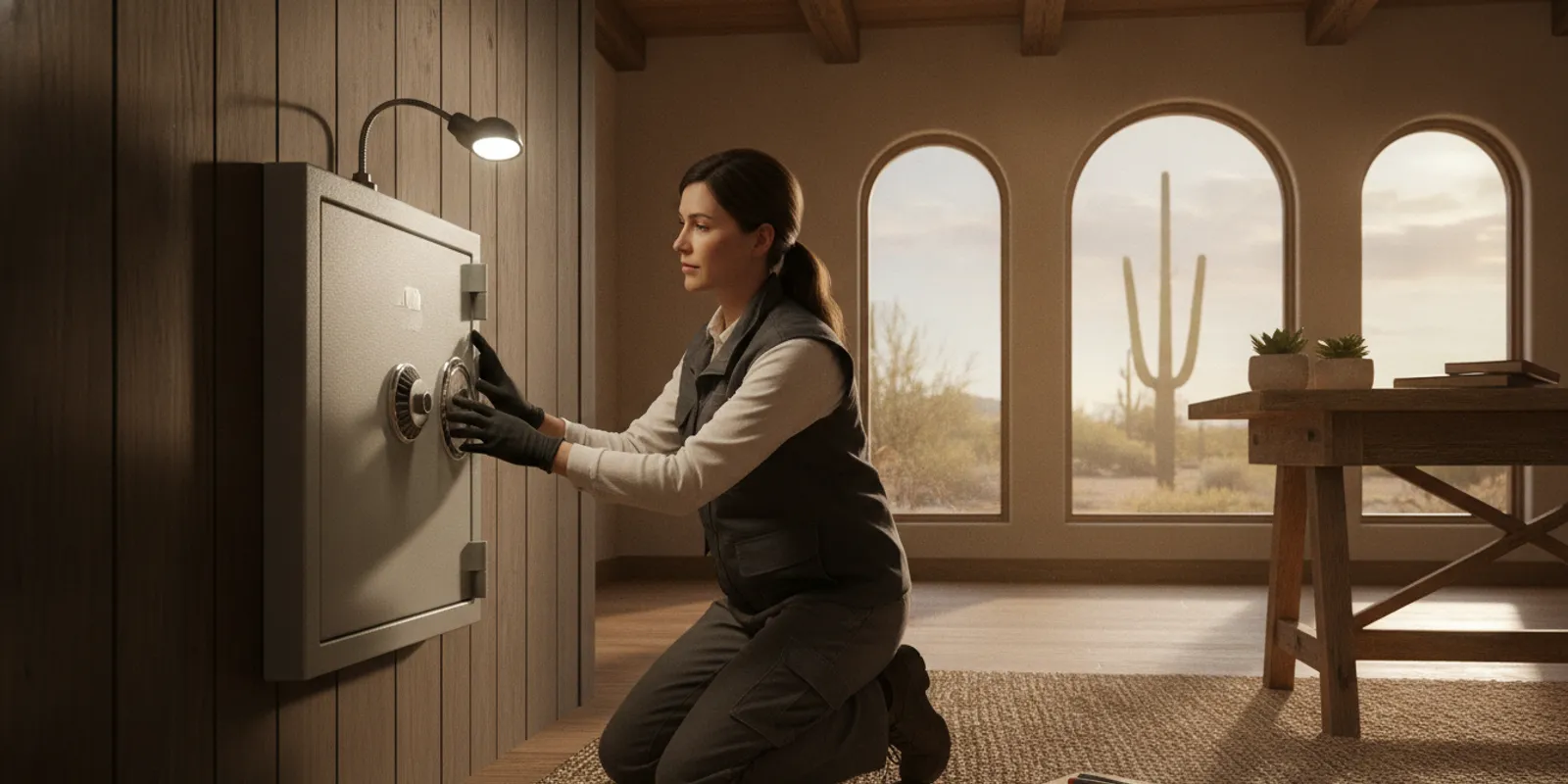
A safe that will not open can put important documents, valuables, or business records out of reach. A professional safe opening service begins with understanding what has happened and what kind of safe is involved, then deciding on a careful next step. If you are in the Mesa area, contact The LOCK Shop to discuss the situation and request an assessment.
Contact The LOCK Shop about your safe
When might you need a safe opening service?
A safe may remain closed for several reasons. The problem could involve a forgotten or changed combination, a key that is missing, an electronic lock that is not responding, or a door or locking component that does not behave as expected. The safe may also be unfamiliar because you have inherited it, moved into a property where it was left behind, or taken responsibility for a business safe without receiving complete access information.
Those situations do not all call for the same response. A lock that appears unresponsive is not enough by itself to determine what is wrong inside the safe. Safe make, model, lock type, age, service history, and the events just before the problem began can all help a professional understand the situation. Avoid assuming that a common online fix applies to your specific safe.
A safe opening request may also be part of a broader service need. You might need help regaining access before arranging a lock repair, evaluating whether the safe is still suitable for its intended use, or addressing access after a change in ownership or staff. These are different goals, so say what you hope to accomplish rather than describing only the symptom.
For example, a homeowner who has a key but cannot turn it should describe whether the key enters smoothly, whether the lock has changed recently, and whether the safe has been moved. A business manager who has inherited a safe from a former employee may not know the combination or have the original paperwork. In that case, explaining who is authorized to approve service and what records are available is more useful than repeatedly testing possible combinations.
In another common situation, a safe may be newly delivered or moved and then fail to open as expected. Note whether it was opened successfully after the move, who handled the move, and whether the difficulty began before or after the safe was repositioned. These facts do not establish a cause, but they help the professional distinguish the timeline and ask better follow-up questions.
What should you do before calling?
Pause before trying additional combinations, keys, or tools. Repeated attempts can make it harder to tell what happened, and force can damage the safe or its contents. Do not drill, pry, strike, or dismantle the safe based on a video or a guess. The safest next step is to preserve the current condition and collect useful details for a professional assessment.
Gather information you can observe without forcing anything:
- Safe identification: Note the make, model, serial number, and any visible label or paperwork. Do not remove panels or move the safe to find a label.
- Lock type: Describe what you can see, such as a dial, keypad, keyway, or another visible control. If you do not know what type it is, say so.
- What changed: Explain when it last opened successfully and what happened immediately before the issue started. Mention a recent move, battery change, combination change, or unusual sound only if it actually occurred.
- Access information: Tell the locksmith whether you have a key, combination, manufacturer documents, or prior service records. Do not send sensitive combinations through an unsecured channel.
- Safe location: Describe where the safe is, whether it is built in or freestanding, and whether the work area is accessible. Do not try to reposition a heavy safe yourself.
- Your goal: Say whether you need access to the contents, want the safe assessed, or have a separate repair or security concern.
These details are not a diagnosis. They help the service provider understand what is known, ask relevant follow-up questions, and discuss whether the job may be appropriate for an on-site visit. If you are unsure about a detail, it is better to say that than to guess.
A simple timeline is often helpful. Write down the last time the safe opened, what happened on the next attempt, and each step taken since then. Include only actions that actually occurred. For example: “It opened Monday; on Tuesday the keypad lit up but the door stayed closed; I tried the combination once more and stopped.” That is clearer than saying only that the safe is broken. If the safe has a visible display, describe the message or indicator in ordinary words rather than trying to interpret it.
Photographs can help communicate the safe’s appearance and its location, but take them only from a safe, convenient position. A clear image of an exterior label or the visible lock may be useful if the service provider requests it. Do not photograph or transmit a combination, access code, or other private information. If a label is inside a door or behind a panel, do not open or dismantle anything to reach it.
What happens during a safe opening service assessment?
A locksmith will generally start by confirming the safe and the access problem. Expect questions about its type, how it is installed, what you have already tried, and whether the safe has been serviced or moved recently. You may be asked to share photographs of visible labels or controls. Provide only images you are comfortable sharing, and keep private access details private.
The locksmith should explain what is understood and what remains uncertain before work begins. Ask what the proposed next step is, what it is intended to accomplish, and whether it could affect the safe, its contents, or its future operation. If the safe’s identity or condition cannot be confirmed from the available details, a provider may need more information before discussing a plan.
Non-destructive methods should be prioritized when possible, but no provider should promise a particular result without assessing the safe and the circumstances. Some problems may be resolved without damage; others can involve limitations or a need for further work. Ask the locksmith to explain the possibilities in plain language, including any relevant trade-offs, before authorizing work.
A helpful assessment is a conversation, not simply a quick guess based on one symptom. You can ask the technician to repeat the proposed plan in everyday terms and to identify what would count as a change in scope. If new information appears after the assessment, pause and ask what it means before approving a different approach. This gives you a chance to decide with a clearer understanding of the safe’s condition and the possible outcomes.
Be prepared to show that you are authorized to request work on the safe. The details required may depend on the situation, such as whether it is your household safe, a company asset, or property left at a newly managed location. If another person must approve service, arrange for that person to be available or ask in advance what authorization is needed. Avoid sharing sensitive ownership or access documents more broadly than necessary.
The LOCK Shop provides safe services and has a Mesa storefront as well as a mobile-service model. The storefront supports product sales and pickup; mobile technicians bring service to customer locations. Whether a particular safe concern can be handled in the field depends on the safe and the job. You can describe the situation first and ask what arrangements are appropriate. For an overview, see The LOCK Shop’s safe services.
How do common safe problems differ?
The first clues can help explain the problem, but they do not prove its cause. This comparison can help you describe what you are seeing when you request assistance.
| What you observe | Useful details to share | Practical next step |
|---|---|---|
| The keypad or controls do not respond as expected | Safe make and model if visible, what the display or controls show, and whether anything changed recently | Stop repeated attempts and ask a professional to assess the safe and lock type |
| You do not have the current combination or key | Whether you have paperwork, a key, or information from a previous owner or manager | Explain how you came to manage the safe and ask what documentation may help |
| The safe was moved or installed recently | When it was moved, whether it opened before the move, and whether there is visible damage | Do not move it again; describe its location and condition |
| The door or handle feels different | What feels or sounds different, when the change began, and whether the safe was recently used | Avoid forcing the handle or door and request an assessment |
| You inherited or took over a safe | Any available manuals, owner information, service history, or known access details | Explain your relationship to the safe and ask what information is needed to proceed |
This table is a preparation aid, not a troubleshooting checklist. A symptom such as a quiet keypad or a stiff handle does not identify a specific failed part. Safe designs vary, and the appropriate response depends on the actual safe and the circumstances.
It can also help to separate the immediate access problem from the longer-term decision. Getting access does not automatically mean the safe should be kept in service, and an unfamiliar safe is not necessarily unusable. After a professional has assessed the situation, ask whether the access issue and the safe’s future operation are separate matters. If you need advice about safe options, the company’s safe services information can help you begin that conversation.
What should you ask before work begins?
It is reasonable to understand the plan before authorizing service. A clear conversation helps align expectations and gives the locksmith a chance to explain any limits. Consider asking:
- What details about the safe or lock do you still need from me?
- What do you recommend as the next step, and why?
- Will you prioritize non-destructive options where appropriate?
- What possible outcomes or limitations should I understand before work starts?
- Could the work affect the safe’s finish, operation, or ability to secure items afterward?
- What should I do to prepare the area, and should I leave the safe where it is?
- Can you provide a free over-the-phone estimate based on the information available, and what could change after an on-site assessment?
The LOCK Shop offers free phone estimates. An estimate is based on the details available at the time, so provide accurate information and ask what assumptions it includes. Do not expect a fixed amount from a general description alone; the work and safe can vary. The company also states that it will meet or beat competitors’ prices, subject to terms and conditions. Confirm how those terms apply to your specific request.
To make that estimate conversation more useful, describe the work area and the safe’s position as well as the lock symptoms. Mention stairs, narrow access, built-in cabinetry, or other practical limits if they apply. Do not move furniture or the safe just to prepare before you have discussed the situation. The provider can tell you whether the area should be cleared or whether the current setup is best left undisturbed.
If you are comparing possible next steps, compare what each estimate assumes rather than focusing only on a number. One discussion may be based on a short phone description, while another may include more information about the safe type and location. Ask whether travel, assessment, parts, or follow-up work are included or still unknown. The goal is to understand the scope and conditions, not to treat an early estimate as a guarantee of the final work.
For planned work, you can use the Request Service form. If you want to talk through general questions first, the frequently asked questions may also help you prepare. You can learn more about the company’s background on its About page. For a general inquiry, use the contact page.
How can you protect the safe and its contents?
Until the problem is assessed, keep the safe in its current position and avoid applying force. Do not try to cut power, remove covers, or change settings unless the safe’s instructions clearly direct you to do so and you are confident the instruction applies to your model. If the safe contains items that need urgent attention, tell the service provider why timing matters, but do not attempt a risky shortcut.
Keep the surrounding work area clear, and tell the locksmith about nearby walls, built-in cabinetry, or other access limitations. If the safe is in a business, make sure an authorized contact is available to explain the situation and approve work. For a home, have the person responsible for the safe available if possible. These simple steps reduce confusion without changing the safe’s condition.
Consider what else may be affected by the timing. A business may need access to records or a controlled handoff between authorized employees; a household may have documents needed for an appointment. Tell the provider what makes the request time-sensitive and ask what can realistically be arranged. Do not assume that urgency changes the safe’s technical limitations or guarantees a particular time or outcome.
After access is restored, ask what was found and whether any follow-up is recommended. If the safe is meant to remain in service, clarify what is needed to operate it correctly and what to do if the issue returns. Keep any new documentation in a secure place, and make sure the right people know how access is managed. For a business, update internal records when responsibility or access changes.
For a workplace, document the handoff without placing the combination or code in an open log. Record who is authorized to access the safe and where secure instructions or records are stored. For a home, decide which trusted household members need access and how you will keep the information private. These are practical management steps rather than a substitute for any follow-up service that the locksmith recommends.
If you are considering a replacement rather than continued use, treat that as a separate decision. A safe’s size, location, intended contents, and access needs matter; do not assume that opening a safe automatically answers whether it should be kept or replaced. The LOCK Shop’s safe services page is a place to start a conversation about the services it offers.
How do you arrange safe service in the Mesa area?
The LOCK Shop is a local, family-owned and woman-operated locksmith and safe-services company headquartered at 1155 South Power Road #116 in Mesa. Its storefront supports key cutting, duplication, product sales, and pickup, while its mobile service brings work to customer locations. The company serves Mesa and the broader East Valley and Phoenix metropolitan area, along with more than 52 central Arizona communities.
When you contact the company, have the safe details and your questions nearby, but do not delay a call because you lack a model number or complete history. State what you know, what you have tried, and what you need. For planned work, use the online request form; for a general inquiry, use the contact page. If you are unsure which route fits your situation, call (480) 452-4505 and explain that you need help with a safe.
The company’s storefront and mobile service serve different purposes. The Mesa location supports key cutting, duplication, product sales, and pickup. A mobile technician brings service to a customer location, but whether a particular safe issue can be handled on site depends on the safe and the work involved. Share the location and access conditions when you make the request so the team can discuss suitable arrangements.
If you are outside Mesa, explain your community and ask whether the request fits the company’s service coverage. The LOCK Shop serves the East Valley, Phoenix metropolitan area, and more than 52 central Arizona communities, but it is still useful to confirm the details for a specific location and job. You can also read about its broader service areas before you contact the company.
Frequently asked questions
Can a locksmith open every safe?
No general guarantee should be assumed. Safe types, conditions, and access problems differ. Share the safe’s details and ask a provider to assess whether the requested work is appropriate and what limitations may apply.
Should I keep trying the combination?
If the safe has stopped responding or you are unsure of the combination, pause rather than making repeated attempts. Record what happened and tell the locksmith what you tried. Do not force the dial, keypad, handle, or door.
What if I do not know the make or model?
That is okay. Share a description of the safe and any visible label or paperwork you can access safely. Do not move or dismantle it just to find identifying information; a locksmith can tell you what else may be useful.
Can I get an estimate before scheduling?
The LOCK Shop offers free phone estimates. The information you provide helps frame the discussion, but ask what the estimate assumes and whether an in-person assessment could change the proposed work.
What information should I avoid sending?
Do not send combinations, codes, or other private access details through an unsecured channel. Share general safe details and ask the service provider how to handle any sensitive information that becomes necessary.
Get a careful next step
A safe that will not open is a reason to gather information, avoid force, and ask for a professional assessment, not to guess at a repair. Explain what you know and what outcome you need so the service provider can discuss an appropriate next step. A real local locksmith shop for keys, locks, door hardware and safes.