Published article
Key Duplication vs Key Origination: Which Automotive Key Service Do You Need?
Learn how automotive key duplication differs from key origination, programming, and documentation, and what details to prepare before requesting service.
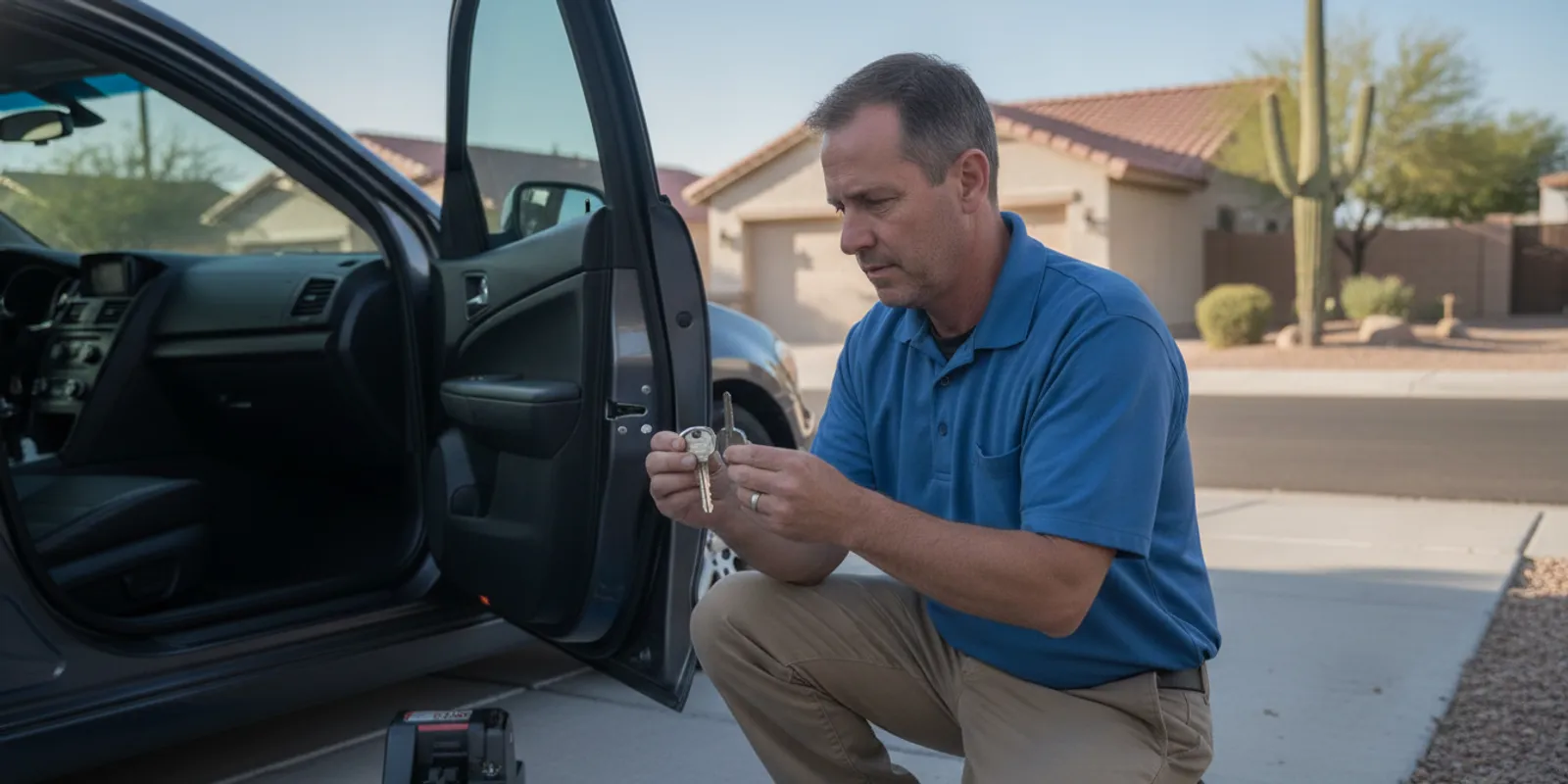
When a vehicle needs another key, the choice between key duplication vs key origination depends mainly on whether you still have a usable key. Duplication starts with an existing key; origination creates a key when there is no working key to copy. Programming may also be needed, so it helps to describe the full situation before arranging service.
Request help with your vehicle key
What is the difference between key duplication and key origination?
Key duplication means making another key from an existing key. The original provides a physical pattern to copy. Depending on the vehicle and key type, a locksmith may also need to address the key's electronic functions so the new key can operate the vehicle.
Key origination means creating a vehicle key when there is no usable key available to duplicate. The work may involve identifying the correct key type, cutting a key to fit, and handling electronic pairing or programming when the vehicle requires it. The precise process depends on the vehicle's make, model, year, and security system.
These terms describe different starting points, not two levels of quality. A spare made from your current working key is usually a duplication request. If all keys are missing, damaged beyond use, or otherwise unavailable, explain that you may need origination. An automotive locksmith can ask follow-up questions to determine what the vehicle calls for.
When is duplication the right request?
Duplication is generally the service to ask about when you have a key that works and want another one. A spare can be useful for a household with more than one driver or as a backup kept in a secure place. It can also be worth considering while the original key is still in good condition, rather than waiting until it is lost or no longer works.
Before requesting a duplicate, check what the existing key does. Does it unlock the doors mechanically? Does it start the engine? Does it include remote buttons? Those functions may be combined in one unit, but they are not necessarily the same function. A key can physically fit a lock and still lack the electronic component needed to start a vehicle.
Tell the locksmith whether your current key is a basic metal key, a transponder key, a remote-head key, or a fob-style device if you know. If you are unsure, describe its shape and buttons or share a photo when arranging service. Do not assume that a key that looks similar is compatible. The key blank and electronic system must match the vehicle.
For information about the shop's automotive key duplication, origination, and programming services, review the service page and describe what your current key can and cannot do. If you need another kind of automotive locksmith service, explain that separately so the request is routed appropriately.
When might key origination be needed?
Origination may be relevant when no working key is available to serve as a pattern. For example, you might have lost every key, received a vehicle without a usable key, or have a key that is broken or damaged enough that it cannot be used for a straightforward copy. In these situations, a locksmith needs to identify the vehicle and determine an appropriate way to create and, if required, electronically prepare a key.
Having no key does not automatically mean every vehicle can be handled in the same way. Key systems vary. Some vehicles use a mechanically cut key; others use a transponder, remote, fob, or a combination. The available service can depend on the specific vehicle and key system. Share the make, model, and year when you request help, but expect the technician to confirm the details before work begins.
Be clear about whether you have any remaining key, even if it is intermittent or only works in some ways. A damaged key may still provide useful information, but it should not be described as fully working if it will not reliably start the vehicle or operate its locks. A precise description helps the locksmith distinguish a copy request from a no-key situation and plan for the right equipment.
Consider two common situations. If you have one key that starts the car and want a backup, describe the request as making an additional key from the one you have. If you have no key that can be used, say that plainly rather than requesting a copy. If you have a key that turns a door but will not start the vehicle, give both details: it is physically present, but it does not provide the function you need. These examples help avoid treating every missing or unreliable key as the same job.
You can also explain why you are requesting service without trying to choose a technical solution in advance. For example, a household may want a second usable key for another driver, while a vehicle owner may need a replacement after losing access to the only key. In either case, the locksmith needs to know the vehicle and the result you want. The service name can be confirmed after those details are reviewed.
How does programming fit into the request?
Cutting and programming are separate parts of many automotive key jobs. Cutting shapes the physical key so it can operate a compatible mechanical lock. Programming, pairing, or registering concerns the vehicle recognizing an electronic key or its transponder. Some keys need both steps; some have no electronic component; and the exact requirement varies by vehicle.
That distinction explains why a key that turns a door lock may not start the engine. It also explains why copying the physical shape alone may not deliver a fully usable spare for a vehicle with an electronic security system. When you call, mention every function you need: door access, ignition, remote lock and unlock buttons, or other features on your existing key.
Do not try to diagnose programming based on appearance alone. Two keys can look alike while using different electronics, and a key with a remote may not be the same thing as a key that the vehicle accepts for starting. If an existing key starts the car but its remote buttons do not work, say so. If the buttons work but the vehicle will not start, explain that too. These details may point to different needs and should be assessed rather than guessed at.
How do the services compare?
| Service term | Starting point | What it generally addresses | What to clarify |
|---|---|---|---|
| Duplication | An existing key is available | Making another key from the existing one; electronic preparation may also be needed | Whether the original starts the vehicle and operates its buttons or locks |
| Origination | No usable key is available to copy | Creating a key for the identified vehicle; cutting and electronic preparation may be relevant | Whether any damaged or partial key remains and the vehicle's make, model, and year |
| Programming or pairing | A compatible electronic key or fob needs vehicle recognition | Electronic setup, which is distinct from cutting the key's physical shape | Which key functions currently work and which are needed |
| Documentation and preparation | Before service is arranged | Sharing vehicle and authorization details so the request can be assessed | Location, contact details, vehicle identification, and proof of authorization if requested |
The table is a starting point, not a diagnosis. A particular vehicle may require more than one of these steps. The locksmith should confirm the scope for your vehicle before work is undertaken.
What information should you prepare?
A few details make it easier to understand the request and determine next steps. Before contacting a locksmith, gather what you can from this list:
- Vehicle details: make, model, and year. If you have it readily available, the vehicle identification number (VIN) may also help identify the vehicle.
- Key status: whether you have a working key, a damaged key, or no key at all.
- Functions needed: starting the vehicle, operating a door lock, remote buttons, or a spare for future use.
- What you have observed: which functions work and when the issue started. Keep the description factual rather than guessing at the cause.
- Vehicle location: where the vehicle is and the best way to reach you.
- Authorization: be prepared to confirm that you are authorized to request work on the vehicle. Ask what information or documentation is needed for your specific request.
You do not need to know the technical name of the key before you call. A clear explanation such as “I have one key that starts the car and want a spare” or “I have no keys for my vehicle” is useful. If you are unsure whether the key is a transponder or remote, say that you are unsure. Accurate observations are more helpful than a confident but incorrect diagnosis.
What should you ask before work begins?
Before approving a job, make sure you and the locksmith are discussing the same outcome. Ask whether the request is being treated as duplication or origination, and whether the vehicle may require programming in addition to cutting. Clarify which functions will be checked at completion. For example, if you requested a spare with remote buttons, ask whether both starting and the requested remote functions are part of the work.
Also confirm what information the locksmith needs to identify the vehicle and verify authorization. Ask whether the estimate can be provided after the vehicle and key details are reviewed, and whether any additional work would be discussed with you before it is done. The LOCK Shop offers free phone estimates, but the final scope can depend on the details of the job. Do not rely on a price for a different vehicle or key type as a promise for yours.
If the appointment is planned work, you can use the Request Service form and include the vehicle details, key status, and functions you need. You can also contact the shop directly to discuss the request. The LOCK Shop is based in Mesa and serves the East Valley and Phoenix metropolitan area; you can review the service-area information when checking whether your location is covered.
How can you prepare for the appointment?
Have the vehicle accessible and make sure the person meeting the locksmith can explain the request. Keep any existing key, even if it is damaged, and any fob or remote associated with the vehicle. Do not discard a broken key before asking whether it may be useful. If you have several keys, identify which one works and what it does.
For a spare-key request, decide what you want the spare to do. A key intended only for mechanical access may not meet the same needs as one expected to start the vehicle or operate remote functions. State your priorities before the work begins. If a key is being created because none is available, tell the locksmith whether the vehicle has any aftermarket or unusual equipment you know about, without assuming it changes the key system.
Keep personal identification and any vehicle ownership or authorization documents available in case they are requested. Requirements can vary with the circumstances, so ask what to bring when arranging the service. For additional background on common service terms, The LOCK Shop's frequently asked questions may also help you prepare.
What can affect the work and estimate?
There is no single price or process that applies to every vehicle key request. The work can differ depending on whether a working key is available, the vehicle's make, model, and year, and whether the requested key needs electronic functions as well as a physical cut. A request for a spare from a working key may have a different scope from creating a key when none is available. The details should be reviewed before you treat an estimate as final.
The LOCK Shop provides free phone estimates. To make that conversation useful, give the vehicle information and describe what is missing or not working. Ask what the estimate includes: for example, whether it covers a physical key, the electronic preparation that may be required, and checking the functions you requested. If you learn that the key type or required work differs from what you first described, pause to confirm any change in scope before approving additional work.
Timing also depends on the actual vehicle and service requirements. When arranging the appointment, explain whether the vehicle is accessible and whether you have any usable key. Ask about the next available option rather than assuming that a particular key type or situation will take the same amount of time as another. A clear initial description helps the locksmith discuss practical next steps without guessing.
How can you check that the result meets your needs?
Before the work is considered complete, describe the functions you expected and ask to check those functions with the new key when appropriate. If you requested a key to start the vehicle, that is different from requesting a key that only operates a mechanical lock. If the key includes remote buttons, identify which buttons you expect to use. This simple check helps keep the conversation focused on the result you requested, not merely on whether a new key was produced.
If one of the requested functions does not work as expected, explain exactly what happened and ask what the next step should be. Avoid repeatedly forcing a key or making changes yourself while the issue is being assessed. Keep the original key and any new key together, and note which one works for each function. That information can make follow-up discussion clearer.
Frequently asked questions
Can a locksmith duplicate a key if I only have one?
Often, one working key is the starting point for a duplication request. Whether a complete spare also needs electronic programming depends on the vehicle and key type. Explain which functions work on your existing key so the request can be assessed accurately.
Is origination the same as programming?
No. Origination describes creating a key when there is no usable key to copy. Programming or pairing concerns electronic recognition by the vehicle. A job may involve origination, cutting, programming, or a combination, depending on the vehicle.
Can a copied key start my car?
It depends on the vehicle and the key. A physical copy may operate a mechanical lock, while a vehicle with an electronic key system may require the compatible electronic component to be prepared as well. Tell the locksmith that starting the vehicle is a required function.
What if I am not sure whether my key is damaged or just needs programming?
Describe the symptoms: whether the key turns, starts the vehicle, and operates any remote buttons. Avoid forcing a damaged key or assuming the cause. A locksmith can use the vehicle details and your description to determine what should be assessed.
Send your vehicle key service request
Get a clear next step for your vehicle key
The useful distinction is simple: duplication starts with a key you can use, while origination addresses a situation with no usable key to copy. Programming and documentation are separate considerations that may be part of the plan. Share the vehicle details, what keys you have, and the functions you need so the locksmith can clarify the appropriate next step.
The LOCK Shop is a family-owned locksmith based in Mesa, Arizona, serving customers across the East Valley and Phoenix metropolitan area. Contact the shop to discuss your vehicle and key needs.