
Published article
How to Change Safe Code Safely: A Practical Guide
Learn how to change safe code safely: identify the lock, follow the exact manual, test with the door open, and know when to call a technician.
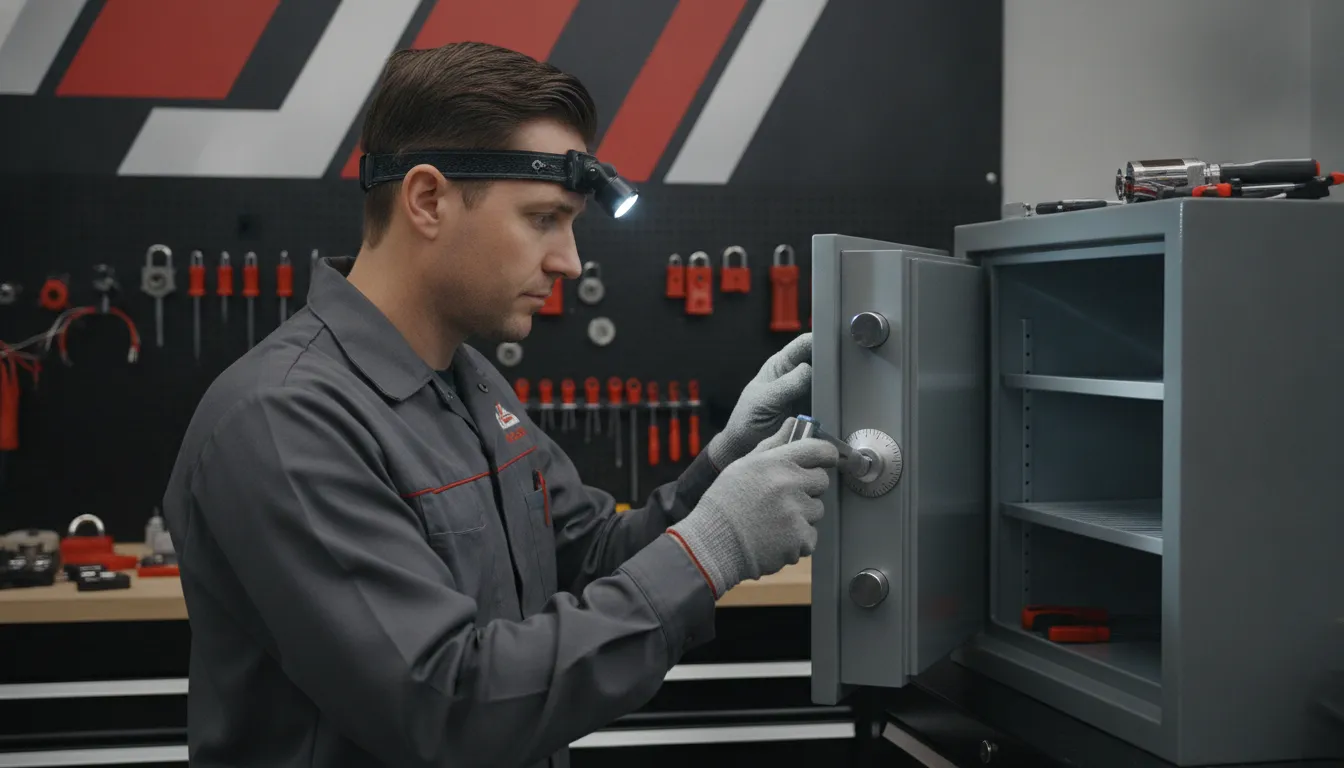
Changing a safe code is not a one-size-fits-all task. The correct process depends on the safe, lock type, and manufacturer. So an authorized owner or responsible manager should identify the model and keep its instructions available before beginning. A careful setup protects both the contents and future access.
Learning how to change safe code safely starts with keeping the door open and confirming the current code and model-specific procedure. Test the new code several times before closing the safe, when the manufacturer permits that method. Never guess at a sequence, publish the code, or continue after an error or unclear lock response.
Before entering anything, confirm that you have permission to make the change, can work privately, and have a secure way to document the new code without exposing it. Those checks help determine whether a straightforward manual-guided change is appropriate or whether a qualified safe technician should handle it.
What to Confirm Before You Change a Safe Code
Before you think about how to change safe code settings, confirm that you are authorized to manage the safe. That may mean you are the owner, an assigned property manager, or a responsible employee with documented permission. Do not attempt a combination change on a safe that belongs to someone else, and do not share the existing or new code in a public message.
Identify the safe and lock type
Look at the safe itself and the lock face. Is it an electronic keypad, a mechanical dial, a key-and-combination lock, or a system with another access method? Procedures can differ even among locks that look similar. Some electronic locks use a menu, while some mechanical locks require a dedicated change tool or professional service. The existing code may also be required, so stop if you do not have the authorized combination.
Record the manufacturer and model number without publishing sensitive access information. Take a clear photo of the lock face and any identification label for your private records. If the safe is part of a business, note who is authorized to use the new code and whether the change needs to be documented for access control.
Find the exact instructions before starting
Use the owner's manual or the manufacturer's instructions for that exact safe and lock. Do not rely on a sequence found for a different model, even if the keypad or dial appears similar. The manual should tell you the required lock position, whether the door or bolt must remain open. Which confirmation signals to expect, and whether a special tool or manager credential is needed.
Set up a private, well-lit work area before beginning. Keep the safe door open, keep the contents clear of the working area, and have the manual available without exposing the code to bystanders or a camera. Plan to test the new code several times while the door remains open, when the manufacturer's instructions permit that method. Never close the safe simply because the lock accepted an entry once.
Know when to stop
Do not proceed if the lock type is unclear, the instructions are missing, the safe is already malfunctioning, or you cannot confirm authorization. Stop after an error, unexpected beep, failed attempt, or unclear display instead of guessing or repeating sequences. For model-specific guidance or a safe combination change, review The LOCK Shop's safe services or request help from a qualified technician. A careful pause is safer than creating a lockout or damaging the lock.
How Do Electronic and Mechanical Safe Locks Differ?
The lock on your safe determines whether a code change is a menu-based electronic update, a mechanical adjustment, or a technician-assisted service. Before looking up how to change safe code instructions, identify the lock type and the exact safe model. Two safes that look similar may use different controls, code lengths, change procedures, or authorization requirements.
Electronic keypad locks
Electronic locks typically use a keypad, and some include a display, backlighting, a fingerprint reader, or another user interface. Depending on the model, the owner or an authorized manager may be able to change a code through a sequence of buttons or an on-screen menu. Some systems require the current code, a manager credential, or a specific user profile before allowing the change.
Those features are categories, not universal instructions. A keypad with a light does not prove that it uses the same sequence as another keypad with a light. Code length, confirmation signals, timeout behavior, and user-management options can vary by manufacturer and model. Use the owner's manual or the manufacturer's documentation for the exact procedure. If the instructions do not clearly match the lock in front of you, stop rather than testing random combinations.
Mechanical dial locks
Mechanical combination locks use a dial and internal wheels rather than electronic buttons. Changing the combination can require a particular lock design, a dedicated change tool, and precise manipulation of the mechanism. Some dial locks may permit an authorized owner to make a change when the existing combination is known, while other systems require an authorized dealer or qualified locksmith. A general dial-turning sequence is not safe to assume.
Mechanical work also creates a greater need for controlled testing. Keep the safe open while following the model-specific instructions, and do not close the door until the new combination has been confirmed as directed by the manufacturer. If the manual is missing, the change tool is unavailable, the dial behaves unexpectedly. Or the existing combination is not known, a qualified technician can help protect the safe from a failed change or lockout.
Other lock systems and combination locks
Some safes combine a keypad with biometric access, a key override, or separate user credentials. Others are designed for specialized security containers and have their own change keys, displays, or status signals. These systems may look straightforward but can have strict handling rules. Never remove covers, disconnect components, or improvise a reset method unless the official instructions specifically authorize it.
The owner's manual controls. Confirm the lock type, keep the door open during permitted testing, and stop when the instructions or safe behavior are unclear. The LOCK Shop lists safe combination changes among its safe services for owners who need model-aware assistance.
| Lock type | What may vary | Safer next step |
|---|---|---|
| Electronic keypad | Menus, code length, credentials, confirmation signals, and timeouts | Follow the exact owner or manager instructions with the safe open |
| Mechanical dial | Change-tool requirements, dial indexes, and handling sequence | Use the exact manual or ask a qualified safe technician |
| Specialized or combined system | Biometric access, key override, user profiles, or separate controls | Confirm the model procedure before touching covers or components |
How to Change a Safe Code Safely, Step by Step
Learning how to change safe code settings starts with recognizing that there is no universal reset sequence. Electronic keypads, mechanical dials, biometric systems, and commercial security containers can require different controls, code lengths, confirmation signals, and bolt positions. Use this workflow as a safety framework, not as a substitute for the owner's manual for your exact lock.
- Authorize the change. Confirm that you own the safe or have documented permission from the owner or responsible manager. Do not attempt to change a code simply because you found a safe, inherited one without clear authorization, or are managing a property without established access procedures. Keep the existing combination private, and do not type it into a public forum or share it in a service request.
- Identify the lock and locate the correct instructions. Record the safe manufacturer, model, lock type, and any visible model or serial information without disassembling the lock. Find the current manual from the manufacturer or use the manual supplied with the safe. Similar-looking keypads can use different menus and confirmation steps, while mechanical locks may require specialized service. If you cannot identify the exact instructions, stop before beginning.
- Open the safe and keep it open during the entire test. Use the existing code or authorized opening method to open the door. Do not start a code change while the safe is closed. Keep the door or drawer open while programming and testing so an unsuccessful change does not leave you locked out. Follow the manual if it specifies a particular bolt position, such as extended or retracted, before programming. The required state is model-specific.
- Follow the manual's current-code and new-code sequence exactly. Use the lock's documented programming control, menu, change key, or other approved method. Enter the current code when the instructions call for it, then enter the new code and repeat it if the manual requires confirmation. Do not substitute a factory default, a guessed reset pattern, or instructions written for a similar-looking lock. Some procedures also require a particular time window, display prompt, beep pattern, or manager authorization.
- Wait for the lock's documented confirmation. Complete every confirmation step in the manual before assuming that the new code was saved. A display message, tone, indicator, or other response may be part of the lock's normal process, but those signals differ by model. If the lock gives an unexpected response, enters an error state, or stops responding, do not continue guessing. Leave the safe open and consult the manual's troubleshooting guidance.
- Test the new code several times with the door open. When the manufacturer permits this test method, enter the new code at least three times and confirm that the lock operates consistently before closing the door or drawer. Observe the bolt movement and any required handle or dial action. Do not test by relying on a single successful attempt. If the code works once but fails on later attempts, keep the safe open and stop to investigate the exact instructions.
- Stop when anything is unclear. Do not remove covers, force a dial, bypass the lock, or repeat unverified sequences. Mechanical combination changes and some specialized electronic locks may require an authorized dealer or qualified locksmith. If the safe is already locked, or the code is unknown, contact a qualified technician. Do the same if the keypad or dial is damaged, or the manual does not match the lock. Use safe combination change services instead of risking damage or a lockout.
Only close the safe after the new code has operated reliably and the manual confirms that the change is complete. If you need model-specific, authorized help in Mesa or the East Valley, you can request safe service from The LOCK Shop without publishing the combination.
How Should You Choose and Document a New Code?
Once you have confirmed that you are authorized to manage the safe, choose a code that protects access without making the owner or organization easy to guess. A code should not be based on a birthday, street address, phone number, employee ID. Business opening date, or another detail that someone could learn from a public profile, paperwork, or casual conversation. Avoid using a code that is already used for an email account, alarm system, banking access, or another unrelated device.
Choose for privacy, not convenience
Do not enter a real code in a blog comment, text thread, shared document, service request, or photograph. The same rule applies while asking for help with how to change safe code procedures. Describe the safe and lock type without disclosing the current or proposed combination. If another authorized person needs access, share the new code through a private channel that your organization considers appropriate. And tell that person not to forward or store it casually.
Limit access to people who genuinely need it. In a home, that may mean the owner and a designated trusted person. In a business, identify the responsible manager and define who may open the safe, approve a code change, or receive the updated record. Keeping the list short makes later access reviews more useful and reduces the chance that an outdated employee, contractor, or former manager retains knowledge of the code.
Store the record separately and securely
If a written record is necessary, store it in a protected password manager, restricted access system, or other secure location approved for sensitive information. Do not keep the only copy taped to the safe, inside the safe, in an unlocked desk, or in an unprotected shared folder. Keep the record separate from the safe so it remains available during an access problem. But do not make it easy to discover alongside the safe's location or identifying details.
Record only what is necessary, such as the safe identifier, the date of the change, the person who approved it, and the authorized users. Follow the exact recordkeeping rules for your household or organization rather than creating a broad log that exposes the combination. When the responsible manager changes, review the access list, remove former authorization promptly, and document who approved the update. If you cannot maintain that process privately, The LOCK Shop lists safe combination changes as a specialized service and can discuss an authorized, privacy-conscious approach without requiring you to publish the code.
What Should You Do When the Code Change Fails?
A failed code change is a reason to pause, not to keep guessing. Safe locks differ by type and manufacturer, and an error tone, flashing light, rejected entry, or unexpected display message may have a specific meaning in the owner's manual. Record what happened without recording or publishing the actual combination. Then identify the safe and lock model and return to the exact instructions for that model.
Read the lock's response before trying again
Do not assume that a beep or error tone means the same thing on every electronic lock. Some manufacturer instructions describe a timed-out change mode and specify what signal indicates that the lock has exited that mode. For example, the government instructions for an S\&G 2740B state that a user who stops during the change process should wait for the change function to time out. Followed by one long beep. That detail applies to that documented lock and should not be treated as a universal reset procedure. Follow your own manual instead.
Check battery or power guidance only when the manual for your exact lock addresses it. Do not remove covers, disconnect components, or substitute a reset sequence based on a similar-looking keypad. Sensitive electronics and model-specific controls can make an otherwise simple mistake more serious.
Keep the safe open and stop before the risk increases
If the door is open, leave it open. Keep the door or drawer in the testing position required by the manual, and do not close it until the new code has worked several times. One documented safe procedure says to check the new combination at least three times with the door or drawer open. This creates a safer opportunity to identify a failed change before the safe is locked.
If the code is rejected repeatedly, the lock enters a delay, the mechanism feels unusual, or the instructions are unclear, stop. Do not continue entering guesses. Do not attempt to bypass, defeat, force, or drill the lock, and do not rely on a factory code. Those actions can increase damage and lockout risk, while also creating privacy and authorization concerns.
If the safe is already locked or the door will not operate normally, seek authorized help rather than escalating the attempt. The LOCK Shop provides professional safe combination changes, along with safe repair and unlocking services. For an urgent access problem, use urgent safe access help. Keep ownership or authorization information available, but do not send your combination through a public form or message.
When Should You Call a Safe Technician?
Knowing how to change safe code is useful only when the safe type, lock, and instructions are clear. If any part of that process is uncertain, stopping early is safer than continuing to guess. A safe technician can help protect the safe, its contents, and your ability to access it later.
Call before attempting a mechanical dial change
Mechanical combination locks are not interchangeable with electronic keypad procedures. Some dial locks require a specific combination-change tool, and an unsuccessful change can create a lockout risk if the door is closed before the new combination is verified. If you have a mechanical dial, lack the required tool, or are unsure whether your lock supports an owner-performed change, ask for qualified guidance first. Keep the safe open and do not test an uncertain change by locking the door.
Get help when the code or instructions are unavailable
Call a technician if the current code is forgotten, unavailable, or belongs to a former employee or occupant whose authorization is unclear. Do not try random combinations, factory codes, or instructions meant for a different model. Electronic locks can vary in their menus, confirmation steps, and code requirements, while specialized security containers may have their own manufacturer procedures. The correct next step depends on the safe and lock, not just on whether the lock has buttons or a dial.
Professional help is also appropriate after repeated failed attempts, a damaged keypad, an unresponsive dial, unusual beeps, or an error state that the manual does not explain. Stop before removing covers, disassembling the lock, or attempting bypass methods. If the safe is already locked and access is urgent, explain the situation without sharing the combination publicly and ask about authorized, privacy-conscious service.
The LOCK Shop provides safe services that include combination changes, repair, maintenance, unlocking, installation, and relocation. Service is subject to the safe type and job requirements, so a technician may first need to identify the model and understand your authorization. For planned help, use Request Service. Keep ownership or authorization details available, but do not send an actual safe code through a public form or message.
Safe Code Change Checklist
Before you close the door, use this final checklist to reduce the risk of a lockout or an uncertain result. A safe code change should be treated as an authorized security task, not a sequence to try casually.
- Confirm authorization. Make sure you own the safe or have clear permission from the owner or responsible manager. Do not change access for someone else without approval.
- Identify the lock and read the manual. Confirm whether the safe uses an electronic keypad, mechanical dial, biometric feature, or another lock type. Instructions vary by manufacturer and model. Do not substitute a sequence from a similar-looking lock.
- Keep the code private. Choose a code that does not rely on easily guessed personal information. Do not write the actual code in an exposed location, send it in a public message, or include it in a service request.
- Keep the door open. Follow the manual's instructions while the safe remains open. If the manual permits repeated testing, test the new code at least three times before closing the door. Confirm that the lock responds as expected each time.
- Document access securely. Record the model, date of the change, and who is authorized to use the safe. Store any code record in a protected system with limited access, not beside the safe.
- Know when to stop. Stop if the lock gives an unfamiliar error, the instructions do not match the safe, the code is rejected repeatedly, or the change process becomes unclear. Do not guess, disassemble the lock, or attempt a bypass.
If you are still unsure about how to change safe code, The LOCK Shop provides safe combination change services for authorized owners and managers. For planned help, request safe service and describe the safe type without sharing the combination. A technician can explain the next safe step based on the lock and job requirements.
Frequently Asked Questions
Can I change the code on any safe?
No. The procedure depends on the safe type, lock type, and manufacturer. Electronic locks often include an owner code-change process, while mechanical combination locks may require an authorized dealer, qualified locksmith, or a model-specific change tool. Confirm the lock model and read its manual before entering any sequence.
Can I change a safe code without the current code?
Usually, a code change requires an authorized existing code or manager credential. Do not guess codes, use a factory sequence from an unrelated model, or attempt to bypass the lock. If the current code is unknown, keep the door open if possible and contact a qualified safe technician for an authorized solution.
How can I avoid locking myself out after changing the code?
Perform the change with the safe door open, follow the exact manual instructions, and test the new code several times before closing the door. Confirm that the bolt or locking mechanism responds as expected. Do not close the safe until the code has been verified and you understand the result.
What should I do if the safe rejects the new code?
Stop rather than repeating guesses. Check the manual for the meaning of the error or required battery guidance, and leave the door open. If the keypad, dial, or lock behaves unexpectedly, or you are locked out, stop operating it and arrange help from a qualified technician. Never disclose your actual code in a message or public request.
Ready to Change Your Safe Code With Confidence?
If the procedure is unclear, the code change fails, or you would rather protect the safe and its contents with qualified help. The LOCK Shop can help you choose a careful next step without asking you to share the code publicly. For planned work, request safe service and describe the safe type and concern. For urgent help, call The LOCK Shop at (480) 452-4505.