Published article
Home Safe Warranty: What It Covers and When to Call a Locksmith
Learn how to review a home safe warranty, check its limits, prepare a claim, and decide when to contact the manufacturer or a locksmith for service.
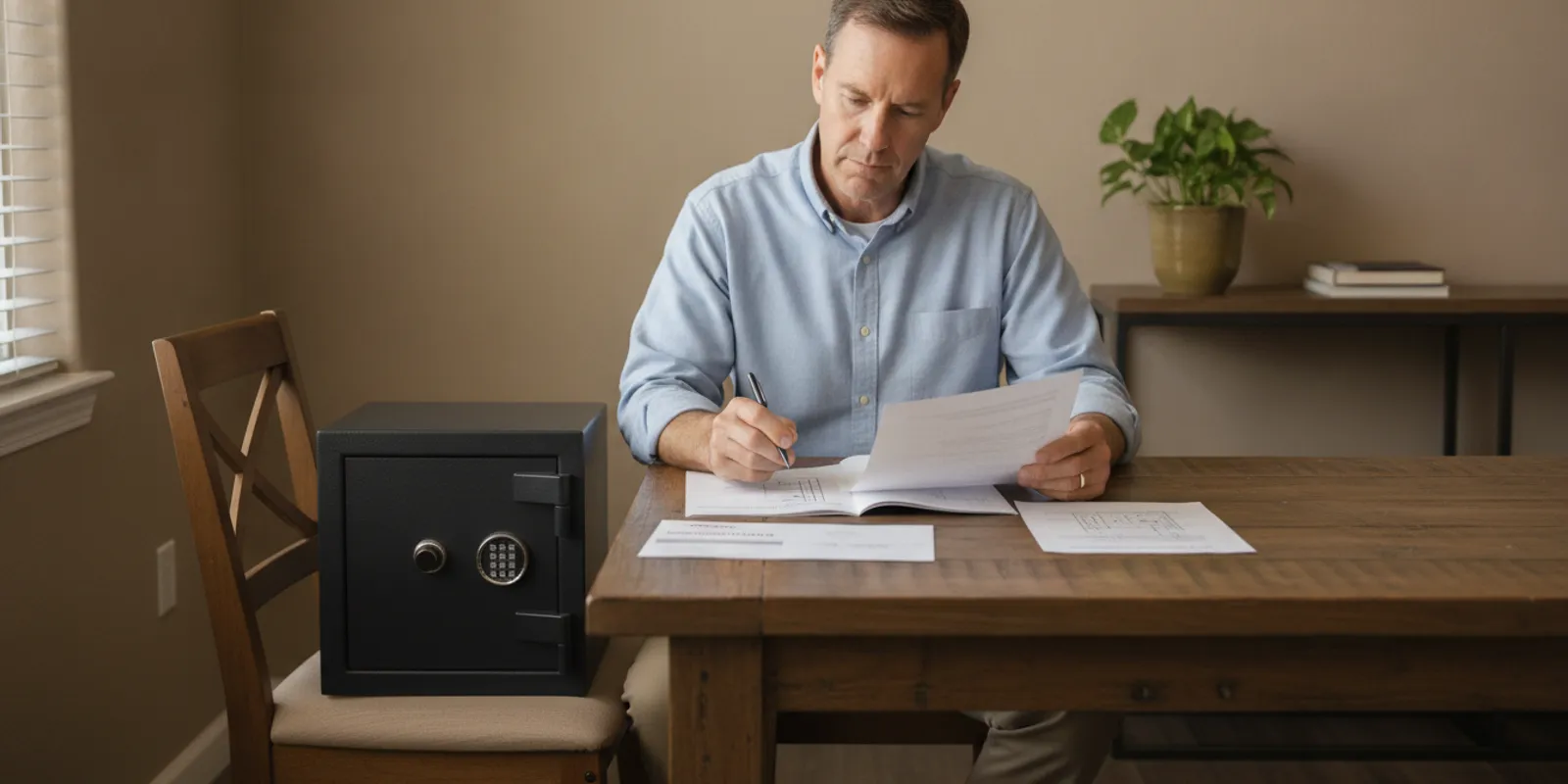
A home safe warranty can help you understand what support may be available if a safe has a defect or stops working as expected. The key is to check the written terms for your exact make and model: coverage can vary by component, conditions, and remedy. A warranty review also helps you decide whether to start with the manufacturer or ask a locksmith about a service assessment.
Ask about safe service options
What does a home safe warranty actually tell you?
A warranty is the manufacturer’s written statement about support for specified problems under stated conditions. It is not a general promise that every issue will be repaired without charge. The exact document matters: two safes from the same brand can have different terms, and different components on one safe may be treated separately.
Look for the warranty supplied with the safe or published for its exact model. A retailer’s short product description, a verbal summary, or the paperwork for a similar model cannot establish your safe’s coverage. The terms may describe repair, replacement of a part, replacement of the unit, or another remedy. They may also set out how to report a problem and what information to provide.
Keep the warranty language in view while you assess a problem. Separate what the document explicitly says from what you hope it means. If a detail is not clear, ask the manufacturer to explain it before authorizing work that might change the safe or lock.
Which warranty details should homeowners check?
Read the warranty from beginning to end, including definitions, footnotes, and instructions for making a claim. Make a short checklist instead of relying on a general phrase such as “limited warranty.” Confirm each item against the actual terms:
- Covered parts: Identify whether the document names the safe body, finish, locking mechanism, keypad, electronic components, or accessories. Do not assume that coverage for one part applies to all the others.
- Coverage period: Check when the period begins and how long it lasts. Some documents may state different periods for different components, so record each separately if applicable.
- Who can claim: Look for language about the original purchaser, transfer to a later owner, or other eligibility requirements. If you bought the safe secondhand, ask the manufacturer whether the terms apply to you.
- Conditions of use: Note any stated installation, operating, maintenance, or care instructions. Compare them with what you know about the safe, without guessing that a condition was or was not met.
- Exclusions: Find the situations the document excludes. It may address damage, misuse, alterations, or other conditions, but only the wording for your model establishes what is excluded.
- Remedy: Determine whether the manufacturer may repair, supply a part, replace the safe, or choose another stated option. Do not assume a particular remedy before the manufacturer reviews the issue.
- Claim procedure: Locate the correct contact method, required proof of purchase, model details, and any preliminary steps. Check whether the manufacturer wants photographs, a written description, or an inspection.
- Labor and related charges: See whether the document addresses labor, shipping, travel, removal, or service visits. A parts commitment does not, by itself, tell you who pays those costs.
- Approved service: Check whether a repair or change must be handled by the manufacturer or an approved provider. Ask before scheduling outside work if you want to preserve a possible claim.
- Claim deadline or notice: Look for a time limit to report a problem, return paperwork, or respond to instructions. Record any stated deadline so that you can follow up promptly.
These are points to verify, not standard benefits promised for every safe. If the terms use unclear wording, ask the manufacturer a focused question and keep its response with your records. That gives you a reliable reference when you decide what to do next.
How do manufacturer support and locksmith service differ?
The manufacturer interprets its own warranty and explains its claim process. It can confirm the document that applies to a model, identify any approved service route, and tell you what information is needed to evaluate a reported issue. Only the manufacturer can say whether its written warranty applies to your particular situation.
A locksmith’s role is different. A locksmith may assess a safe’s lock or operating problem, discuss practical service options, or help with safe-related work that the provider offers. That assessment is not automatically a warranty claim, and hiring a locksmith does not establish that the manufacturer will reimburse the work. If coverage might apply, ask the manufacturer about authorization before work begins.
| Situation | Useful first contact | Questions to resolve |
|---|---|---|
| You suspect a defect in a part named in the warranty | Manufacturer | Does the reported issue fit the terms, and what claim steps or approved provider are required? |
| You cannot identify the safe or locate its document | Manufacturer or seller records | Which make, model, or purchase details can identify the applicable warranty? |
| The safe will not open or its lock is not operating normally | Manufacturer first if coverage may apply; locksmith for a service assessment when appropriate | Is service authorized, what will the visit involve, and are any costs addressed by the warranty? |
| You need installation, delivery, moving, or other safe work | A qualified safe-service provider, with manufacturer guidance if relevant | What is included in the requested work, what access is needed, and could the work affect warranty terms? |
| You already arranged a repair | Manufacturer promptly, then the service provider as needed | Can the work be documented, and does the warranty specify any notice or next step? |
Use the table as a starting point, not as a substitute for the warranty. For example, a keypad issue could be a covered component problem, a battery or operating issue addressed by the manual, or a separate service need. The safest next move depends on the symptoms and the manufacturer’s instructions.
How should you prepare before contacting the manufacturer?
Gather the details that make the first conversation specific. Having them ready can save repeated calls, but do not open or dismantle the safe just to find information.
- Find the purchase record. Locate the receipt, order confirmation, or other proof of purchase. Note the purchase date and seller if shown.
- Identify the safe. Write down the make and model from accessible paperwork or a visible exterior label. Include a serial or product number only if it is available without forcing access or removing parts.
- Find the applicable terms. Keep the warranty and owner’s manual nearby. If you cannot find them, ask the manufacturer where to obtain the correct documentation for that model.
- Describe the problem factually. Record when it began, what you observed, whether an error message appeared, and what happened immediately beforehand. Avoid diagnosing the cause as a fact unless it has been confirmed.
- Note relevant history. Record whether the safe was recently moved, installed, or serviced and who performed the work, if known. This helps the manufacturer understand the sequence without implying a cause.
- Ask about process and costs. Confirm how to open a claim, whether a provider must be approved, what inspection involves, and whether the terms address labor, travel, shipping, or removal.
If the safe is locked, say so at the beginning and ask what details the manufacturer can use without access to its contents. Avoid sending combinations, access codes, or sensitive contents information through an unsecured channel. You can also ask how to verify that you are speaking with the manufacturer’s authorized support contact.
What should you do when a safe will not open?
First, pause. Repeatedly entering combinations, forcing the handle, striking the door, or using improvised tools can make a problem harder to diagnose or may cause damage. Do not take apart the lock simply to test a theory.
Consult the instructions for the exact model. If the manual describes a simple, non-invasive check, such as a specified battery replacement or keypad procedure, follow it only when you are confident the instructions match your safe. Note what you tried and the result. If you are uncertain, stop and ask the manufacturer for guidance rather than improvising.
When you contact support, describe the sequence clearly: whether the keypad responds, whether the handle moves normally, what sounds or indicators you noticed, and whether the issue followed a battery change, move, or service visit. Avoid making many attempts while waiting for guidance. A concise timeline is more useful than a guess about the failure.
If the manufacturer directs you to an approved provider, follow that route and ask what to expect. If warranty support does not apply, or you need an independent service assessment, a locksmith may be able to discuss options. The LOCK Shop provides safe services in Mesa; explain the make, model if known, and symptoms when asking about next steps. Do not disclose the combination in an unsecured message.
How do you tell whether work could affect coverage?
Before authorizing a repair, modification, or opening, search the warranty for language about unauthorized service, alterations, or required approval. If the wording is broad or unclear, ask the manufacturer to identify the specific restriction and explain whether the proposed work falls under it. Request an answer in writing when practical.
Share the manufacturer’s instructions with the provider you contact. Ask whether the provider can follow those instructions and what work is proposed before it begins. A clear scope helps you distinguish a diagnostic assessment from a repair, a lock change, or other work. If the provider cannot confirm how the work relates to the warranty, pause and return to the manufacturer for clarification.
Keep the paperwork from each conversation: dates, names or reference numbers when provided, instructions, estimates, and service records. These records do not guarantee that a claim will be approved, but they help you explain what happened and demonstrate which steps you took.
What if you cannot find the warranty or purchase receipt?
Start with records you already have: email receipts, online order history, product registration, installation paperwork, or documents kept with household records. Search for the brand and model using the information shown on the paperwork or an accessible label. Do not remove panels or force the safe open just to locate a number.
Contact the manufacturer with what you can identify and ask which details it needs to retrieve the applicable warranty. If the safe was bought secondhand or inherited, say so and ask whether the warranty can transfer. The answer depends on the actual terms; do not assume either that coverage continues or that it has ended.
If the manufacturer cannot identify the safe from the information you have, ask what safe, non-invasive options remain. A locksmith may help assess the safe or discuss service needs, but that is separate from confirming warranty eligibility. Keep any new information with your records so you do not have to reconstruct the search later.
How can you keep warranty records useful over time?
Make a small safe file in a secure location separate from the safe itself. It can be digital, paper, or both. The goal is to find the documentation without needing to open the safe or expose sensitive access information.
- Save the warranty, owner’s manual, receipt, and product-registration confirmation, if available.
- Record the make and model, and store any serial number in a place appropriate for your household’s security needs.
- Keep installation, delivery, moving, and service paperwork with dates and provider details.
- Note any instructions the manufacturer gives about operation, maintenance, or approved service.
- After a support conversation, record the date, contact method, reference number, and next step.
- Review the file if ownership changes, the safe is moved, or work is arranged, and confirm any relevant warranty language before proceeding.
A useful file is especially helpful when several years have passed or a household member needs to contact support. Store combinations and access codes separately from general service notes, and avoid including them in ordinary email or messages. Good documentation supports a clear conversation; it does not create coverage that the warranty does not provide.
When is it useful to contact a locksmith?
Consider a locksmith when you need a practical assessment of a safe’s lock or operation, want to discuss repair options, or need help with safe-related work outside the manufacturer’s claim process. If a possible warranty claim is involved, contact the manufacturer first and ask whether it requires an approved provider or advance authorization.
Before booking, explain what you know and what you do not know. Share the safe’s make and model if available, whether it opens, what symptoms you observed, and whether the manufacturer has issued instructions. Ask what the proposed visit can assess, what information or proof of authority may be needed, and what work would require separate approval. Do not assume an inspection is free or covered unless that has been confirmed.
The LOCK Shop is a family-owned and operated locksmith based in Mesa, Arizona, serving the East Valley and Phoenix metropolitan area. You can review its safe services, check general information on its frequently asked questions page, or learn about the company on its About page. For a specific situation, provide enough detail to discuss the service without sharing a combination or other sensitive access information.
How can a homeowner work through a warranty question?
Consider a homeowner whose keypad stops responding while the safe remains closed. A useful process is to note the model, locate the warranty and manual, describe the keypad behavior, and ask the manufacturer whether the lock or electronic component is addressed by the terms. The homeowner should also ask whether a specific provider must inspect it and whether the warranty explains any labor or visit costs.
If the manual contains a model-specific battery check, the homeowner can ask whether it is appropriate and follow the instructions if comfortable. If the keypad remains unresponsive, the next step is not to pry at the door or take the lock apart. Follow the manufacturer’s directions or discuss a service assessment with an appropriate provider. The example does not establish that the issue is covered; it shows how separating documentation, symptoms, and next steps reduces assumptions.
For another example, imagine a safe that was recently moved and now feels different to operate. Record when it was moved and what changed, then review the warranty language on installation, movement, and service. Contact the manufacturer before arranging work if the terms require approval. If you seek a locksmith assessment, state that the safe was moved and ask what the assessment covers before authorizing repair.
In both cases, the decision path is the same: identify the exact safe, describe observable facts, ask the manufacturer about its written terms, and authorize service only after you understand the proposed scope. That approach preserves choices without promising an outcome.
Frequently asked questions
Does a home safe warranty cover a lockout?
Not necessarily. Coverage depends on the exact written terms and the circumstances. Ask the manufacturer whether the situation qualifies and whether it requires a particular service provider.
Can a locksmith tell me whether the warranty will pay?
A locksmith may assess the safe and discuss service options, but the manufacturer decides whether its warranty applies. Contact the manufacturer before approving work if potential coverage matters to you.
What if I cannot find the warranty?
Use purchase records or accessible product information to identify the make and model, then ask the manufacturer for the applicable document. Do not force access or remove parts to locate identification details.
Should I attempt a repair before contacting the manufacturer?
Review the manual and warranty first. If the terms require approval or an authorized provider, follow those directions. Avoid dismantling the safe or changing its lock until you understand the possible effect on coverage.
Does keeping the receipt guarantee a claim will be approved?
No. A receipt may help establish purchase details, but the manufacturer reviews the reported issue under the applicable written terms. Keep the receipt with the warranty, and ask support what else is required.
Ask The LOCK Shop about safe service options
Review the warranty, document what the safe is doing, and confirm the appropriate service route before authorizing work that could affect a claim.