
Published article
Car Key Stuck in Ignition: What to Do Before Calling a Locksmith
Is your car key stuck in the ignition? Learn safe steps, common causes, what not to force, and when to call The LOCK Shop for help.
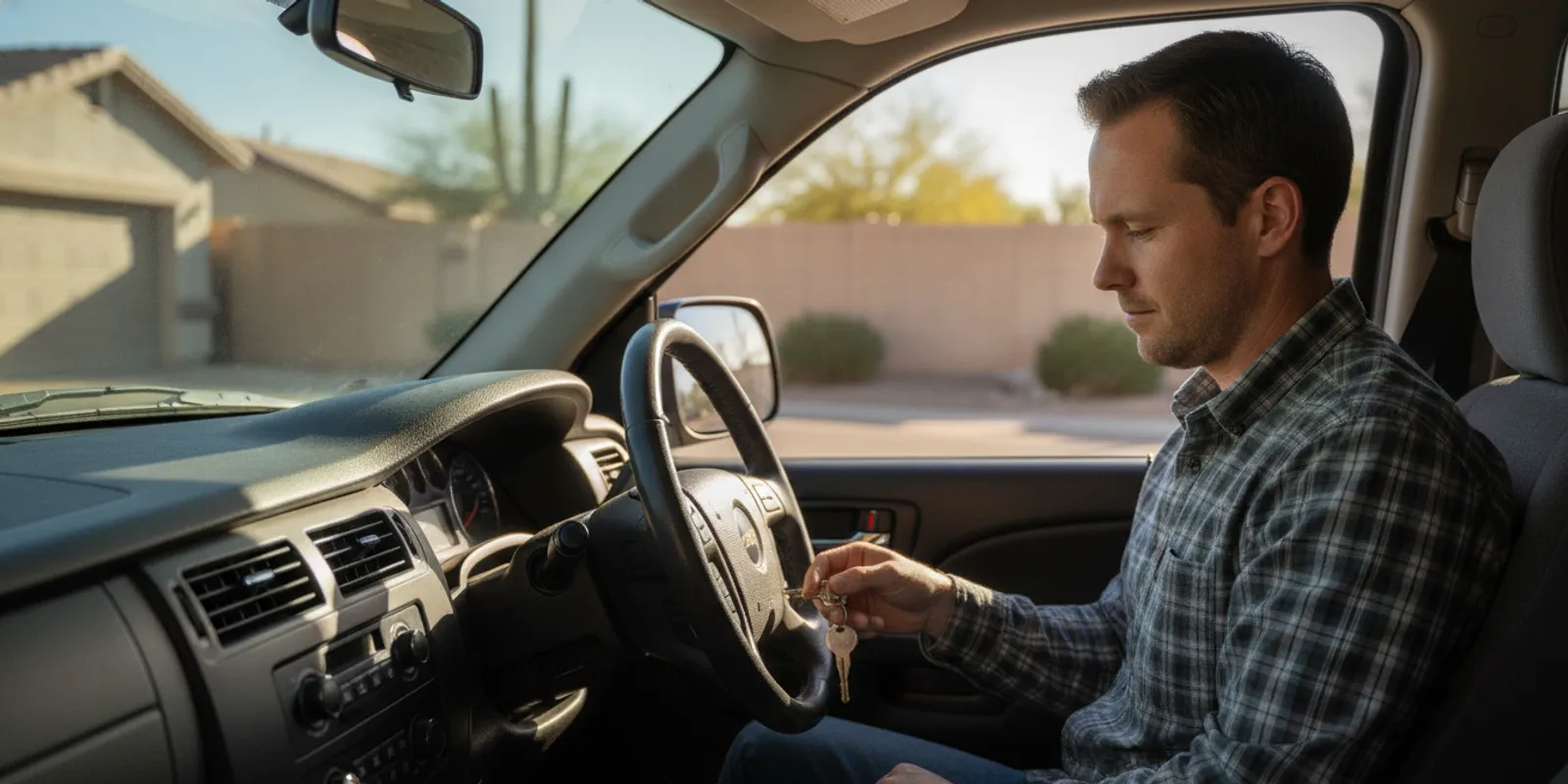
When you have a car key stuck in ignition, the safest response is to pause instead of pulling harder. A key that will not turn or come out can result from steering-wheel tension, an incorrect park position, a worn key, a damaged ignition cylinder, or a broken key. If you are in the Mesa area and need help, call The LOCK Shop at (480) 452-4505.
What should you do first when a car key is stuck in the ignition?
Keep the vehicle stationary and identify exactly what is happening. Is the key fully inserted but unable to rotate? Does it turn but refuse to release? Is the blade bent, cracked, or only partly inside the ignition? These details help distinguish a simple release issue from a problem that needs ignition repair or key service.
- Set the parking brake. Keep the vehicle from moving while you check the controls. If you are near traffic, prioritize your personal safety and keep clear of moving vehicles.
- Confirm the transmission position. If the vehicle has an automatic transmission, gently verify that the shifter is fully in Park. Do not force the shifter or key. If it will not move normally, leave it alone.
- Turn off accessories. Switch off the engine, lights, radio, and other accessories if they are still running. Do not leave the vehicle running while you try to remove the key.
- Relieve steering-wheel pressure. Gently move the wheel a small amount left and right while applying only light turning pressure to the key. Work slowly and stop if the key does not respond.
- Try a spare key, if available. A spare can show whether the original key is worn or bent. Do not use a damaged spare or push it into a keyway containing part of a broken key.
These checks are simple observations, not a way to bypass vehicle security. If the key does not respond to light pressure, stop. Repeated attempts can turn a manageable issue into a broken key or damaged ignition.
Why can a car key get stuck in the ignition?
Several different problems can produce the same symptom. The cause may involve the vehicle controls, the key, or the ignition lock. Without examining the vehicle, no one can identify the exact cause from the symptom alone, but these patterns can help you describe the problem accurately when you call.
Steering-wheel tension
When front wheels are turned against a curb or another obstacle, tension can transfer to the steering lock. The key may not rotate normally even though it worked earlier. Lightly moving the steering wheel in both directions while maintaining gentle key pressure can sometimes release that tension. Do not jerk the wheel or twist the key with force. If the wheel remains locked and the key still will not turn, stop testing.
The vehicle is not fully in Park
Many automatic vehicles require the shifter to be fully in Park before the key can be removed. A worn shifter mechanism, obstruction, or switch problem can make the vehicle appear to be in Park when the ignition does not recognize that position. Move the shifter only through its normal range and do not rock it aggressively. If it will not move normally, request service rather than trying to defeat the interlock.
A worn or damaged key
Years of use can wear the cuts on a key. A key ring can bend a thin blade, and a fall can damage the head or transponder housing. A worn key may still open a door but fail to operate the ignition consistently. Compare it with a known-good spare without forcing either one. If the spare works, keep the original key for inspection rather than continuing to use it.
Debris or damage in the keyway
Dirt, a foreign object, or a damaged piece inside the ignition can prevent the key from seating correctly. Spraying an unknown product into the ignition or inserting another object may push debris farther inside. If the key feels blocked, stops before it is fully inserted, or feels rough in a new way, stop and arrange an inspection.
Ignition-cylinder wear or internal failure
The ignition cylinder contains parts that recognize the key and allow it to rotate. Internal wear can make the key difficult to turn, intermittently stuck, or impossible to remove. A pattern of increasing resistance is useful information because it may show that the problem existed before the final lockup. Repeated attempts can worsen the damage. A locksmith can assess whether the cylinder needs repair, replacement, or related service.
A broken key
A key can snap when its blade is weakened or excessive force is applied. If part of the key remains visible, resist pulling it with household pliers. Pliers can bend the fragment, scratch surrounding trim, or push the broken piece deeper. Broken-key extraction is specialized work, and the next step depends on whether the lock or keyway is also damaged.
What should you avoid when the key will not come out?
A stuck key creates pressure to solve the problem quickly, but aggressive troubleshooting can turn a small issue into a damaged ignition or broken key. Avoid these mistakes:
- Do not force the key to turn. A key blade can snap inside the cylinder.
- Do not yank the key sideways. Sideways pressure can damage the keyway and ignition assembly.
- Do not use another key or metal object to pry it out. This can push a fragment farther inside.
- Do not hammer, drill, or pry around the ignition. These actions may damage surrounding vehicle components.
- Do not spray unknown lubricant. The wrong product can attract debris or affect internal components.
- Do not cycle the ignition repeatedly. Repeated attempts add stress without addressing the cause.
- Do not use adhesive, magnets, knives, or household tools on a broken fragment. They may make extraction more difficult or damage the keyway.
- Do not drive if the key is loose or the ignition operates abnormally. Arrange an assessment first.
If you are unsure whether the key is turning, locking, or releasing normally, describe the symptom instead of experimenting. The automotive locksmith services page is a useful starting point for vehicle key and lock concerns.
How do you know whether you need key extraction, a new key, or ignition repair?
These needs are related but not interchangeable. Removing a broken fragment will not correct a worn ignition cylinder, and cutting a new key may not solve a damaged lock. The appropriate service depends on what an inspection finds.
| Situation | Likely service focus | Safe next step |
|---|---|---|
| Intact key will not rotate or release | Ignition and vehicle-control assessment | Try only light checks, then request help |
| Key blade has snapped | Broken-key extraction | Leave the fragment in place |
| Key is worn, bent, or damaged | Key cutting, duplication, or replacement | Provide a spare or vehicle details |
| Known-good keys also bind | Ignition-cylinder inspection or repair | Stop testing keys repeatedly |
| Key will not release after Park is confirmed | Interlock, ignition, or control diagnosis | Set the parking brake and request guidance |
In some cases, a locksmith can extract the key and make a replacement. In others, the ignition cylinder needs repair or replacement before the vehicle can be used reliably. The technician may need the vehicle year, make, model, key type, and information about what happened immediately before the problem.
Why the order of service matters
It is tempting to request a replacement key immediately, especially when the key looks worn. That may be appropriate when the key is the only problem, but a new key cannot correct a damaged ignition cylinder or a failed release mechanism. Likewise, extraction is only one part of the job when a broken fragment resulted from a cylinder that was already binding.
Write down what changed before the key became stuck. For example, the key may have required extra wiggling for several days, the steering wheel may have been turned against a curb, or the key may have been dropped. A short timeline helps the locksmith consider the key, cylinder, and vehicle controls together instead of treating the visible symptom in isolation.
What information should you provide when requesting service?
A clear description helps a locksmith prepare. Gather what you can without continuing to manipulate the ignition:
- The vehicle year, make, and model.
- Whether the key is intact, bent, cracked, or broken.
- Whether it is fully or partly inserted and whether it turns at all.
- Whether the vehicle is in Park and the steering wheel is locked.
- Whether the vehicle starts, powers on, or remains inactive.
- Whether a spare key produces the same result.
- Whether the issue began suddenly or followed days of sticking, grinding, or extra wiggling.
- Your location and whether the vehicle is safely accessible.
You can request service online or call The LOCK Shop to explain the situation directly. Do not continue testing the key while you wait. If you are calling from a busy road, explain the safety concern and your exact location so the service conversation starts with the right context.
How does a professional ignition assessment usually work?
A professional assessment begins with questions and a visual inspection. The locksmith examines the key, ignition opening, and surrounding components, then determines whether the key can be removed without additional damage. The process varies by vehicle and lock condition.
If a broken fragment is present, extraction should be approached carefully so the keyway is not damaged. If the key is intact but the cylinder binds, the locksmith may evaluate the cylinder and related controls. If the key itself is the problem, key cutting or programming may be considered based on the vehicle and key type. The goal is to identify the cause before recommending work.
Before work begins, ask what the technician believes is causing the problem, whether the key or cylinder shows damage, and what the available next steps are. If more than one component may be involved, ask which step is diagnostic and which step is corrective. This gives you a clearer explanation of why extraction, replacement, or repair is being considered.
The locksmith FAQs provide general information about common questions. A service conversation is still important because a stuck ignition is specific to the vehicle's condition.
When should you call for help right away?
Request professional help promptly when the key is bent, broken, deeply stuck, or accompanied by grinding, unusual resistance, or visible damage. Stop troubleshooting if the vehicle is parked in an unsafe location, blocks a travel lane, or cannot be secured. If it will not shift normally or you are concerned about moving it, keep it stationary and arrange assistance.
Emergency situations can involve more than the key. Follow local safety procedures, move away from traffic when possible, and do not leave the vehicle unattended with keys or valuables exposed. The LOCK Shop provides emergency locksmith service, but the response depends on location, access, and the request. Review the emergency locksmith information before contacting the company.
How can Mesa drivers prevent a stuck ignition?
No maintenance step can prevent every ignition problem, but a few habits may reduce avoidable stress:
- Replace a key when it is visibly worn, bent, or cracked.
- Keep heavy key rings from hanging on the ignition key while driving.
- Keep a spare key accessible and check it before an emergency.
- Store keys away from objects that can bend or damage the blade.
- Pay attention to a key that needs wiggling or turns inconsistently.
- Address repeated ignition trouble before the key breaks.
- Keep the key head and any electronic housing dry and protected from impacts.
- When a spare is made, test it during a normal trip rather than waiting until the original fails.
When you need a duplicate or replacement, information about auto key duplication, origination, and programming can help you understand what to ask about. A spare is most useful when you know where it is and have confirmed that it operates the vehicle as expected.
What should you check before arranging a tow or continuing your trip?
A key that remains in the ignition can affect more than the convenience of starting or stopping the vehicle. Before deciding to drive, consider whether the key turns smoothly through its normal positions, whether it can be removed normally, and whether the steering wheel and shifter behave as expected. If any of these functions feel different, do not assume the problem will correct itself after a short drive.
Check the area around the vehicle without taking the ignition apart. Look for a visibly bent blade, a loose key head, broken material at the ignition opening, or signs that the key is only partly inserted. Do not use a flashlight, tool, or second key to probe inside the cylinder. A clear photo of the key and ignition may help explain the condition during a phone call, but do not delay assistance if the vehicle is in an unsafe location.
If the vehicle must be moved for safety, ask for guidance before attempting to drive it. A vehicle that starts may still have an ignition or key problem that could worsen during the trip. Tell the locksmith whether the vehicle is in a driveway, parking lot, roadside location, or another restricted area. That information helps set expectations about access and the safest way to handle the vehicle.
Frequently asked questions
Can I remove a stuck ignition key myself?
You can try only the gentle checks described above: set the parking brake, confirm Park, and lightly relieve steering-wheel tension. If the key does not release without force, stop. Pulling, prying, drilling, or using household tools can cause more damage.
Should I use lubricant on a stuck key?
Do not use an unknown lubricant or spray simply because the key is difficult to turn. The product may not suit the ignition, and spraying can move debris farther inside. A locksmith can inspect the condition and advise on repair.
What if the key is broken inside?
Leave the fragment in place and do not push it farther in with another key. Avoid adhesive, magnets, knives, and pliers. Contact a locksmith for broken-key extraction and explain whether the ignition was already difficult to use.
Can a new key fix an ignition that will not turn?
Sometimes a damaged key is the cause, but a new key will not repair a worn ignition cylinder. If a known-good key has the same problem, mention that when requesting service.
Does The LOCK Shop serve drivers outside Mesa?
The LOCK Shop is based in Mesa and serves the East Valley and broader Phoenix metropolitan area. Call (480) 452-4505 or use the service request form to confirm service for your location.
Request automotive locksmith service
What should you record while waiting for service?
While waiting, keep the key and any loose fragments together, note whether the vehicle is locked, and avoid repeated tests. If someone else will meet the locksmith, share the vehicle location, access instructions, and a description of the key. Do not leave personal documents or valuables visible in an unattended vehicle. These small preparations help the visit begin with useful information and reduce the temptation to keep forcing a problem that needs careful attention.
What is the safest next step?
A car key stuck in ignition is a reason to slow down, not apply more force. Keep the vehicle secure, make only safe light checks, and contact The LOCK Shop in Mesa when the key remains stuck, breaks, or points to an ignition problem.