
Published article
Best Home Safe: How to Choose the Right Safe for Your Home
Compare home safes by fire and burglary protection, capacity, access, anchoring, and placement so you can choose one suited to what you need to protect.
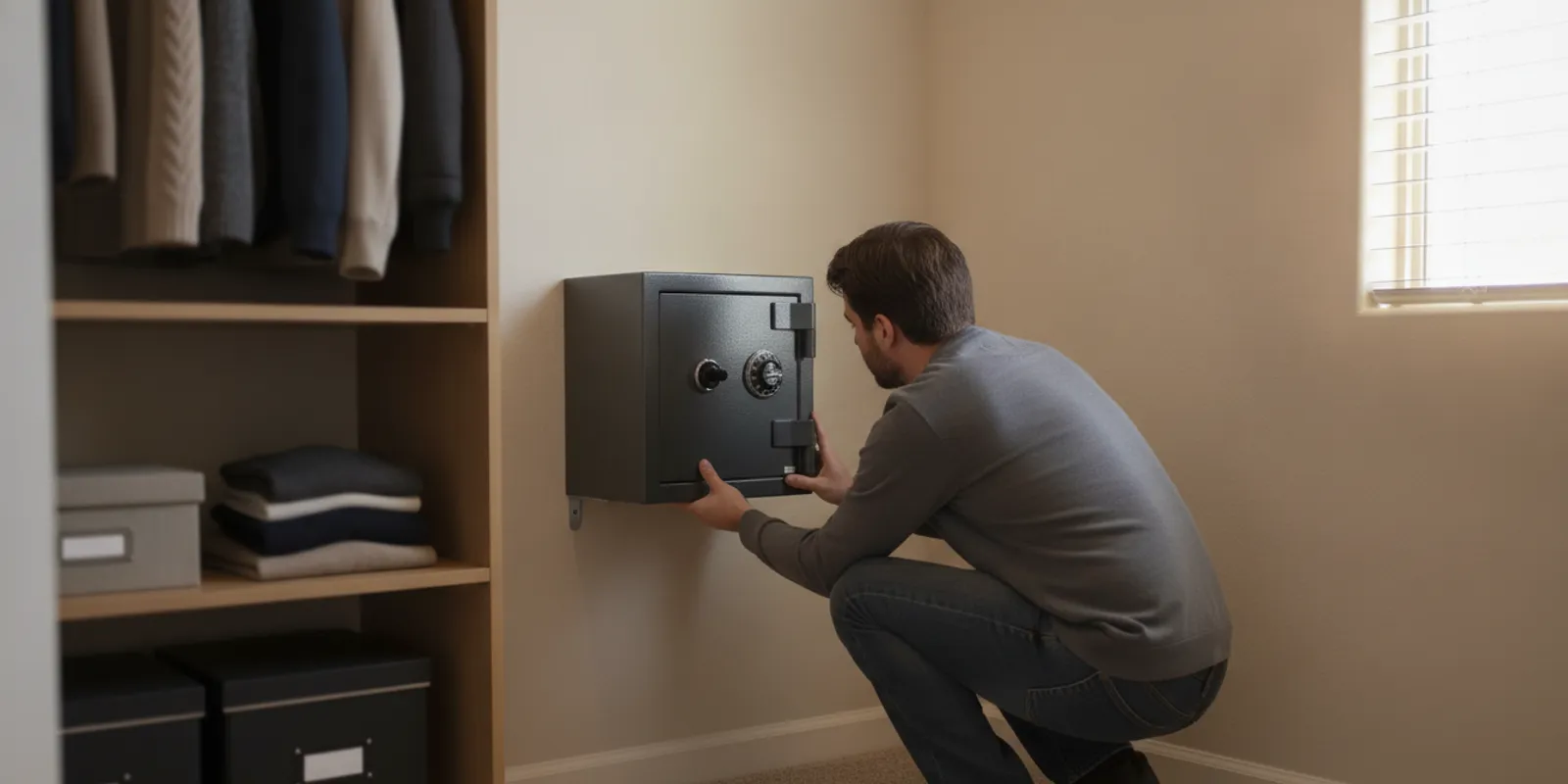
Choosing the best home safe starts with deciding what you need to protect and what risks matter most in your home. A safe designed to resist fire is not automatically designed to resist burglary, and a large safe is not always the right fit. By comparing protection, size, access, anchoring, and placement before you buy, you can choose a safe that suits the items you plan to store and how you expect to use it.
What should a home safe protect?
Start by listing the items you want to keep together. Common choices include documents, small valuables, backup media, or items you may need to reach quickly. The list affects the safe’s interior size, shelf layout, and the kind of protection to prioritize.
Then consider the threat you are trying to address. A fire-resistant safe is intended to help protect contents from heat for a stated period under the manufacturer’s test conditions. A burglary-resistant safe is built to resist certain forms of forced entry. Those are different performance goals. Some products advertise both, but the wording and test details matter: do not assume that one label proves every kind of protection.
Read the manufacturer’s documentation for the specific model. Look for what the rating covers, how long the stated protection applies, and which contents are included. Paper, electronic media, and other contents may have different sensitivities. If the product description does not clearly explain its claims, ask the seller or manufacturer before relying on them.
A useful starting point is to divide your inventory into “must protect” and “convenient to store.” For example, a folder of irreplaceable household records may deserve different consideration from spare keys or items you could replace. This is not a substitute for checking the safe’s stated capabilities; it helps you avoid paying attention to features that do not address your actual priorities. Also think about whether you need access during an ordinary day, during travel, or only occasionally. Frequency of access can affect both the lock choice and the location.
Keep a simple inventory outside the safe, without recording sensitive access information in the same place. Note approximate dimensions and any storage cases or folders. That list gives you a practical basis for comparing models and later checking whether the safe still meets your needs as household items change.
How do fire and burglary protection differ?
Think of fire and burglary protection as separate questions rather than a single quality scale. For fire, check whether the safe’s documentation states a tested temperature and duration, and what kind of contents the test applies to. A fire claim without clear test details is hard to compare with another model.
For burglary resistance, look for specific construction details and independently documented ratings where available. A heavy safe may be harder to move, but weight alone does not tell you how its door, locking mechanism, or body will perform against attack. Nor does a fire rating establish burglary resistance.
Consider your likely use and storage environment. If the priority is keeping paper records together during a household emergency, fire performance may be central. If the concern is unauthorized access, focus on resistance to entry, the lock, and whether the safe can be anchored. A safe can offer some combination of features, but check the evidence for each feature separately.
| Feature | What to compare | Questions to ask |
|---|---|---|
| Fire protection | Test conditions, stated duration, and contents covered | What does the manufacturer’s documentation say the model protects? |
| Burglary resistance | Construction, door and lock details, and documented rating | What specific resistance claim is supported for this model? |
| Capacity | Usable interior dimensions, shelves, and door clearance | Will my largest planned item fit without forcing it? |
| Anchoring | Mounting points and suitable installation surface | Can it be secured to the floor or another appropriate structure? |
| Access | Key, combination, or electronic mechanism | Can intended users operate it and manage access reliably? |
When comparing claims, write down the exact model and quote the wording from its documentation. Do not treat marketing labels as interchangeable. If two safes both say “fire protection,” compare the test details and contents specified rather than assuming equal performance. If a model advertises burglary resistance, find out whether the claim is tied to a documented rating and what the rating actually describes.
Also consider whether the safe will be used for one purpose or several. A household that stores both paper and digital media should verify that the listed protection applies to each type of content; a general fire statement may not answer that question. If a safe is intended to protect valuables from access, ask how the construction and lock contribute, rather than relying only on the unit’s size or weight.
What size home safe do you need?
Compare interior dimensions, not just the exterior footprint. Safe walls and doors take up space, and the usable compartment may be smaller than the product’s outside measurements suggest. Measure the largest item you plan to store, including its folder, case, or protective sleeve. Allow room to retrieve it without having to rearrange everything each time.
Make a short inventory before shopping. For example, a homeowner storing a few passports and documents may need a different layout from someone who wants shelves for binders and several small valuables. If you expect your storage needs to grow, consider a little extra capacity, but balance it against the safe’s weight, location, and installation requirements.
Check shelf adjustability and door swing as well. A shelf that can be repositioned may make the interior more useful. Measure the intended route into the room and the space where the door will open. A safe that technically fits into a closet may be awkward to load or access once installed.
Here is a practical measuring routine. First, gather the items you plan to store and measure the widest, tallest, and deepest one. Second, measure the room or closet where the safe may go, including the width of the opening and the space needed for the door to swing. Third, check the delivery route: hall turns, stairs, thresholds, and any narrow doorway can matter as much as the final position. Finally, compare those measurements with both the manufacturer’s exterior dimensions and the usable interior dimensions.
Think about how the interior will work in daily use. A deep compartment can hold larger objects but may make smaller items difficult to see or reach. Shelves can separate documents from small valuables, while a fixed shelf may limit what fits vertically. If you plan to keep folders upright, check the clear height with the shelf in place. If you plan to store a case flat, measure its footprint, not just its thickness.
Resist choosing a safe based on capacity alone. A larger unit may require a different delivery and installation plan, and it may not suit the floor or room you had in mind. A smaller safe can be a reasonable match for a defined inventory if it offers the protection you need and remains usable. The best choice is the one that fits the contents, location, and installation plan together.
Which access type fits your household?
Home safes may use a key, a mechanical combination, an electronic keypad, or another access method. Each has practical trade-offs. A key is straightforward to operate, but you need a sensible plan for controlling and storing it. A combination avoids keeping a key at hand, but users must remember the combination and be able to operate the mechanism. Electronic access can be convenient for regular use, but check the manufacturer’s instructions for power, battery replacement, and backup access.
Choose a method the people who are meant to use the safe can operate consistently. If several household members need access, agree on who should know the combination or hold a key and how that information will be managed. Avoid storing access details in an obvious place near the safe.
Before buying, read the instructions for routine operation and what to do if you cannot open the safe. Ask about service options for the particular model, including opening or combination changes if those services are needed. The LOCK Shop provides safe opening and combination-change services; the right next step depends on the safe and the situation.
Match the mechanism to the household’s habits rather than choosing only by appearance. A safe opened frequently should have a method its intended users can use without confusion. For a safe opened rarely, consider whether users will remember the procedure and where the instructions can be kept securely. If more than one person needs access, agree in advance how access will be shared and what happens if the usual user is unavailable.
For an electronic lock, check how the manufacturer instructs owners to handle batteries and what backup entry method, if any, is available. For a keyed unit, decide who will control the key and avoid leaving it in an obvious nearby drawer. For a combination lock, follow the instructions for setting or changing the combination and store any record securely away from the safe. These are practical questions to settle before purchase, not after the safe is installed and loaded.
Why does anchoring matter?
Anchoring can help keep a safe in its intended position and make it more difficult to remove. Whether and how a safe can be anchored depends on its design, the mounting points, and the floor or structure beneath it. Check the manufacturer’s installation guidance rather than assuming every safe can be fastened in the same way.
Think about the surface and what may be below it before drilling or fastening. Flooring types, finished surfaces, and the structure underneath can affect the appropriate method. Also consider the safe’s weight and the route used to bring it into the room. A heavy unit can be difficult to position, and moving it without a plan may damage floors or create a lifting hazard.
Professional installation may be worth considering when the safe is heavy, needs anchoring, must be moved through a challenging route, or when you are unsure about the mounting surface. The LOCK Shop documents safe installation, delivery, relocation, maintenance, repair, opening, and combination changes. Ask what is appropriate for your model and location before work begins.
Before deciding how to anchor a safe, check the owner’s manual for approved mounting points and installation requirements. The mounting surface matters: attaching a safe to a finish layer without understanding what supports it may not accomplish the intended purpose. If you are uncertain about the floor construction, the safe’s weight, or the correct hardware, pause and ask a qualified service provider to assess the situation rather than improvising.
Consider practical consequences too. Anchoring may affect the floor finish and could limit later relocation. If you rent or live in a property with restrictions, check the relevant permission before drilling. Do not assume a safe can be fastened to any wall, cabinet, or floor; the safe’s design and the structure must be suitable. Keep instructions and any installation information with the safe’s records for future service.
Where should you place a safe?
Choose a location that balances access, discretion, and practical installation. A safe used often should be reachable without turning routine access into a project. A safe used mainly for long-term document storage may suit a less prominent spot. In either case, consider the route in, door clearance, ventilation and environmental conditions described by the manufacturer, and whether the floor or supporting structure is suitable.
Do not choose a hiding place before checking whether the safe can be installed and opened there. A cramped corner may block the door or make it hard to use the keypad. A location upstairs may complicate moving a heavy safe, while a location in a finished room may affect how anchoring can be done. Plan the full path from delivery to final position.
Keep the safe’s access method in mind, too. Users should be able to operate it in the available light and space. Follow the model’s care instructions, and avoid putting contents inside that the manufacturer says are unsuitable.
Walk through the proposed location as if you were using the safe. Can the door open fully? Is there room to hold a folder while entering a combination or operating a keypad? Can you stand comfortably in front of it? If the safe is in a closet, will stored coats or household items obstruct access? These simple checks can reveal problems before delivery.
Evaluate the location as a whole. A convenient position may be visible to visitors or difficult to secure; a discreet location may be inconvenient for routine use. The manufacturer’s guidance on temperature, moisture, and care should inform the choice. Avoid placing the unit where ordinary household activity could block its door or where service access would be difficult. If you are considering a place on an upper floor, include the delivery route and the safe’s weight in your planning.
Placement also affects the household’s ability to use the safe consistently. If it is needed for documents used during travel or periodic appointments, a location that is accessible without moving other objects may be more practical than a tucked-away spot. If it is intended for occasional storage, convenience may matter less, but clear access is still necessary for inspection and maintenance.
How can you compare models before buying?
Use the same checklist for each safe you consider. This makes it easier to spot when two products sound similar but make different claims or have different practical limitations.
- Write down the contents. List what you want to store now and what you may add later. Measure the largest items.
- Rank your protection priorities. Decide whether fire performance, resistance to unauthorized entry, or both are important. Review separate documentation for each claim.
- Check the actual capacity. Compare interior measurements, shelves, and door clearance against your inventory and available location.
- Choose an access method. Consider who will use it, how often, and how the household will manage keys, combinations, or power requirements.
- Plan placement and anchoring. Measure the route and final position. Review the installation instructions and the construction of the mounting surface.
- Ask about ongoing service. Check the owner’s manual for maintenance and contact an appropriate safe service provider if installation, repair, relocation, opening, or a combination change is needed.
Before making a purchase, compare the model’s documentation rather than relying on a product name or a broad claim. Note the exact model number, included accessories, warranty terms, and the manufacturer’s recommendations. If the safe is being installed in an existing home, share the placement and access details when asking about installation. That gives a service provider useful context for discussing feasibility.
It can help to keep a side-by-side note for two or three options. Record each model’s exterior and interior dimensions, stated fire details, burglary documentation, lock type, weight, mounting provisions, and any manufacturer instructions that affect location. Mark unclear claims as questions instead of filling in the gaps yourself. This keeps the comparison grounded in the information actually provided.
Then test each option against your own situation. For example, if one model fits the contents but cannot pass through the intended route, it is not a practical choice without a revised plan. If another fits the route but lacks clear documentation for the protection you consider essential, ask the seller for details before deciding. If a unit is easy to access but its door cannot open fully in the proposed location, reconsider either the model or the placement.
For safe-related questions in Mesa and the East Valley, you can review The LOCK Shop’s safe services. The company offers free phone estimates; ask what details are useful to discuss for your safe and the work you have in mind.
When should you ask for professional safe service?
Professional help can be useful when you are planning installation or relocation, when a safe needs repair or maintenance, or when you cannot access it and need an opening service. It can also help to ask before purchasing if the safe’s size, route, anchoring, or intended location raises questions. Safe handling and installation depend on the particular unit and site, so avoid assuming that one approach fits every model.
When you contact a provider, be ready to share the make and model if known, the issue or task, the safe’s approximate size and location, and any relevant access limitations. Do not send sensitive combinations or access information in an unsecured message. Ask what the service involves and confirm the next steps before work begins.
To discuss installation, repair, maintenance, relocation, opening, or a combination change, use the request service form. You can also read the company’s frequently asked questions or review its lock and security services for related needs.
Before requesting help, write down the information you can safely share: the make and model if visible, approximate dimensions, where the unit is located, and whether the request concerns installation, maintenance, repair, relocation, opening, or a combination change. Include access constraints such as stairs, narrow passages, or limited door clearance. This can make an initial discussion more useful without sending a combination, key code, or other sensitive information through an unsecured channel.
For an installation discussion, share where you hope to place the safe and whether anchoring is being considered. For a relocation, describe the route and any known obstacles. For a safe that will not open, explain what you have already checked in the manufacturer’s instructions and avoid forcing the door or mechanism. The appropriate service depends on the unit and the circumstances, so confirm the proposed work before it begins.
When you call for a free phone estimate, ask which details the provider needs to understand the scope and whether there are questions you should answer before arranging a visit. A useful estimate conversation distinguishes the model and requested work from assumptions about the site. Keep the safe’s documentation accessible, but do not share combinations or access credentials unless an appropriate, secure process is agreed.
Frequently asked questions
Is a fire-resistant safe also burglary-resistant?
Not necessarily. Fire and burglary protection address different hazards. Check the documentation for the specific safe and look for separate evidence supporting each claim.
Should I choose the largest safe I can fit?
Not automatically. Start with your inventory, then compare usable interior capacity, location, access, and installation needs. Extra room can be helpful, but a safe must also fit the route and intended mounting surface.
Can I install a safe myself?
Some models may be designed for straightforward installation, but the correct approach depends on the safe, its weight, the mounting points, and the structure. Follow the manufacturer’s instructions and seek professional help if you are unsure or the unit is difficult to move or anchor.
What if I cannot open my safe?
Check the manufacturer’s operating instructions and any recommended basic troubleshooting steps. If it remains inaccessible, avoid forcing the door or mechanism; ask about professional safe opening for the specific model.
What is the right next step?
The best home safe is the one whose documented protection, usable capacity, access method, and installation plan match your household’s needs. Compare the details before buying, and get help when moving, anchoring, or servicing the safe calls for a careful plan.